
Thursday, March 21, 2019

Wednesday, March 20, 2019
Do 46 Million Millennials Know They Are Mortgage Ready?

Many have written about the millennial generation and whether or not they, as a whole, believe in homeownership as part of attaining the American Dream.
Millennials have taken longer to obtain traditional milestones than the generations before them, such as getting married, having kids, and buying a home. However, that does not mean that they do not still aspire to achieve those things.
History shows that people tend to buy their first home around age 30. Nearly 5 million millennials will turn 30 in the next two years. This will continue to fuel demand for housing.
This is also one of the many reasons why the millennial homeownership rate has continued to grow over the past few years. 48.4% of Americans between the ages of 30-34 now own a home.
There are over 46 million millennials (33% of the generation) who are considered “Mortgage Ready”, meaning they meet the qualifications to be approved for a mortgage today!
- a FICO Score ≥ 620
- a Back-End Debt to Income Ratio ≤ 25%
- no Foreclosures or Bankruptcies in the last 7 years
- no severe delinquencies in 1 year
“We now know there are millions of buyers with the income & credit necessary to qualify to buy a home. The biggest question is:The good news is that more and more millennials are realizing that they can afford a home now. Even so, more can be done to increase awareness of low down payment programs to attract even more of this generation.
Do they know it? …Unfortunately, many renters don’t investigate homeownership simply because they don’t believe it’s an option.”
New data from realtor.com shows that in December, millennials accounted for 42% of all new home loans originated in the month. This is more than any other generation.
Bottom Line
If you are one of the many millennials who may be “Mortgage Ready” but are unsure what your next steps should be, contact a local real estate professional who can help guide you on your path to homeownership.Tuesday, March 19, 2019
What Credit Score Do You Need To Buy A House?

There are many misconceptions about the credit score needed to buy a house. Recently, it was reported that 24% of renters believe they need a 780-800 credit score to be considered for a mortgage. The reality is they are misinformed!
Only 25% of the Americans have a FICO® Score between 740 and 800. Here is the breakdown according to Experian:
- 16% Very Poor (300-579)
- 18% Fair (580-669)
- 21% Good (670-739)
- 25% Very Good (740-799)
- 20% Exceptional (800-850)
“Just because you have a low credit score doesn’t mean you can’t purchase a home. There are a lot of options out there for consumers with low FICO® scores,”There are many programs available with low or no credit score requirement. The Federal Housing Administration (FHA) now requires a minimum FICO® score of 580 if you want to qualify for the low down payment advantage. The US Department of Agriculture (USDA) does not set a minimum credit score requirement, but most lenders require a score of at least 640. Veterans Affairs (VA) loans have no credit score requirement.
As you can see, none of them are above 700!
It is true that the average FICO® score for all closed loans in January was 726, but there are plenty of people taking advantage of the low credit score requirements. Here is the average FICO® Score of closed FHA Loans since April 2012 according to Ellie Mae: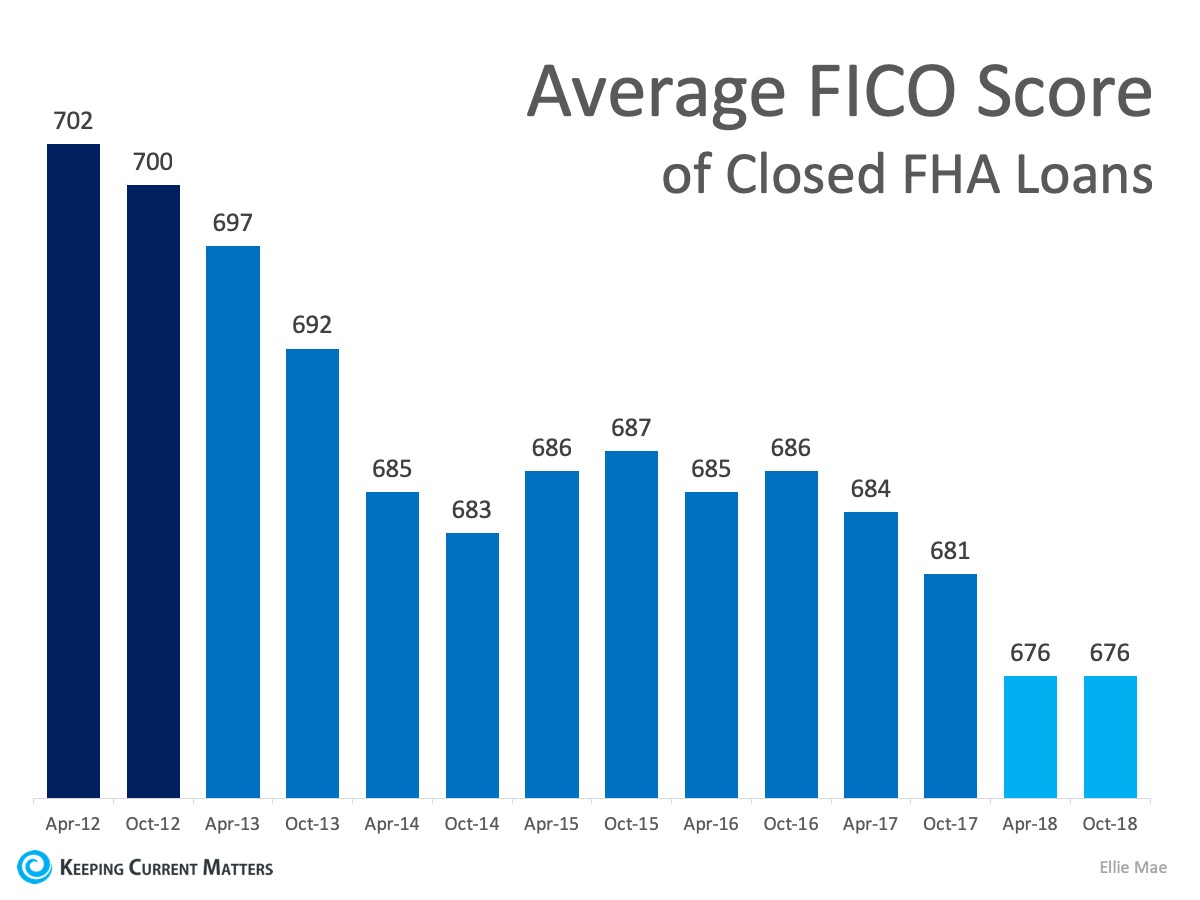 As
you can see, that number has been dropping for the last seven years. As
a matter of fact, the average FHA Purchase FICO® Score reported in
January 2019 was 675!
As
you can see, that number has been dropping for the last seven years. As
a matter of fact, the average FHA Purchase FICO® Score reported in
January 2019 was 675!One of the challenges is that Americans are unsure about their credit score. They just assume that it is too low to qualify and do not double check. Credit.com confirmed that only 57% of individuals sought out their credit score at least once last year.
FICO® reported,
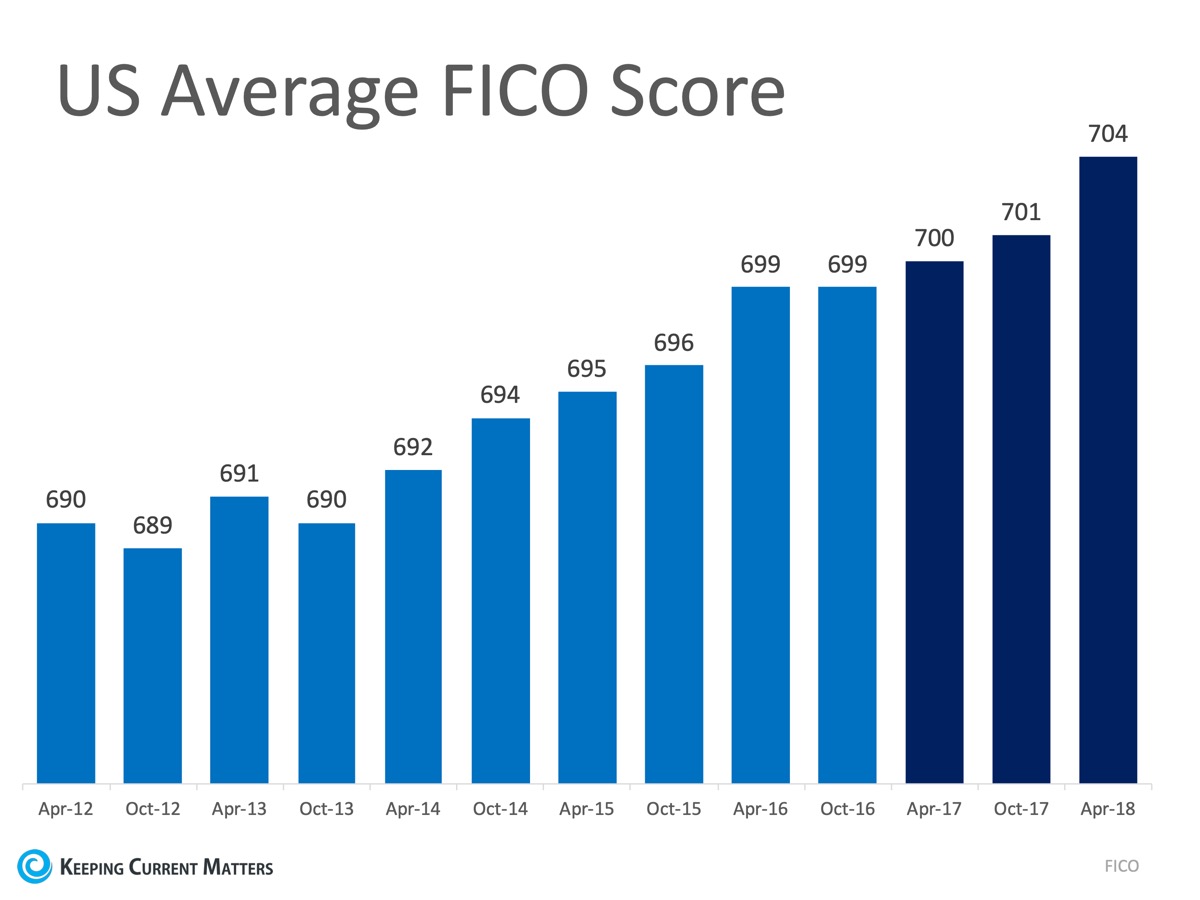
“Since October 2009, the average year-over-year FICO® Score has steadily and consistently increased, from a low of 686 in 2009 to the latest high of 704 as of 2018.”Here is the increase in the average US FICO® Score over the same period of time as the graph earlier.
Bottom Line
At least 84% of Americans have a score that would allow them to buy a house. If you are unsure what your score is or would like to improve your score in order to become a homeowner, sit down with a real estate professional that can help you to set a path to reach your dream!Monday, March 18, 2019

Want To Increase Your Family’s Wealth? Here’s How!

Everyone should realize that unless you are living somewhere rent-free, you are paying a mortgage – either yours or your landlord’s. Buying your own home provides you with a form of ‘forced savings’ that allows you to use your monthly housing costs to increase your family’s wealth.
Every month that you pay your mortgage, you are paying off a portion of the debt that you took on to purchase your home. Therefore, you own a little bit more of your home every month in the form of home equity. As your home’s value increases, you also gain home equity.
Every quarter, Pulsenomics surveys a nationwide panel of over 100 economists, real estate experts, and investment and market strategists. They are asked to project how residential home prices will appreciate over the next five years for their Home Price Expectation Survey (HPES).
The latest data from their Q1 2019 Survey revealed that home prices are expected to round out the year 4.3% higher than they were in January. For the next 5 years, home values will appreciate by an average of 3.21% a year.
This is great news for homeowners!
For example, let’s assume a young couple purchased and closed on a $250,000 home in January of this year. Simply through their home appreciating in value, those homeowners can build their home equity by over $40,000 over the next five years.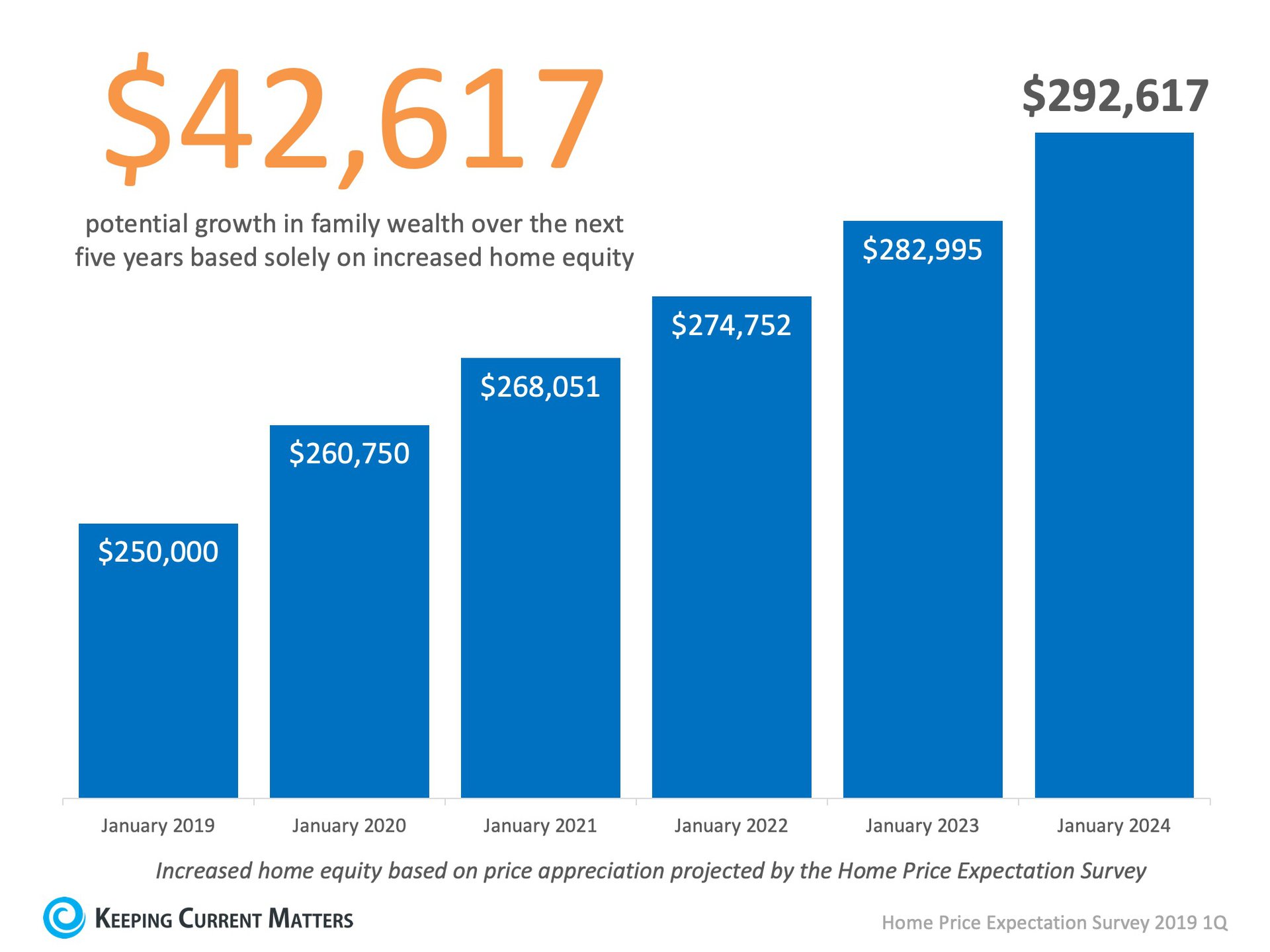
Let’s look at the potential equity gained over the same period of time at some higher price points:
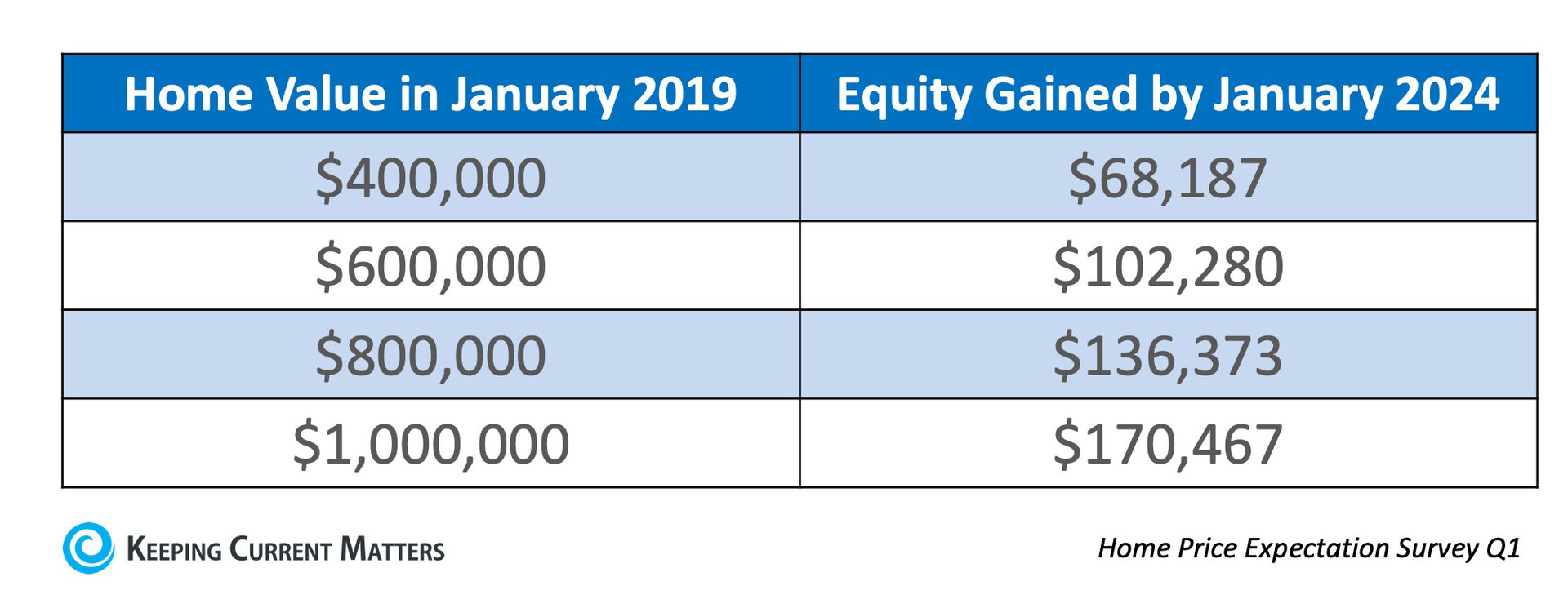
In many cases, home equity is a large portion of a family’s overall net worth.
Bottom Line
Whether it’s your first or your fifth, if your plan for this year includes buying a home, meet with a local real estate professional who can help you understand where prices are headed in your area.Friday, March 15, 2019
How to Choose the Right Lighting for Your Kitchen

Unsure where to start when it comes to choosing the right lighting for your kitchen? That’s understandable. Although there are a lot of options, many of them fall into one of the four categories below. Once you decide what category or combination of lighting you want in your kitchen, you can look into the various choices available. But first, let’s start with the basics.

Task Lighting
Task lighting will give an area of your kitchen more concentrated light. To put it plainly, the purpose of task lighting is to help you see what you’re doing. You can hang a task light over a kitchen island where you do all your chopping and prepping, over the stove or other areas in your kitchen that get a lot of use.
People also consider mounted lights under a cabinet or on the wall as a form of task lighting.
This provides an even more direct light source, but you have to be careful about how you place it to ensure that it doesn’t create harsh shadows over other parts of your kitchen.
Recessed Lighting and Track Lighting
Recessed lighting is a series of lights that brighten a room. It is also referred to as pot lights or can lights because of their inconspicuous nature. It’s a method of adding light to your kitchen that disappears into your ceiling.
You can also install a series of lights on a track, although this doesn’t give a seamless effect like pot or can lights. As the name suggests, these lights run on a track and snake around the ceiling in a way that offers the most light where you need it.
Ambient Lighting
This is the most basic type of lighting you can opt for. It creates a blanket effect as a means to brighten a room. It will add an efficient amount of light for you to get things done around your kitchen, but nothing more. It’s not meant to help you achieve detailed projects — that’s a task light’s job.
Many people opt for ambient light because it’s simple and for the most part effective, but also because it will brighten your kitchen in a more natural way. It won’t cast as many shadows as track lighting or a pendant light (we’ll get to those). For more concentrated light, you can pair ambient lighting with some form of task lighting.
Pendant Lights
Pendant lights can work in a couple of ways depending on where your light source is facing. You can choose an inverted pendant light that will cast the light upward and thus function more like ambient lighting. Or you can choose a pendant light that casts light down, causing it to act more like task lighting. So, the type of pendant light you choose depends on the kind of lighting you require.
A chandelier is a type of pendant light that many people opt for because of its elegance and ability to elevate a room. A pendant light typically adds a bit more style to the room you use it in, which is why it’s so popular.
For tips on lighting all the rooms in your home, give us a call today. We love sharing our tips and expertise.
Subscribe to:
Posts (Atom)