Wednesday, April 10, 2019


Homeowners Insurance 101: Discuss these items with your insurance company and be sure to shop around for the best premiums, as this affects your monthly mortgage each month...

#TheMoreYouKnow #homeowners #realestate 
#homeinsurance

Home Buyer Demand Will Be Strong for Years to Come


There has been a lot written about millennials and their preference to live in city centers above their favorite pizza place. Some have even gone so far as to say that millennials are a “Renter-Generation”.

And while this might be true for some millennials, more and more research has surfaced that shows for the vast majority, owning a home is a major part of their American Dream!

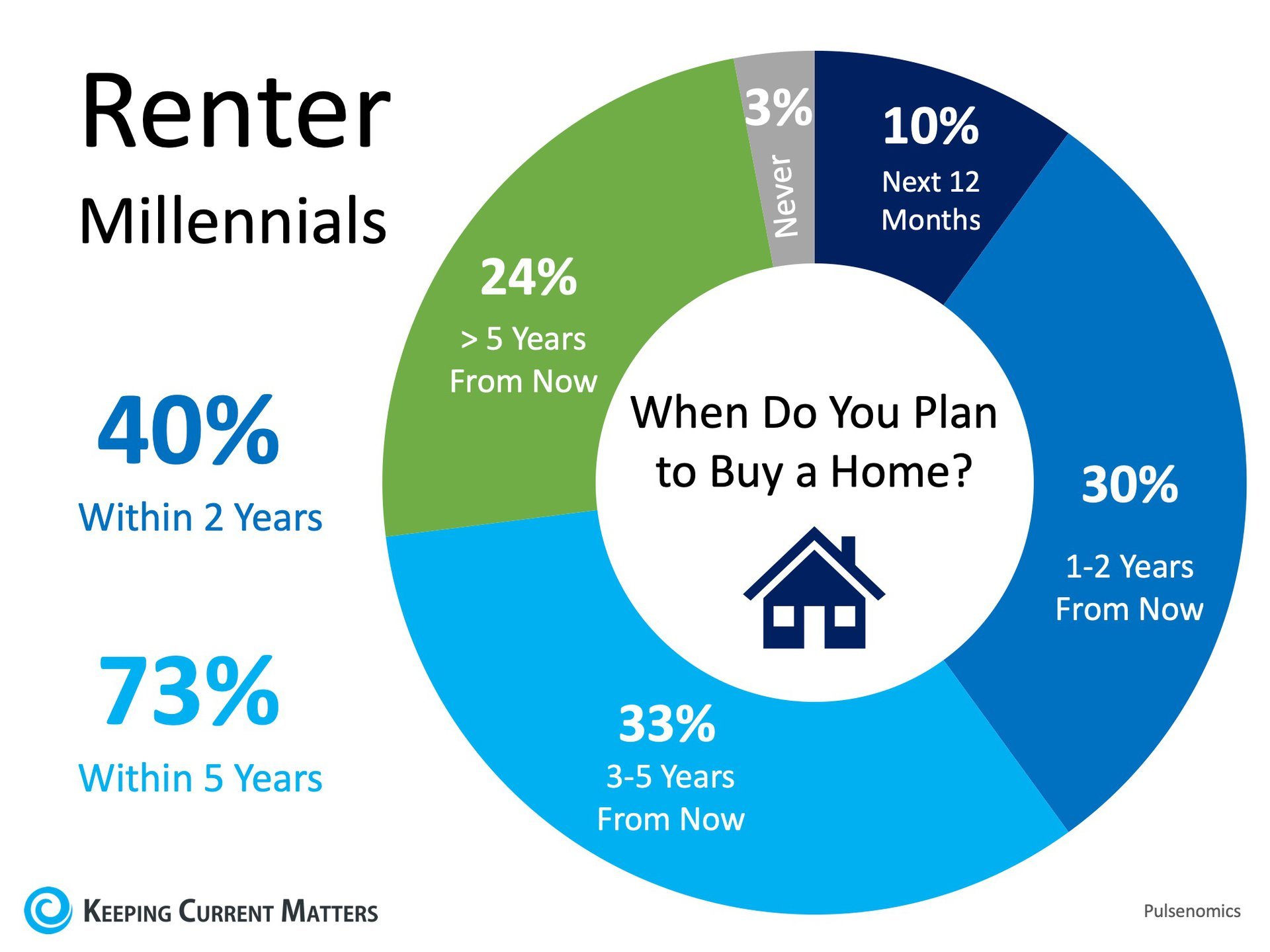
New research shows that 66% of millennials who currently rent are determined to buy a home! Seventy-three percent of those surveyed by Pulsenomics plan to buy a home in the next five years, with 40% planning to do so within the next two years!
Home Buyer Demand Will Be Strong for Years to Come | Keeping Current Matters
“Millennials want to own a home as much as prior generations,” Ali Wolf, Director of Economic Research at Meyers Research says. “We saw millennial shoppers scooping up homes in 2018—and 2019 will be no different.”

Bottom Line

Are you one of the millions of renters who are ready and willing to buy a home? Meet with a local real estate professional who can help determine your ability to buy now!

Tuesday, April 9, 2019

Are You Ready for a New Home? A Guide for Move-Up Buyers


Are you feeling like you've outgrown your current home? Has your life changed over the years? This could be a sign that you're ready to move out of that starter home and into something that more closely aligns with your lifestyle.
Keep reading to learn the signs that you're ready to move up!
Your Current Home Has Increased in Value
It may be a good financial decision for you to move into a nicer home if your current home has significantly increased in value. Check with your Realtor about the current value of your home. If it's worth much more than you bought it for, now might be a good time to sell and put the money from the sale toward buying a bigger place.
You or Your Partner Received a Salary Boost
Have you or your partner experienced an increase in your yearly earnings? If so, you may want to crunch the numbers and see how much more house you can afford. If your earnings have remained stagnant, then buying a more expensive home is probably not a good financial move. However, your life may have changed since you bought your first home, and perhaps you can afford a house that delivers a little more luxury or one that's located in a better area.
The Neighborhood Is Changing
Maybe you loved the neighborhood you live in when you first moved there, but if you've owned your house for a while, chances are the neighborhood has gone through some changes. Maybe it gained in popularity and younger people have moved into the area, making the streets busier and louder on the weekends. Since smaller cities and suburbs are seeing an uptick in new residents, your area, like many others, could be becoming more transient and less community-oriented.
Your Lifestyle Has Changed
Has your lifestyle changed because you started a family or got a demanding job? You may have outgrown your starter home with the addition of new family members. Or, perhaps you need to live in a house that is closer to the office. Many people become move-up buyers because their lifestyle has significantly changed since they bought their first home.
Other things to consider: Before making your final decision, ask yourself these two questions to make sure you're ready to move up.
Can I afford two mortgages? Depending on the order of events, there is a chance that you could end up buying your new home before selling your old home. In this case, can you afford two mortgages? Or have you researched financing options, such as bridge loans and home equity loans?
Can I afford moving costs? When figuring out your budget, factor in moving costs, such as closing fees, Realtor commission and hiring movers.
Think you're ready to take the plunge and move up? Contact us today to start the process!

Monday, April 8, 2019

What to Consider When Choosing Your Home To Retire In

As more and more baby boomers enter retirement age, the question of whether they should sell their homes and move has become a hot topic. In today’s housing market climate, with low available inventory in the starter and trade-up home categories, it makes sense to evaluate your home’s ability to adapt to your needs in retirement.

According to the National Association of Exclusive Buyers Agents (NAEBA), there are 7 factors that you should consider when choosing your retirement home.

1. Affordability

“It may be easy enough to purchase your home today but think long-term about your monthly costs. Account for property taxes, insurance, HOA fees, utilities – all the things that will be due whether or not you have a mortgage on the property.”
Would moving to a complex with homeowner association fees actually be cheaper than having to hire all the contractors you would need to maintain your home, lawn, etc.? Would your taxes go down significantly if you relocated? What is your monthly income going to be like in retirement?

2. Equity

“If you have equity in your current home, you may be able to apply it to the purchase of your next home. Maintaining a healthy amount of home equity gives you a source of emergency funds to tap, via a home equity loan or reverse mortgage.”
The equity you have in your current home may be enough to purchase your retirement home with little to no mortgage. Homeowners in the US gained an average of over $9,700 in equity last year.

3. Maintenance

“As we age, our tolerance for cleaning gutters, raking leaves and shoveling snow can go right out the window. A condominium with low-maintenance needs can be a literal lifesaver, if your health or physical abilities decline.”
As we mentioned earlier, would a condo with an HOA fee be worth the added peace of mind of not having to do the maintenance work yourself?

4. Security

“Elderly homeowners can be targets for scams or break-ins. Living in a home with security features, such as a manned gate house, resident-only access and a security system can bring peace of mind.”
As scary as that thought may be, any additional security is helpful. An extra set of eyes looking out for you always adds to peace of mind.

5. Pets

“Renting won’t do if the dog can’t come too! The companionship of pets can provide emotional and physical benefits.”
Consider all of your options when it comes to bringing your ‘furever’ friend with you to a new home. Will there be necessary additional deposits if you are renting or in a condo? Is the backyard fenced in? How far are you from your favorite veterinarian?

6. Mobility

“No one wants to picture themselves in a wheelchair or a walker, but the home layout must be able to accommodate limited mobility.”
Sixty is the new 40, right? People are living longer and are more active in retirement, but that doesn’t mean that down the road you won’t need your home to be more accessible. Installing handrails and making sure your hallways and doorways are wide enough may be a good reason to look for a home that was built to accommodate these needs.

7. Convenience

“Is the new home close to the golf course, or to shopping and dining? Do you have amenities within easy walking distance? This can add to home value!”
How close are you to your children and grandchildren? Would relocating to a new area make visits with family easier or more frequent? Beyond being close to your favorite stores and restaurants, there are a lot of factors to consider.

Bottom Line

When it comes to your forever home, evaluating your current house for its ability to adapt with you as you age can be the first step to guaranteeing your comfort in retirement. If after considering all these factors you find yourself curious about your options, contact a local real estate professional who can evaluate your ability to sell your house in today’s market and get you into your dream retirement home!

Friday, April 5, 2019

Self-Employed Clients? Loan Approval Chances Just Got Better


The two largest sources of mortgage money in the United States want self-employed loan shoppers to know that their chances of getting a home loan approved have increased.
Fannie Mae and Freddie Mac have rolled out automated underwriting technology for lenders that take a lot of the guesswork and risk out of the approval process for mortgage applications of the self-employed.
One of the reasons lenders have been reluctant to approve loans if you’re self-employed is because it’s expensive, time-consuming, and labor-intensive to gather and analyze the paperwork needed to verify your income and gauge your risk. It’s much easier and profitable to process applications of wage or salaried employees who get a W-2 issued by their employer.
But this new technology, incorporated into the companies’ automated underwriting systems, enables lenders to analyze the paperwork quickly and accurately so they can come to a decision in a fraction of the time it used to take and with far less speculation involved.
The process potentially increases efficiency so much that even small community banks in rural areas can find it cost-effective to consider loan applications that before they might have passed on.
No process is perfect and there’s bound to be problems as glitches are worked out, but the new procedures show Fannie and Freddie are trying to remove some of the friction self-employed homebuyers face.
The new underwriting is a top story in the latest Voice for Real Estate news video from NAR.

Your Home's Spring Maintenance Checklist [INFOGRAPHIC]


Some Highlights:

  • Every spring, your home needs some extra TLC!
  • Whether you plan on selling your home this spring or not, conducting this maintenance will help ensure your home functions well for the rest of the year.
  • Your real estate agent will have a list of specific suggestions for getting your house ready for market and is a great resource for finding local contractors who can help!