Friday, August 9, 2019
Tips for Maintaining Your Sanity While Selling
When selling a home, sometimes it’s a good idea to just clear your head. Do something fun and don’t think about showings or bids or worry about what an inspection will reveal. Here are some great activities that you can do to take your mind off your real estate needs for a while.
Hit the road. Pack an overnight bag and go on a little adventure. There are probably plenty of places within a few hours’ drive that will offer fun and excitement—a winery, a casino resort, a great hiking area, etc. For those moving to a new state, this could be your last chance to visit these areas, so make a day or two of it.
Binge a TV show. It’s easy to forget the stresses of life when binge-watching a show, so choose the latest buzz-worthy offering and spend a weekend watching one episode after another. Be sure to keep your cell phone out of sight so you can get lost in the show and not have real life interrupt.
Take in a sporting event. Visit the local ballpark, stadium or arena during their respective seasons. If you don’t have a major league team you follow, check out the nearest minor league facility, or, better yet, go support your local high school’s sports team. Consider other sporting events as well, like lacrosse, tennis or soccer. It’s always fun to cheer for the home team and enjoy some snacks at the game.
See an old friend. Sure, you keep up with your old classmates and workmates on Facebook…but when was the last time you actually saw any of them in person? Get together for that lunch you’re always talking about or arrange a night out with a bunch of friends and hold a little reunion. Let the memories flow and talk about the good ole’ days.
Try something new. Have you been to an escape room? Ever done laser tag? Have you always wanted to try one of those art classes where you paint along with an instructor? Take the family to one of these fun activities and just enjoy a couple of hours away from cleaning and worrying about the house.
Selling a house might seem like a 24/7 proposition but make sure to take a deep breath and not let it be all consuming.
Thursday, August 8, 2019
The VA Loan at A Glance!
Wednesday, August 7, 2019
Determining Property Type
The Internal Revenue Service considers four different types of real estate. Specific types of properties have benefits based on their classification. The determination does not depend on the property itself as much as it depends on how the property is used and what the owner's intentions are.
Principal Residence ... a principal residence is the place a person lives or expects to return if they are temporarily away from it. It could be a single family, detached home or condominium or a duplex, tri-plex or four-unit. The owner(s) can deduct the qualified mortgage interest and property taxes on the schedule A of their tax return. There is a capital gains exclusion on profit of up to $250,000 for a single taxpayer and up to $500,000 for a married taxpayer.
Income Property - is improved property that is rented or leased to tenants as opposed to using it personally. It can include houses and condos, apartment buildings, office complexes, shopping centers, warehouses and other commercial buildings. Depreciation is allowed on the improvements. For property held more than one year, the profits are taxed at long-term capital gains rates. This type of property is eligible for a tax deferred exchange.
Investment Property ... can be raw land or improved property that is not rented or leased. This property is not subject to depreciation. If the property is held for more than one year, the profits are taxed at long-term capital gains rates. It is also eligible for a tax deferred exchange.
Dealer Property ... this type of property is primarily considered inventory because the intention is to sell it without intentionally holding it for more than a year. It could be new construction such as a home builder. It could be an investor who buys a property and expects to sell it for more. There is not a requirement to make improvements. The profits on dealer property are taxed as ordinary, "sweat of the brow" income. Dealer properties cannot be exchanged.
A second home is like a principal residence in that you can deduct the interest and property taxes on your Schedule A, up to the limits. A second home, as well as a principal residence, can be rented out up to 14-days a year without threatening the status of the property. Seconds homes are not eligible for exchange because personal use properties are not allowed. A second home is not a principal residence and profits are taxed like an investment property. If you own it for more than a year, it is taxed at long-term capital gains rates.
Vacation homes are rented for more than 14 days a year and are like income property but with some additional rules that apply. If your personal use is 14 days or less or 10% of the time it is rented, your expenses can be deducted in excess of income. If you use it for more than 14 days or more than 10% of the number of days it is rented, it is considered personal use and your expenses are limited to the amount of income collected with no losses being deductible.
Taxpayers can strategically change the property type based on their intentions. A principal residence can be converted to income property. Dealer property could become a principal residence. A rental property could become a principal residence.
Tuesday, August 6, 2019
How Much Do You Know About Down Payments?
Whether you’ve owned a home before, or you’re ready to jump into homeownership for the first time, there are always a lot of questions swirling around about what is truly required for a down payment, and how to best source down payment assistance. Let’s tackle these two today.
1. How much do you really need for a down payment?
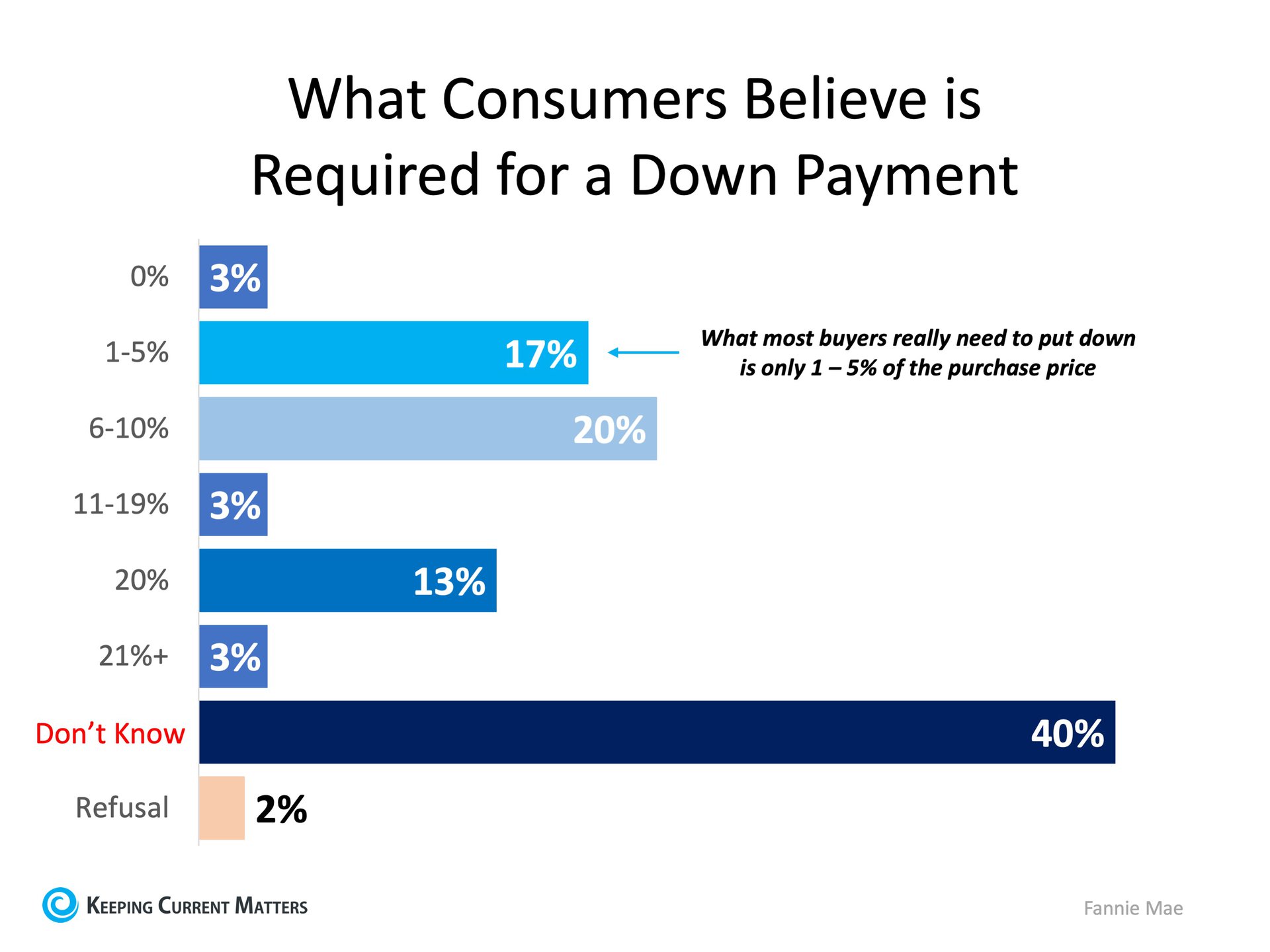
There is a long-standing misconception about down payment requirements. A survey from Fannie Mae shows only 17% of consumers know the minimum options are actually between 1 – 5% of the purchase price and 40% don’t know how much they need at all.
There
are many mortgage loans available that require as little as 3% down for
first-time buyers, and some ask for only 3.5% down from repeat buyers.
There are even loans available for Veterans that provide 0% down payment
options too.We’ve mentioned recently that you don’t need to come up with a 20% down payment to buy, and we’ve also shared how quickly you can save for a 3% or 10% down payment, depending on where you live. If you’re planning to put down just 3%, the research shows it may be possible in most states to have enough saved for a down payment in less than a year. That puts homeownership in a much closer reach for many potential buyers, maybe even you!
2. How can I get help with my down payment?
Regardless of the loans available, many buyers still need assistance with a down payment. The great news is, there are a lot of ways to tap into down payment assistance options. Here are just a couple of them:Assistance from Family Members
The National Association of Realtors (NAR) said, “a third of recent first-time buyers received down payment assistance from family members.” They also mentioned, “the average net worth of those aged 75 and over stands at $264,800…They just might offer the boost the next generation needs to become homeowners.”That means one of the ways to find help with a down payment is to accept a gift from a family member. If this is an option for you, make sure you talk to your loan officer before you accept the money, to ensure you document the process the way it is required by your loan. This way, it will be received properly and you can still potentially qualify.
Down Payment Assistance Programs
The reality is, not everyone has a loved one or a family member who can provide help with a down payment. There are, however, more than 2,500 down payment assistance programs available (by local areas like city, county, or neighborhood), and some of them are even specifically for first-time buyers.The gap, as mentioned in the same survey, is “only 23% of consumers are familiar with low down payment programs.”
That’s why it is so important to get familiar with these options by doing your homework before you plan to buy a home. Determine what is available in the area where you ultimately want to live, so you have all the details you need to take advantage of the down payment assistance option that is best for your family.
Bottom Line
If buying a home is one of your long-term goals, you may be able to get there sooner than you think by tapping into one of the many down payment assistance programs available.Monday, August 5, 2019
Weeds, Wildflowers or Invasive Plants?
If you have plants popping up in your yard that you didn’t plant, your first instinct may be that it’s a weed. You very well might be right; after all, what are weeds except for unwanted plants? At the same time, it’s possible that you’ve got wildflowers growing on your property. Depending on your view of wildflowers, that could change things significantly.
Wildflowers can do a lot of good for bees and other local pollinators, giving a boost to your local ecosystem and adding some beauty to boot. If the flower is from an invasive species, though, even something useful can cause a lot of harm over time. How are you supposed to keep all of this straight, so you’ll know what to pull and what to leave alone?
All About Weeds
So what is a weed? It’s an unwanted plant, sure, but it is also a plant that will compete with your existing flowers and other plant life for resources. A good example of this is clover in your lawn. As time goes by, the clover out-competes the grass and largely takes over your yard. You’ll face similar problems with any weed if it manages to become established.One of the things that makes weeds so competitive is that most of the time you can’t just pull them up and be done with them. Dandelions are typically considered a weed, and even if you pull up a dandelion early you’ll still see more in your yard. This is because they have deep root systems that continue growing even if the flower is pulled free. Really getting rid of weeds means figuring out what the weeds are and what the proper way to eliminate them is.
Weeds vs. Wildflowers
Some weeds (including the dandelions and clovers mentioned above) produce flowers and are usually frequented by bees and other pollinators. Despite this, they’re still considered weeds instead of wildflowers. So what’s the difference between the two?The primary difference between weeds and wildflowers is how they grow. Weeds tend to spread once established, growing to consume as many additional resources as they can and spreading their seeds as far as possible. Wildflowers are not as aggressive with their growth, instead growing densely in an area and spreading out from that area at a slower pace. This is why wildflowers are not generally considered competitive with existing plants; they aren’t likely to overrun an area in a short period of time and are much easier to contain to a single area.
Invasive Plant Species
One thing to keep in mind is that both weeds and wildflowers can be considered invasive. For that matter, even some of the plants you buy at nurseries are considered invasive in some regions! An invasive plant species is one that is not native to the area, so other species aren’t able to compete with it as effectively as they would with plants that are native to the area.This can be very problematic. Invasive species typically have different resource requirements than native species, so as they grow and spread, they may use resources in a way that shifts the balance of the local ecosystem. This shift can be very bad for local species, giving the invader a much stronger competitive advantage for those resources. In some cases, invasive species can actually eradicate native strains from the local area!
Identifying Unexpected Plants
If you want to promote the growth of wildflowers while getting rid of weeds and invasive plants, you need to learn to identify them. Search online to find out which weeds and invasive plants are common in your area, taking the time to search for images online so you can identify them even with slight variations in their appearances. There are also smartphone apps available that identify plants with a high degree of accuracy which you can use to identify weeds and invasive plants.Another option is to take photos or clippings of the plants in question to your local agricultural extension office. They should be able to identify the plant for you and can also tell you whether it’s a weed or an invasive plant. If it needs to be removed, they can also provide suggestions for the most effective removal techniques.
Friday, August 2, 2019
Existing Home Sales Point Toward a Good Time to Sell [INFOGRAPHIC]
Some Highlights:
- Existing Home Sales dropped 1.7% from May to a seasonally adjusted annual rate of 5.27 million in June.
- Low inventory levels are still a factor in the market. The current supply of homes for sale is at 4.4 months, which is less than the optimal 6-month supply.
- Median home prices were up 4.3% from June 2018, hitting $285,700. This marked the 88th consecutive month with year-over-year price gains.
Thursday, August 1, 2019
How to Judge the Impact of the Next Economic Slowdown on Housing
We’ve experienced economic growth for almost a decade, which is the longest recovery in the nation’s history. Experts know a recession can’t be too far off, but when will this economic slowdown actually occur?
Pulsenomics just released a special report revealing that nearly 6 out of 10 of the 90 economists, investment strategists, and market analysts surveyed believe the next recession will occur by the end of next year. Here’s the breakdown:
- 9% believe a recession will occur this year
- 50% believe it will occur in 2020
- 35% believe it will occur in 2021
- 6% believe it will occur after 2021
- Trade Policy
- Stock Market Correction
- Geopolitical Crisis
How might the recession impact real estate?
Challenges in the housing and mortgage markets were major triggers of the last recession. However, a housing slowdown ranked #9 on the list of potential triggers for the next recession, behind such possibilities as fiscal policy and political gridlock.As far as the impact the recession may have on home values, the experts surveyed indicated home prices would continue to appreciate over the next few years. They called for a 4.1% appreciation rate this year, 2.8% in 2020, and 2.5% in 2021.
Bottom Line
On the same day, in the same survey, the same experts who forecasted a recession happening within the next 18 months also claimed housing will not be the trigger, and home values will still continue to appreciate.
Subscribe to:
Posts (Atom)