You probably have an idea of your perfect basement fixed in your
head, but there are many decisions that go into achieving the space
you're envisioning. What are some commonly overlooked dos and don'ts
that you should know before you begin to finish or refinish your
basement?
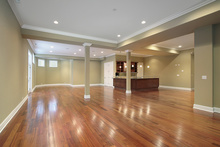 1. Assess Structural Issues Before You Begin
If your basement has any structural damage, sagging joists or leaky
walls, it is much easier to address these issues before you begin the
renovation. It is best to take care of any potential problems now—you
will thank yourself down the road.
2. Preplan the Order in Which You Will Build the Walls
It is significantly easier to build the walls on the floor and then
put them in place than to build them upright, but this requires careful
planning and a fairly large, open space.
Construct your outer walls first, and then work your way inward. If
possible, you should build all the interior walls and place them
somewhere out of the way before you start to put any of them up. This
will ensure that you have space to work while you are constructing the
final walls.
3. Complete Electrical and Plumbing Work Before Installing Walls
It is much easier to place your pipes if you do not have to cut
through several studs in the process. Attach the pipes to your foam
insulation—tape works, and it does not have to be permanently
attached—then place the wall in front of that. You will then be able to
attach the pipes to the studs and nail the studs to the wall.
The one downside to this method is that there will be a gap between
your wall and your foam insulation, slightly decreasing the available
floor space once your renovation is completed. However, this method is
much easier than the alternative, so you might want to consider whether
you really need an extra few inches of floor space.
4. Consider the Room’s Airflow
If you are planning to divide your basement into separate rooms or
areas, you will want to make sure that each portion has adequate
airflow. Using long ducts with an inline fan can be a straightforward
way to make sure that the heat from the furnace makes it all the way to
the other end of the room. You can wire these fans to run all the time
or to just turn on when your furnace turns on. They typically have their
own control panel, so you will be able to easily access your inline fan
when you need to.
Keeping these tips in mind can help make your basement remodeling as
straightforward as possible. Call or email us today if you have
additional questions.

 These two statistics are directly related to one another. As inventory has decreased and demand has increased, prices have been driven up.
