Showing posts with label home improvement. Show all posts

Tuesday, January 7, 2020

3 Benefits to Buying Your Dream Home This Year


Outside of a strong economy, low unemployment, and higher wages, there are three more great reasons why you may want to consider buying your dream home this year instead of waiting.

1. Buying a Home is a Great Investment

Several reports indicate that real estate is a good investment, topping other options such as gold, stocks, bonds, and savings. Why? Real estate helps build equity, a form of investing for you and your family. According to CoreLogic’s Equity Report,
“U.S. homeowners with mortgages (roughly 64% of all properties) have seen their equity increase by a total of nearly $457 billion since the third quarter 2018, an increase of 5.1%, year over year.”
This means the average homeowner gained approximately $5,300 in equity over the past year. If you want to start building your equity, put your housing costs to work for you through homeownership this year.

2. Mortgage Interest Rates Are Low

The Primary Mortgage Market Survey from Freddie Mac indicates that interest rates for a 30-year mortgage have fallen since November 2018 when they hit 4.94%. In their latest forecast, Freddie Mac expects rates to remain low, leveling out to a yearly average of 3.8% in 2020.
When you purchase a home at a low mortgage rate, it will impact your monthly mortgage payment, giving you the opportunity to buy more house for your money.

3. Investing in Your Family is a Win

There are some renters who haven’t purchased a home yet because they’re uncomfortable taking on the obligation of a mortgage. Everyone should realize that, unless you’re living rent-free with your parents, you’re paying a mortgage – either yours or that of your landlord.
Today, rental prices continue to increase, and when you’re paying your landlord’s mortgage instead of your own, you’re not the one earning the equity. As an owner, your mortgage payment is a form of ‘forced savings’ you can use later in life to reinvest in your family. You can use it for a variety of opportunities, such as saving for your children’s education, moving up to a bigger home, or starting your own business. As a renter, it can be more challenging to achieve those types of dreams without home equity working for you.

Bottom Line

Buying a home sooner rather than later could lead to substantial savings and long-term financial growth for you and your family. Reach out to a local real estate professional to determine if homeownership is the right choice for you this year.

Wednesday, December 18, 2019

What Causes Ice Build-Up on Homes?


When the weather is cooler than cool, it can turn ice cold. Unfortunately, this can lead to a lot of ice on and around your home. There are few things that can make you lose your chill faster in the winter than ice-related falls or damage to your home. Excessive ice build-up can create a number of potentially dangerous situations during the winter, so knowing what causes it (and more importantly, how to prevent it) is an important part of staying safe as temperatures drop.

Ice Build-Up

There are a few different ways that ice can build up during the winter. The most basic ice buildup is just a thin layer of ice that covers large portions of the house, sometimes accompanied with snow or other precipitation. This usually isn’t that big of a deal. Of greater concern are large icicles, sheets of ice and snow that build up on the roof, frozen gutters and built up ice at the edge of the roof known as an ice dam. These can be dangerous in several ways, both to you and to your house.

Frozen Gutters

When ice freezes in your gutters, it places extra strain on the screws or clips holding the gutters in place. Overflow can result in icicles hanging from the gutters, and if the buildup gets too heavy it can actually pull the gutters away from your roof. This is particularly dangerous because that heavy ice can then fall to the ground… bringing part of your gutter with it.

Ice Dams

If a portion of your roof becomes warm enough to melt some of the snow and ice on top of it, an ice dam can form. That melted snow or ice will trickle down the roof as water, reaching the eaves or gutter and encountering much colder materials where it will freeze again. This process continues until there is a buildup of ice at the very edge of the roof, with liquid water attempting to flow underneath it. The ice can overflow onto your gutters, while the water forces its way under shingles and possibly through other materials until it freezes and expands. The longer the ice dam continues this process, the thicker it becomes and the more damage it can do.

Other Forms of Ice

Ice sheets and icicles also present dangers during the winter. Icicles form when liquid water gradually drips at the same spot over time, freezing more and more until it grows large enough to potentially break free and fall to the ground. Ice sheets form similarly to ice dams, but instead of melting entirely the heat of the roof only melts a small portion of the ice sitting on it. The remaining ice is able to shift under its own weight due to the thin layer of water underneath it, and in some cases may slide down the roof and fall to the ground.

Removing Ice Build-Up

Care should be taken when trying to remove any form of ice build-up. Don’t use any sharp implement as it can damage your roof, gutters or walls. Instead, tap away at the ice with a blunt mallet or pole. Work in small sections, making sure that there is someone with you to brace your ladder in case the ice shifts. Apply a calcium chloride ice melter to the ice beforehand, if possible, to melt as much of it as you can (but don’t use rock salt or other chemicals that can damage your home.) Take every precaution you can before you start trying to remove the ice, because even when you’re prepared, it can be dangerous.

Preventing Build-Up

To prevent ice build-up, work on improving ventilation in your attic to ensure even heating and consult an energy efficiency expert to see if there are other steps you can take. Use a snow rake to remove snow and ice buildup from the roof before it can become a problem, and clean your gutters thoroughly before winter weather sets in. If you have a continuing problem with build-up, you might also consider replacing some or all of your existing roof with a standing-seam metal roof with a water-repellant membrane underneath it.

Wednesday, December 4, 2019

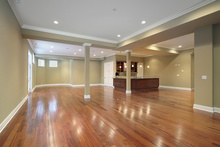
4 Tips for Refinishing Your Basement


You probably have an idea of your perfect basement fixed in your head, but there are many decisions that go into achieving the space you're envisioning. What are some commonly overlooked dos and don'ts that you should know before you begin to finish or refinish your basement?

1. Assess Structural Issues Before You Begin
If your basement has any structural damage, sagging joists or leaky walls, it is much easier to address these issues before you begin the renovation. It is best to take care of any potential problems now—you will thank yourself down the road.
2. Preplan the Order in Which You Will Build the Walls
It is significantly easier to build the walls on the floor and then put them in place than to build them upright, but this requires careful planning and a fairly large, open space.
Construct your outer walls first, and then work your way inward. If possible, you should build all the interior walls and place them somewhere out of the way before you start to put any of them up. This will ensure that you have space to work while you are constructing the final walls.
3. Complete Electrical and Plumbing Work Before Installing Walls
It is much easier to place your pipes if you do not have to cut through several studs in the process. Attach the pipes to your foam insulation—tape works, and it does not have to be permanently
attached—then place the wall in front of that. You will then be able to attach the pipes to the studs and nail the studs to the wall.
The one downside to this method is that there will be a gap between your wall and your foam insulation, slightly decreasing the available floor space once your renovation is completed. However, this method is much easier than the alternative, so you might want to consider whether you really need an extra few inches of floor space.
4. Consider the Room’s Airflow
If you are planning to divide your basement into separate rooms or areas, you will want to make sure that each portion has adequate airflow. Using long ducts with an inline fan can be a straightforward way to make sure that the heat from the furnace makes it all the way to the other end of the room. You can wire these fans to run all the time or to just turn on when your furnace turns on. They typically have their own control panel, so you will be able to easily access your inline fan when you need to.
Keeping these tips in mind can help make your basement remodeling as straightforward as possible. Call or email us today if you have additional questions.

Tuesday, October 15, 2019

What Color Should I Paint My Walls for the Best Return?


Painting your home is a great way to express yourself and let your personality shine through in your living space. The colors you choose for your rooms can really bring them to life in ways that few other changes can. However, a fresh coat of paint can do more than just give your rooms some personality. With the right colors, the paint you choose can even increase the likelihood that your house will sell at a good price when you put it on the market. To maximize this effect, there are a few colors you should consider (and a few you should avoid.)

Picking the Right Color

If you’re looking for a good color to apply throughout the house, consider a light shade of gray or beige. Both of these colors help to liven up rooms by adding just a bit of color but are neutral enough to let each room’s other accents take command. If you want something a bit different, taupe or so-called “greige” colors (mixes of gray and beige) can also work well. Some off-white colors, especially those with hints of brown or other warm shades, can also brighten up your rooms. Many of these colors pair well with white or beige baseboards and trim.

Good Kitchen Colors

If you’re going room by room, the kitchen is a good place to add a bit of darker color. Darker grays and grays mixed with darker blue shades do well in the kitchen; in fact, some reports have shown that homes with a gray-blue shade in the kitchen sell for an average of $1800 more than similar homes with other kitchen shades. Depending on the size of your kitchen and the amount of wall that’s actually visible behind the cabinets and appliances, you may be able to get away with hotter colors such as deep red or dark orange. Just avoid going too bright with whatever color you choose.

Living Room and Bath Colors

The living area and bathroom both benefit from more neutral shades such as beige and gray, but that doesn’t mean you can’t change things up in some cases. Consider the flooring and other fixtures as well as the amount of natural light that comes into the room and look at colors that take advantage of what’s already there. Light green, blue or brown can sometimes work wonderfully, especially if they include hints of gray to keep them from being too bright. You can even choose a bit stronger blues in the bathroom as homebuyers tend to respond well to blue there, just so long as you don’t go for too bright of a shade.

Bedroom Colors

Blue is a popular bedroom color, especially in shades such as cerulean. There are several bold color choices that you can get away with in the bedroom, though. Don’t go crazy with the bedroom colors and avoid anything that’s too bright – but giving the bedroom a splash of color in blue, green or even red or brown can work well so long as it’s not too much of a departure from the rest of the house.

Colors to Avoid

There are, of course, a few colors that you should avoid when painting your walls. Anything too bright or garish should obviously be avoided since it could turn off potential buyers. Black is another color to avoid; not only do many people find it depressing, but it will also be difficult for future homeowners to cover up. Also on the list of colors to avoid? Bright white. You might think that this would give your home a clean look or make it ready for a new homeowner to customize, but bright whites (especially when paired with white trim) often create a clinical look that actually makes buyers less interested in the space.