Showing posts with label Chapman Hall Realtors. Show all posts

Wednesday, January 15, 2020

Homes Are More Affordable Today, Not Less Affordable


There’s a current narrative that owning a home today is less affordable than it has been in the past. The reason some are making this claim is because house prices have substantially increased over the last several years.

It’s not, however, just the price of a home that matters.

Homes, in most cases, are purchased with a mortgage. The current mortgage rate is a major component of the affordability equation. Mortgage rates have fallen by over a full percentage point since December 2018. Another major piece of the affordability equation is a buyer’s income. The median family income has risen by approximately 3% over the last year.

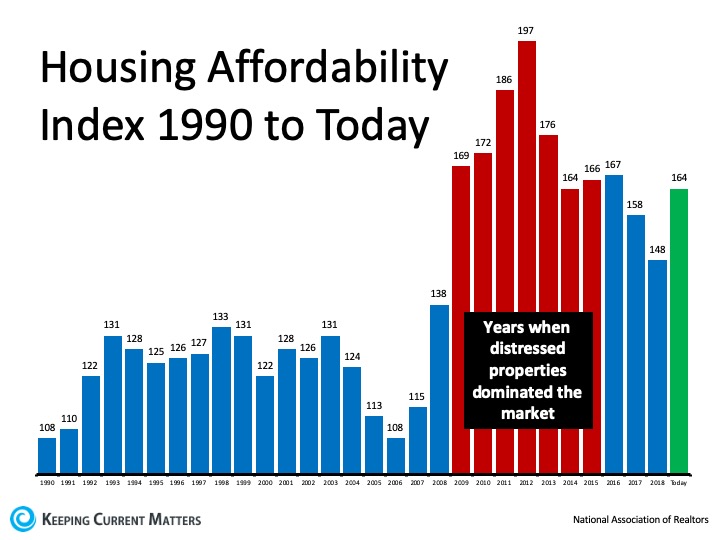
The National Association of Realtors (NAR) releases a monthly Housing Affordability Index. The latest index shows that home affordability is better today than at almost any point over the last 30 years. The index determines how affordable homes are based on the following:
“A Home Affordability Index value of 100 means that a family with the median income has exactly enough income to qualify for a mortgage on a median-priced home. An index of 120 signifies that a family earning the median income has 20 percent more than the level of income needed pay the mortgage on a median-priced home, assuming a 20 percent down payment so that the monthly payment and interest will not exceed 25 percent of this level of income (qualifying income).”
The higher the index, therefore, the more affordable homes are. Here is a graph showing the index since 1990:Homes Are More Affordable Today, Not Less Affordable | Keeping Current MattersObviously, affordability was better during the housing crash when distressed properties – foreclosures and short sales – sold at major discounts (2009-2015). Outside of that period, however, homes are more affordable today than any other year since 1990, except for 2016.

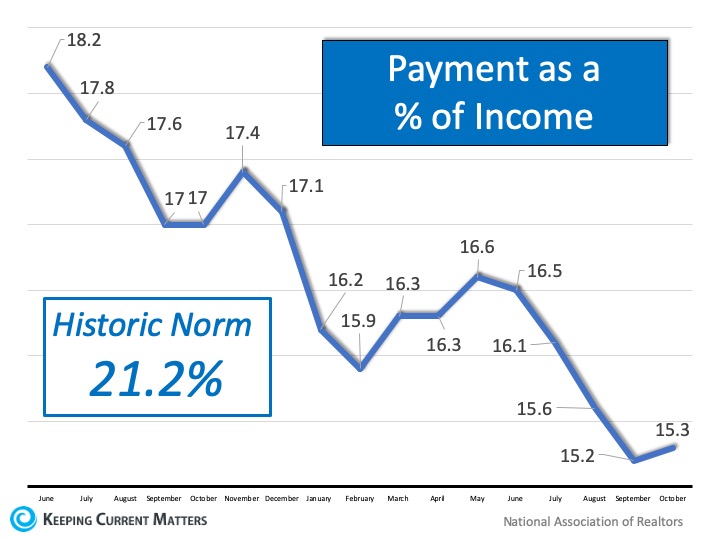
The report on the index also includes a section that calculates the mortgage payment on a median priced home as a percentage of the median national income. Historically, that percentage is just above 21%. Here are the percentages since June of 2018:Homes Are More Affordable Today, Not Less Affordable | Keeping Current MattersAgain, we can see that affordability is much better today than the historical average and has been getting better over the last year and a half.

Bottom Line

Whether you’re thinking about buying your first home or moving up to the home of your dreams, don’t let the false narrative about affordability prevent you from moving forward. From an affordability standpoint, this is one of the best times to buy in the last 30 years.

Thursday, January 9, 2020

There’s a Long Line of Buyers Waiting for Your House

If you’re following what’s happening in the housing market right now, you know that many people believe the winter months aren’t a good time to sell a home. As realtor.com Senior Economist George Ratiu recently noted,
“Sellers tend to be more reluctant to list during the colder time of year when the market typically makes a seasonal slowdown.”
However, a recent report by ShowingTime reveals how this year is different. Buyer activity is way up compared to the same time last year. The report explains,
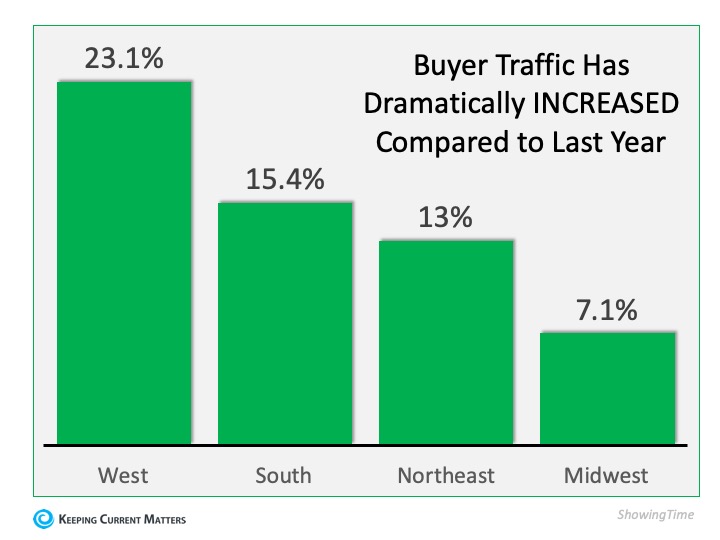
“The nation’s 12.6% growth in home showings compared to 2018 was the most significant jump in buyer traffic during the current four-month streak of year-over-year increases. The West Region saw the greatest growth in activity, with a 23.1% jump – the region’s greatest in the history of the Showing Index.”
The increase has spread across all four regions of the country, as the graph below shows:There’s a Long Line of Buyers Waiting for Your House | Keeping Current Matters

Bottom Line

Waiting for the “spring buyers’ market” may be a mistake this year. It seems the purchasers are already out and looking to buy.

Tuesday, January 7, 2020

3 Benefits to Buying Your Dream Home This Year


Outside of a strong economy, low unemployment, and higher wages, there are three more great reasons why you may want to consider buying your dream home this year instead of waiting.

1. Buying a Home is a Great Investment

Several reports indicate that real estate is a good investment, topping other options such as gold, stocks, bonds, and savings. Why? Real estate helps build equity, a form of investing for you and your family. According to CoreLogic’s Equity Report,
“U.S. homeowners with mortgages (roughly 64% of all properties) have seen their equity increase by a total of nearly $457 billion since the third quarter 2018, an increase of 5.1%, year over year.”
This means the average homeowner gained approximately $5,300 in equity over the past year. If you want to start building your equity, put your housing costs to work for you through homeownership this year.

2. Mortgage Interest Rates Are Low

The Primary Mortgage Market Survey from Freddie Mac indicates that interest rates for a 30-year mortgage have fallen since November 2018 when they hit 4.94%. In their latest forecast, Freddie Mac expects rates to remain low, leveling out to a yearly average of 3.8% in 2020.
When you purchase a home at a low mortgage rate, it will impact your monthly mortgage payment, giving you the opportunity to buy more house for your money.

3. Investing in Your Family is a Win

There are some renters who haven’t purchased a home yet because they’re uncomfortable taking on the obligation of a mortgage. Everyone should realize that, unless you’re living rent-free with your parents, you’re paying a mortgage – either yours or that of your landlord.
Today, rental prices continue to increase, and when you’re paying your landlord’s mortgage instead of your own, you’re not the one earning the equity. As an owner, your mortgage payment is a form of ‘forced savings’ you can use later in life to reinvest in your family. You can use it for a variety of opportunities, such as saving for your children’s education, moving up to a bigger home, or starting your own business. As a renter, it can be more challenging to achieve those types of dreams without home equity working for you.

Bottom Line

Buying a home sooner rather than later could lead to substantial savings and long-term financial growth for you and your family. Reach out to a local real estate professional to determine if homeownership is the right choice for you this year.

Tuesday, December 24, 2019

When a House Becomes a Happy Home


We talk a lot about why it makes financial sense to buy a home, but more often than not we’re drawn to the emotional reasons for homeownership.

No matter the size or shape of a living space, the feeling of a home means different things to different people. Whether it’s a certain scent or a favorite chair, the feel-good connections to our own homes are typically more important to us than the financial ones. Here are some of the reasons why

1. Owning your home offers stability to start and raise a family

From the best neighborhoods to the top school districts, even those without children at the time of purchase may have this in the back of their minds as a major reason for choosing the location of the home they purchase.

2. There’s no place like home

Owning your own home offers not only safety and security, but also a comfortable place where you can simply relax and kick-back after a long day. Sometimes, that’s just what we need to feel re-charged and truly content.

3. You have more space for you and your family

Whether your family is expanding, an older family member is moving in, or you need to have a large backyard for your pets, you can take all this into consideration when buying your dream home, so the space truly works for you.

4. You have control over renovations, updates, and style

Looking to actually try one of those complicated wall treatments you saw on Pinterest? Tired of paying an additional pet deposit for your apartment building? Maybe you want to finally adopt that fur-baby puppy or kitten you’ve been hoping for. Who’s to say you can’t do all of these things in your own home?

Bottom Line

Whether you’re a first-time homebuyer or a move-up buyer who wants to start a new chapter in your life, now is a great time to reflect on the intangible factors that make a house a happy home.

Friday, December 20, 2019

Bargain Buying 101: Things to Look for In a Deal


When you’re shopping for a new home, it’s not uncommon to face a little bit of sticker shock when it comes to price. This often leads to buyers trying to find a good balance between what they want and what they can afford. However, if you’re smart (and maybe a little lucky), you may be able to find some really great deals if you know what to look for.

One of the keys to finding a good deal is to look for properties that have qualities that might seem unappealing at first but that can be corrected fairly easily. Some of these things can drive prices down significantly but won’t require a major renovation to fix. If you’re hoping to find a bargain, here are a few things to look out for.

Ugly Paint

Even though there’s a lot of damage that can make your paint look ugly, sometimes the paint is just ugly because someone chose to bring together colors that should never coexist. It could be awful colors, it could be cheap paint that’s faded over time or it could even be an amateur paint job that never got touched up. Regardless of the reason for the ugly paint job, it can drive the price of the property down by thousands or even tens of thousands of dollars. It doesn’t even have to be the entire house; one ugly room can give you an opportunity to find a good deal on an otherwise nice property.

Landscaping Issues

A property’s yard is one of the first things that potential buyers see. If it’s obviously been neglected or has bald patches and overgrown flower beds, this can make a negative first impression because it suggests that the house itself might not have been taken care of either. That isn’t always the case, though. Even if the house is in good condition, a yard that needs some TLC can usually shave some money off the asking price and help you to net a great deal.

Fixtures and Accents

There are a lot of cosmetic elements in houses that can start looking rough over time. Handles and knobs can come loose or become tarnished, shutters can get loose, bathroom tiles can become cracked… the list goes on. While updating these issues won’t break the bank, many sellers will drop their asking price quite a bit due to how these little things make the house look.

Bathroom Concerns

A lot of buyers shy away from houses that have obvious bathroom problems, causing those sellers to bring the price down significantly in many cases. Depending on the extent of the issues in the bathroom, though, there could be a real opportunity here. If the problem with the bathroom is mostly cosmetic, then you may be able to fix it on the relatively cheap side and save a lot of money in the process. Just be sure to keep an eye out for signs of water damage or mold, since that could indicate problems that would be much more expensive to fix.

Previous Foreclosure

One other strategy for finding a deal is to look for bank-owned properties that were previous foreclosures. These properties are often sold at a discount because the bank isn’t necessarily trying to sell the house at market value, it’s simply trying to recoup the money it lost when it had to foreclose. The amount you can save will depend on both the bank and the amount of equity that was in the home when it was foreclosed, but you may luck into a great deal on a nice house this way. Just be aware that while there are legitimate programs that can help you find a foreclosed property, there are also some scammy ones out there as well.

Call in the Experts

Having your Realtor help you with your search is another way to find hidden gems and get a bargain on your next home. They can find you properties that need some of these little fixes and give you an idea of what sort of updates the property could need.

Friday, December 6, 2019

What is the Best Investment for Americans?


Some are reporting that there is trepidation regarding the real estate market in the United States. Apparently, the American people are quite comfortable.
Porch.com, a major network helping homeowners with their renovation projects, recently conducted a survey which asked Americans:
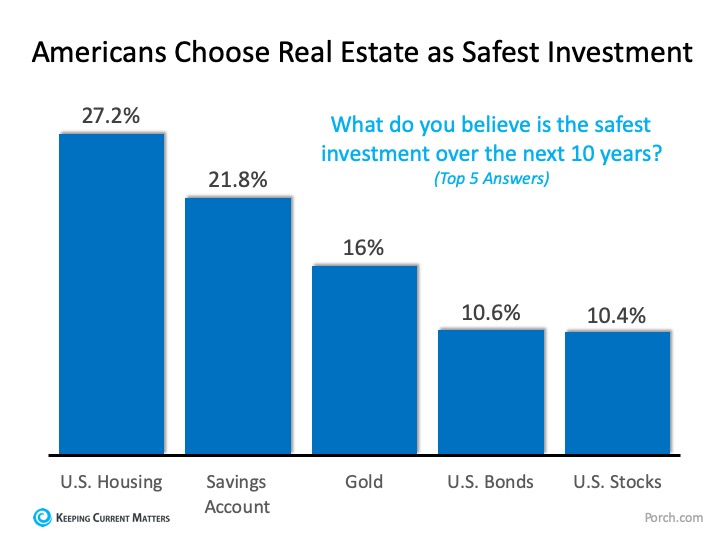
“What do you believe is the safest investment over the next 10 years?”
U.S. housing came in at number one, beating out other investments such as gold, stocks, bonds, and savings.
Here is a graph showing the top five investments Americans selected:What is the Best Investment for Americans? | Keeping Current MattersThe findings of the Porch.com survey also coincide with two previous surveys done earlier this year:
  1. The Federal Reserve Bank’s 2019 Consumer Expectations Housing Survey reported that 65% of Americans believe homeownership is a good financial investment, and that the percentage has increased in each of the last four years.
  2. The Gallup survey showed that Americans have picked real estate as the “best” investment for six straight years.

Bottom Line

Based on all three surveys done this year, we can see that Americans still believe in homeownership as a great investment, and that feeling continues to grow.

Monday, December 2, 2019

7 Ways To Add Value To Your Rental PropertyBoomers Can Maximize Net Worth with Real Estate Assets


You have spent years paying off your mortgage. Maybe you can afford to buy a rental or vacation property. Or buy your trophy home and entertain family and friends. Or perhaps you need some home equity to pay for college tuition. Lots of home and real estate decisions to make.
A big part of your net worth is built into your primary home or multiple homes if you previously bought investment properties. The big question for you is “do you have visibility into what the net worth really is and what is the forecasted value of this key part of your retirement?”

Remembering Net Worth

Your net worth regarding your home has two financial components to it. First is the estimated value of the house. Real estate markets are always changing so it is a good idea to get an update over how the housing marketing is doing in your neighborhood and for your specific house. Another good metric to calculate is how much as your home appreciated from your original purchase price.
Next is knowing the combined loan balances on your primary mortgage and any other home equity loans or lines of credit you may have taken out. Subtract the estimated value of your home from these remaining loan balances and see what is the equity or net worth of your home.

Making Future Decisions

If you bought your house over 10 to 15 years ago, you probably have a decent amount of home equity built up. But another key factor is to try and forecast what your home value will be in 3 to 4 years and where your remaining loan balances will be. This data will essentially forecast your home equity a few years from now.
Once you have this, then you are better prepared to make various financial decisions depending on your situation. You might be considering how much equity you could take out of the house. This equity can be used for things like a college tuition or a big home improvement project you have been wanting.  Maybe you want the equity for a down payment on your first rental property that could generate retirement income for you. Or you really want that vacation house you have been dreaming of.
Being aware of these financial aspects of your home puts you in the best position possible when making financial decisions on how to maximize the value of your home and possibly other real estate assets.

Don’t Forget the Expenses

You still need to track your ongoing home expenses such as the mortgage, property tax, utilities and other services. One thing that catches many people off guard if the home is over 15 years old is the need to budget for annual fix it and repair costs.
You can minimize these costs by staying on top of preventative maintenance by having a system to remind you of these seasonal tasks. But ultimately things like hot water heaters, garage door springs, and seals on double pane windows eventually wear out. You should have a budget for replacement of these items.
If you have been planning on finally getting around to that big home improvement project, make sure you have a good budget to manage it. Project costs can get out of hand quickly depending on the product and brand choices you make. Remember to track the costs, receipts and warranties because this impacts the tax basis in the house for future tax purposes. And details of your remodel projects are helpful in the future when you want to sell the house.

Valuable Hidden Assets

The personal property in your house has probably grown over the years. You have acquired more furniture, electronics, tools, etc. for yourself and your kids. You may even have some valuable items such as art, antiques, and other collectibles. Make sure you have a home inventory to itemize these possessions to make sure you understand the overall value. And it is important to make sure these are properly insured as part of your insurance policy.
With a lot of your net worth linked to your home, it is wise to get handle on this as part of your overall personal finance situation. Be a smart homeowner by protecting and growing your net worth, minimizing expenses, and having all the financial data about your home (or homes) at your fingertips to guide you in making good real estate financial decisions.

Tuesday, October 29, 2019

Thinking of Selling Your Home? The Waiting Is The Hardest Part.


Tom Petty famously penned the words, “the waiting is the hardest part” in his early 80’s hit song The Waiting, and his thought process can surprisingly also be applied to individuals considering selling their homes today. Traditional thinking would suggest it may be best to wait until the spring to sell when there is a flood of buyers in the market, but right now may in fact be an even better time to list your home.

We can see the overall economy is good: wages are rising, there are near record-low unemployment rates, and mortgage interest rates are still very low too. Over the past 10+ years the housing market has stabilized, so what (if anything) is the biggest challenge in the housing market today?
The answer is simple: it’s inventory.

According to the Existing Home Sales Report by the National Association of Realtors,
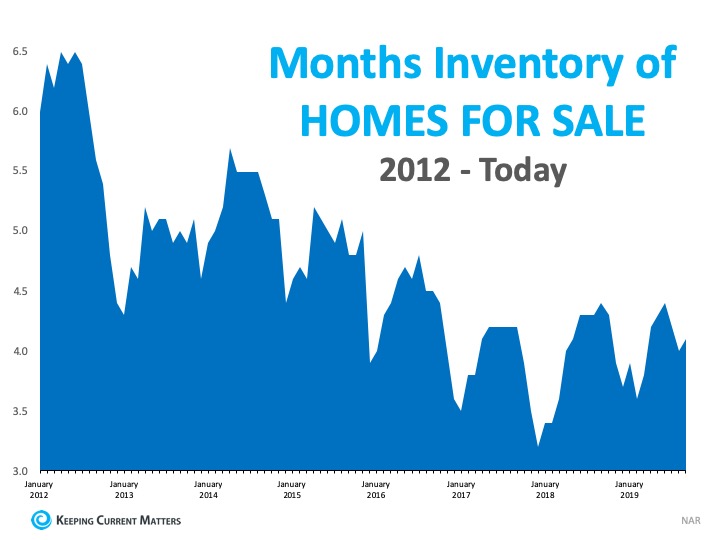
“Total housing inventory at the end of September sat at 1.83 million, approximately equal to the amount of existing-homes available for sale in August, but a 2.7% decrease from 1.88 million one year ago. Unsold inventory is at a 4.1-month supply at the current sales pace, up from 4.0 months in August and down from the 4.4-month figure recorded in September 2018.”

What does this mean?

While homes are coming to the market, they aren’t coming fast enough! Right now, across the country there is less than 6 months of overall inventory of homes for sale, putting us in a seller’s market. The challenge is that there are not enough homes for sale to increase the supply needed for the number of people who want to buy, especially in the starter and middle-level markets.
To be in a balanced market (meaning we have enough inventory for the number of buyers in the market), we need to have 6 months of inventory available. Today we are nowhere near that number, and as a matter of fact, the last time we reached that height was August 2012 (as shown in the graph below):Thinking of Selling Your Home? The Waiting Is The Hardest Part. | Keeping Current MattersWhen we look at the inventory challenge today, we can see that now is a great time to sell your house. Truthfully, waiting may end up being the hardest part in the long run. This landscape is a great place for sellers who own homes in the starter and middle-level markets to take the opportunity to sell in a sellers’ market, before inventory catches up with demand. Serious buyers are actively in the market and ready to make a move at this time of year. When inventory is limited at the lower end, like it is today, selling before more homes are listed could mean a significant seller’s advantage to those who are ready to move up. The upper level of the market has much more inventory available to move into, so it’s a win across the board.

Bottom Line

If you’re considering selling your home, don’t wait – now is the time to make your move! Take advantage of the high housing demand and the low inventory of homes for sale at the lower end of the market and use your purchasing power while mortgage rates are low to go after the move-up home of your dreams. The best thing you can do is connect with a local real estate professional and decide if now is the right time for you.

Tuesday, October 1, 2019

What to Expect from Your Home Inspection


You made an offer and it was accepted. Your next task is to have the home inspected prior to closing. Agents often recommend you make your offer contingent upon a clean home inspection.
This contingency allows you to renegotiate the price you offered for the home, ask the sellers to cover repairs, or in some cases, walk away if challenges arise. Your agent can advise you on the best course of action once the report is filed.

How to Choose an Inspector

Your agent will most likely have a short list of inspectors they’ve worked with in the past to recommend to you. HGTV suggests you consider the following five areas when choosing the right home inspector for you:
1. Qualifications – Find out what’s included in your inspection and if the age or location of your home may warrant specific certifications or specialties.
2. Sample Reports – Ask for a sample inspection report so you can review how thoroughly they will be inspecting your dream home. In most cases, the more detailed the report,
the better.
3. References – Do your homework. Ask for phone numbers and names of past clients who you can call to discuss their experiences.
4. Memberships – Not all inspectors belong to a national or state association of home inspectors, and membership in one of these groups should not be the only way to evaluate your choice. Membership in one of these organizations does, however, often mean continued training and education are required.
5. Errors and Omission Insurance – Find out what the liability of the inspector or inspection company is once the inspection is over. The inspector is only human, after all, and it is possible they might miss something they should see.
Ask your inspector if it’s okay for you to tag along during the inspection, so they can point out anything that should be addressed or fixed.
Don’t be surprised to see your inspector climbing on the roof or crawling around in the attic and on the floors. The job of the inspector is to protect your investment and find any issues with the home, including but not limited to: the roof, plumbing, electrical components, appliances, heating and air conditioning systems, ventilation, windows, fireplace and chimney, foundation, and so much more.

Bottom Line

They say, ‘ignorance is bliss,’ but not when investing your hard-earned money into a home of your own. Work with a professional you can trust to give you the most information possible, so you can make the most educated decision about your purchase.

Thursday, September 26, 2019

Homeowners Are Happy! Renters? Not So Much.


When people talk about homeownership and the American Dream, much of the conversation revolves around the financial benefits of owning a home. However, two recent studies show that the non-financial benefits might be even more valuable.

In a recent survey, Bank of America asked homeowners: “Does owning a home make you happier than renting?” 93% of the respondents answered yes, while only 7% said no. The survey also revealed:
  • More than 80% said they wouldn’t go back to renting
  • 88% agreed that buying a home is the “best decision they have ever made
  • 79% believed owning a home has changed them for the better
Those surveyed talked about the “emotional equity” that is built through homeownership. The study says more than half of current homeowners define a home as a place to make memories, compared to 42% who view a home as a financial investment. Besides building wealth, the survey also showed that homeownership enhances quality of life:
  • 67% of current homeowners believed their relationships with family and loved ones have changed for the better since they bought a home
  • 78% are satisfied with the quality of their social life
  • 82% of homeowners said they were satisfied with the amount of time they spend on their hobbies and passions since purchasing a home
  • 75% of homeowners pursued new hobbies after buying a home
Homeowners seem to be very happy.

Renters Tell a Different Story…

According to the latest Zillow Housing Aspirations Report45% of renters regret renting rather than buying — more than five times the share of homeowners (8%) who regret buying instead of renting. Here are the four major reasons people regret renting, according to the report:
  • 52% regret not being able to build equity
  • 52% regret not being able to customize or improve their rentals
  • 50% regret that the rent is so high
  • 49% regret that they lack private outdoor space
These two studies prove that renting is just not the same as owning.

Bottom Line

There are both financial and non-financial benefits to homeownership. As good as the “financial equity” is, it doesn’t compare to the “emotional equity” gained through owning your own home.

Friday, September 6, 2019

Selling Your Home in the Off Season


Spring and summer are traditionally seen as the best times to sell your house. Research has actually shown that homes sold during the first half of May tend to sell faster and sell for a higher average price than house sales at any other time of the year. Once you get into fall and winter, buyer competition doesn’t seem as fierce and average prices start to drop. This doesn’t mean you can’t sell during the off season, of course; it just means that you need to maximize the value of your home to get the most out of your property.

There’s Always a Buyer

Even though it’s the off season, there will always be someone out there who’s looking to buy a home. There are traditionally fewer home sales during the fall and winter, but that doesn’t mean that there aren’t any. It’s easy to assume that you’ll have to take what you can get if you find someone who’s interested, but that’s definitely not the case. While there’s a good chance that you’re a motivated seller if you’re selling during the off season, keep in mind that many home buyers are motivated as well. It’s true that you might not get as much out of your home as you would near the start of summer, but don’t think that you’re necessarily going to have to settle either.

Aggressive Pricing Strategies

With that said, you’re more likely to sell quickly if you’re more aggressive with your pricing strategy than you would be during the summer. Don’t price your home for less than its worth – but cut a little closer to its actual value than you might otherwise. Determine the actual value of the home and what you need to get from the sale, then add a little more to the total to give yourself some wiggle room for negotiations. This lets you present the home as a great deal and still yield a bit to the buyer, convincing them that they really are getting a great deal on the property and need to make the purchase before somebody else comes along.

Appearance Matters

It’s always important to have your house looking its best when you’re trying to make a sale, but it’s especially important during the off season. This can be a chore, especially if you have trees dropping leaves all over the yard, but it’s worth it. If at all possible, your home should be the one that stands out from the neighborhood because it has fresher paint, a neater lawn, cleaner windows and any other adjustments you can make to improve its overall look. The more you can wow potential buyers, the more likely they are to actually buy.

Cut Out the Clutter

If you’re in the process of packing while trying to sell your home, take any boxes and anything that’s ready to go and get it out of the house and into a storage unit or elsewhere. The same goes for most of the clutter that we build up in our daily lives. When a potential buyer comes to look at the house you should ideally have everything pared down to some basic furniture, standard amenities and perhaps a few picture frames or other personal items that are tastefully presented around the house. You want buyers to see the house for its beauty and be able to picture their lives there, not to see how the house looks overflowing with your life.

Be Prepared

If you really want to get a potential buyer’s attention, show them that you’re prepared to answer any questions they might have about the house. Get a pre-inspection so you’ll know about any issues that you might not have noticed, making necessary repairs or disclosures as needed. Gather up documentation about the heating and cooling system, any maintenance that’s been performed and even details like the energy ratings on the windows. If you really want to go the extra mile, track down photos of the house from different seasons or pictures of any flowers or trees in bloom so that potential buyers will have an idea of what they can look forward to.

Tuesday, July 30, 2019

How to Increase Your Equity Over the Next 5 Years


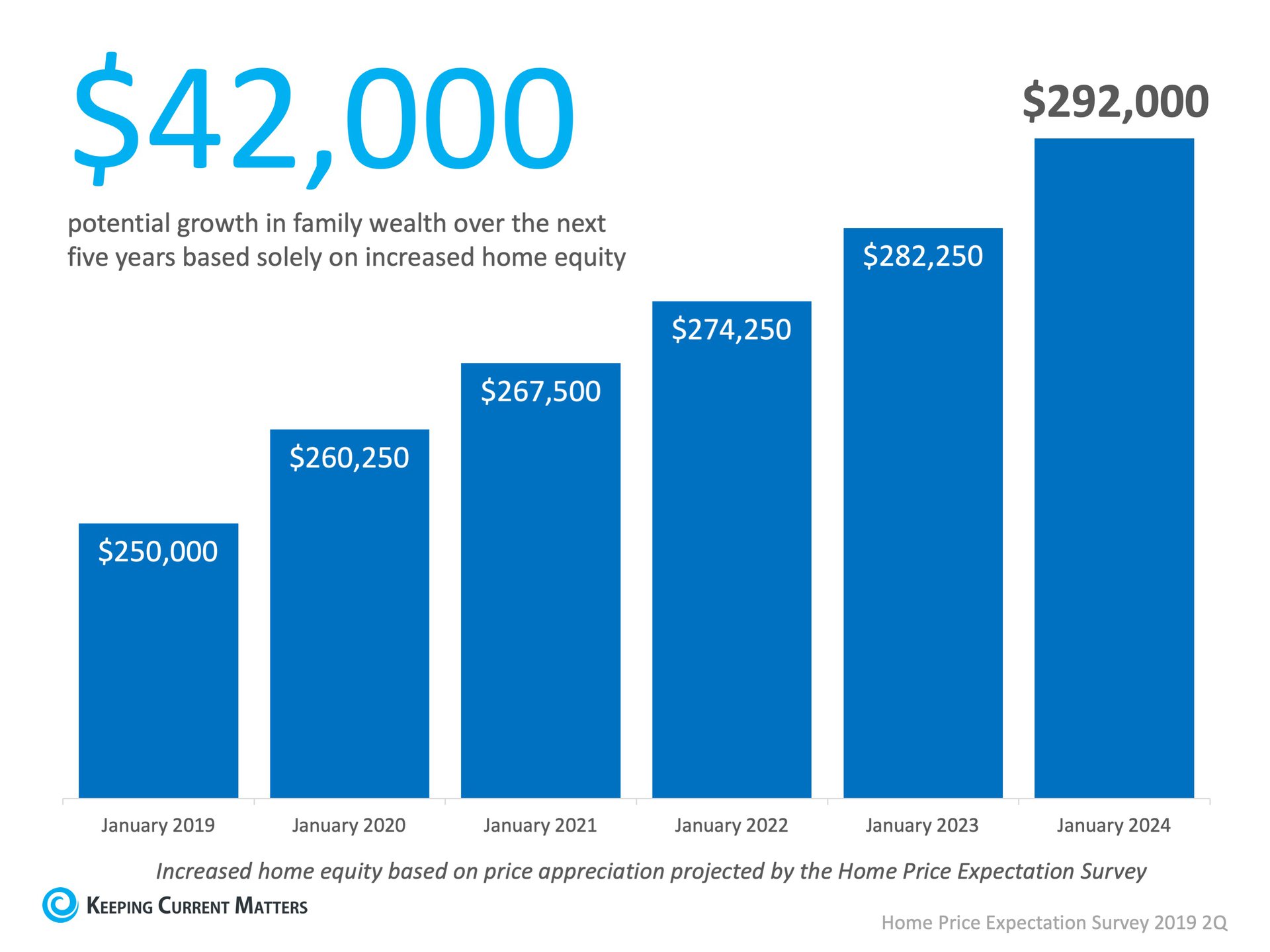
Many of the questions currently surrounding the real estate industry focus on home prices and where they are heading. The most recent Home Price Expectation Survey (HPES) helps target these projected answers.

Here are the results from the Q2 2019 Survey:
  • Home values will appreciate by 4.1% in 2019
  • The average annual appreciation will be 3.2% over the next 5 years
  • The cumulative appreciation will be 16.8% by 2023
  • Even experts representing the most “bearish” quartile of the survey project a cumulative appreciation of over 6.7% by 2023

What does this mean for you?

A substantial portion of family wealth comes from home equity. As the value of a family’s home (an asset) increases, so does their equity.

Using the projections from the HPES, here is a look at the potential equity a family could earn over the next five years if they purchased a $250,000 home in January of 2019:How to Increase Your Equity Over the Next 5 Years | Keeping Current MattersBased on gains in home equity, their family wealth could increase by $42,000 over that five-year period.

Bottom Line

If you don’t yet own a home, now may be the time to purchase. Owning or moving up to your dream home could allow you to ride the increase in equity of a growing asset.
Home Price Expectation surveyEvery quarter, Pulsenomics surveys a distinguished panel of over 100 economists, investment strategists, and housing market analysts regarding their 5-year expectations for future home prices in the United States.

Tuesday, July 23, 2019

What Do I Need to Know About Mold?


There are few things that homeowners dread more than mold in the house. You’ve likely heard horror stories about people living with mold infestations that made them seriously ill. Is this just hype, or is there a real danger to having mold in your home? More importantly, what can you do if you find mold growing somewhere in the house?

What Is Mold?

Mold is a broad group of fungi, with thousands of species and subspecies around the world that typically prefer dark and damp habitats. Often fuzzy in appearance (though occasionally slimy or cottony), molds spread across materials and break them down to get the nutrients the mold needs to survive and thrive. Instead of seeds, molds release single-celled spores that in many cases are too small to see with the naked eye; these spores float through the air to land on a variety of surfaces, beginning growth once they find themselves in a suitable habitat. Though molds are made up of a number of individual stalks fibers, a connected clump of mold is considered to be a single living entity.

Types of Mold

There are several common types of mold that you might see around the house. While some of these may not be inherently dangerous, any mold can trigger reactions in anyone with an allergy or sensitivity. The five most common of these molds are:
  • Aspergillus: One of the most common indoor molds, it often appears green, blue-green or gray but can also appear white or even yellow.
  • Cladosporium: A black or green mold that has an appearance like ground pepper, it commonly grows on smooth surfaces like toilets and painted walls but can also grow in fabrics and rugs.
  • Ulocladium: A black mold that grows in wet areas, especially in cracks and corners; it is most common in homes with water damage and active leaks.
  • Aureobasidium: Varying in color from pink to brown or black, this mold most commonly grows behind wallpaper, on painted surfaces and on wood.
  • Stachybortrys: The infamous “black mold”, it features a slimy dark green or black color and thrives in areas that are damp and maintain high humidity for weeks.

Is Mold Actually Dangerous?

While many molds are allergens, most will not cause severe reactions unless you have a mold sensitivity or have other health problems that make you more prone to infection. However, some molds (such as black mold) actually are toxic and can make you very sick if you’re around them for too long. Symptoms of a mold allergy or toxic mold exposure can include a chronic cough, skin rashes, fatigue, difficulty focusing and even pain or infection in your sinuses, eyes and ears.

Mold Testing and Removal

If you suspect that you have mold problems, there are home tests available to help you identify the type of mold in your home. These should only be a first step, however, as they often aren’t enough to definitively show you the scope of your mold problem. Call in an expert to confirm the results of your test or take a scraping of the mold and have it analyzed. Be sure to wear a dust mask or other breathing protection if you aren’t sure what type of mold you’re dealing with until the problem is taken care of.

For many mold infestations, getting rid of leaks or other sources of humidity is a great way to slow or even stop mold growth. Mold can cause serious damage over time, however, so you may need professional mold removal and repair services if you can’t get the problem under control early.
Is your home in need of some serious mold removal?

Thursday, July 11, 2019

Americans’ Powerful Belief in Homeownership as an Investment


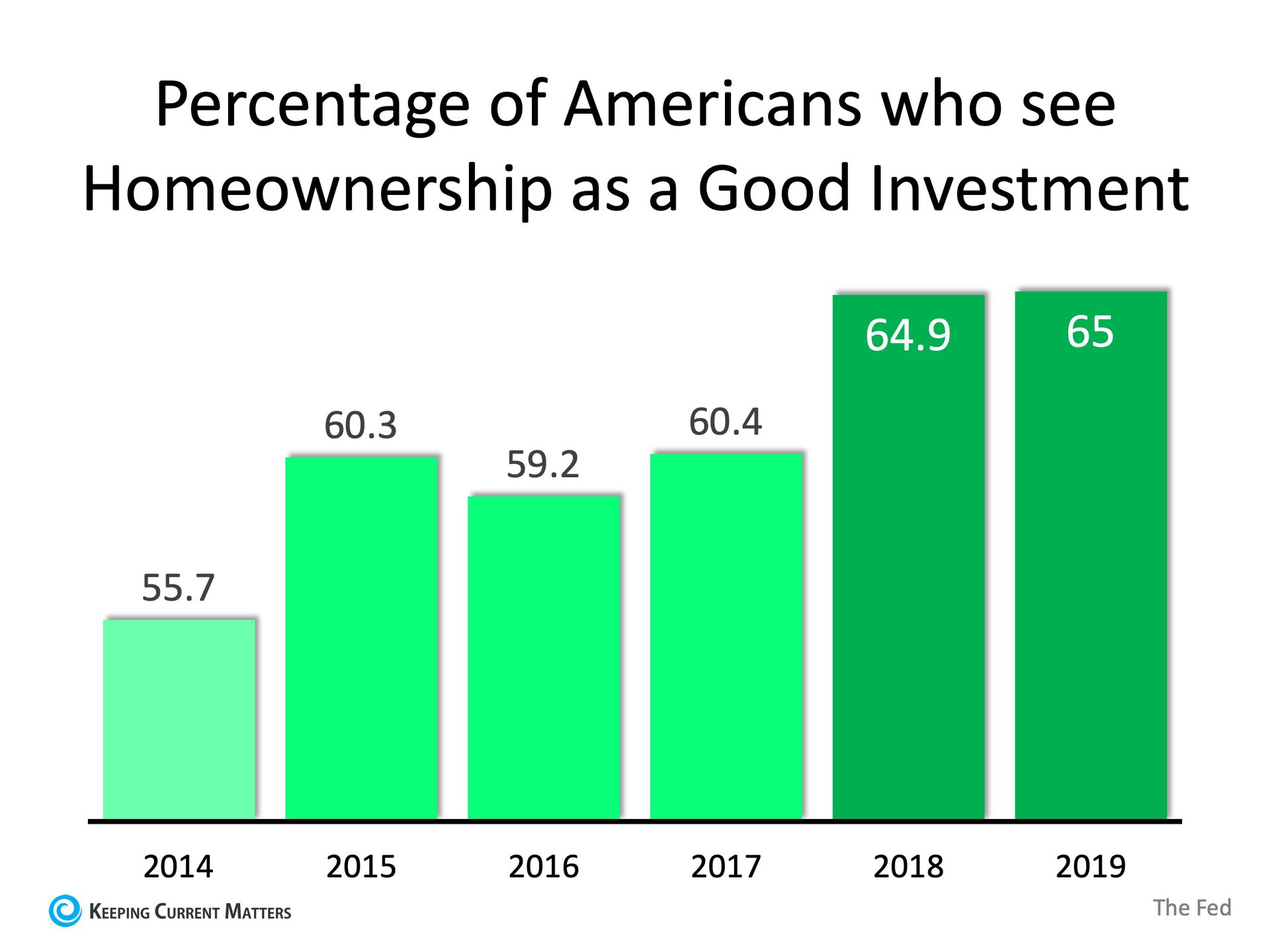
The Federal Reserve Bank (The Fed) recently released their 2019  Survey of Consumer Expectations Housing Survey. The survey reported that 65% of Americans believe homeownership is a good financial investment. Since 2014, the percentage has increased by over nine percent.Americans' Powerful Belief in Homeownership as an Investment | Keeping Current MattersThe Fed’s survey also showed that when the results are broken down by age, education, income, or region of the country, more than 55% of Americans in each category see homeownership as a good investment.

This coincides with a recent Gallup survey of Americans which revealed that real estate was their number one choice for the best long-term investment when compared to stocks, savings accounts or gold.

Bottom Line

Americans’ belief in residential real estate as a good financial investment continues to grow as the housing market returns to normalcy.

Monday, July 8, 2019

Now’s the Time to Move-Up and Upgrade Your Current Home!


Homes priced at the top 25% of the price range for a particular area of the country are considered “premium homes.” In today’s real estate market, there are deals to be had at the higher end! This is great news for homeowners wanting to upgrade from their current house.

Much of the demand for housing over the past couple of years has come from first-time buyers looking for their starter home. Many of the more expensive homes listed for sale have not seen as much interest.


According to ILHM’s Luxury Report, this mismatch in demand and inventory of luxury and premium homes has created a Buyer’s Market. For the purpose of the report, a luxury home was defined as one that costs $1 million or more.
“A Buyer’s Market indicates that buyers have greater control over the price point. This market type is demonstrated by a substantial number of homes on the market and few sales, suggesting demand for residential properties is slow for that market and/or price point.”
The authors of the report were quick to point out that current conditions at the higher end of the market are no cause for concern.
“While luxury homes may take longer to sell than in previous years, the slower pace, increased inventory levels and larger differences between list and sold prices, represent a normalization of the market, not a downturn.”
Luxury can mean different things to different people. To one person, luxury is a secluded home with plenty of property and privacy. To another, it could be a penthouse at the center of a bustling city. Knowing what characteristics mean luxury to you will help your agent find you the home of your dreams.

Bottom Line

If you are debating upgrading your current house to a premium or luxury home, now is the time!

Friday, June 28, 2019

Americans Rank Real Estate Best Investment for 6 Years Running!


Some Highlights:

  • Real estate has outranked stocks/mutual funds, gold, savings accounts/CDs, and bonds as the best long-term investment among Americans for the last 6 years.
  • Stock owners are more positive about real estate than stocks as an investment.
  • Of the 4 listed, real estate is the only investment you can also live in!

Wednesday, June 12, 2019

3 Things to Know in the Housing Market Today!


A lot is happening in the world, and it’s having a direct impact on the housing market. The reality is this: some of it is positive and some of it may be negative. Some we just don’t know yet.


The following three areas of the housing market are critical to understand: interest rates, building materials, and the outlook for an economic slowdown.

1. Interest Rates

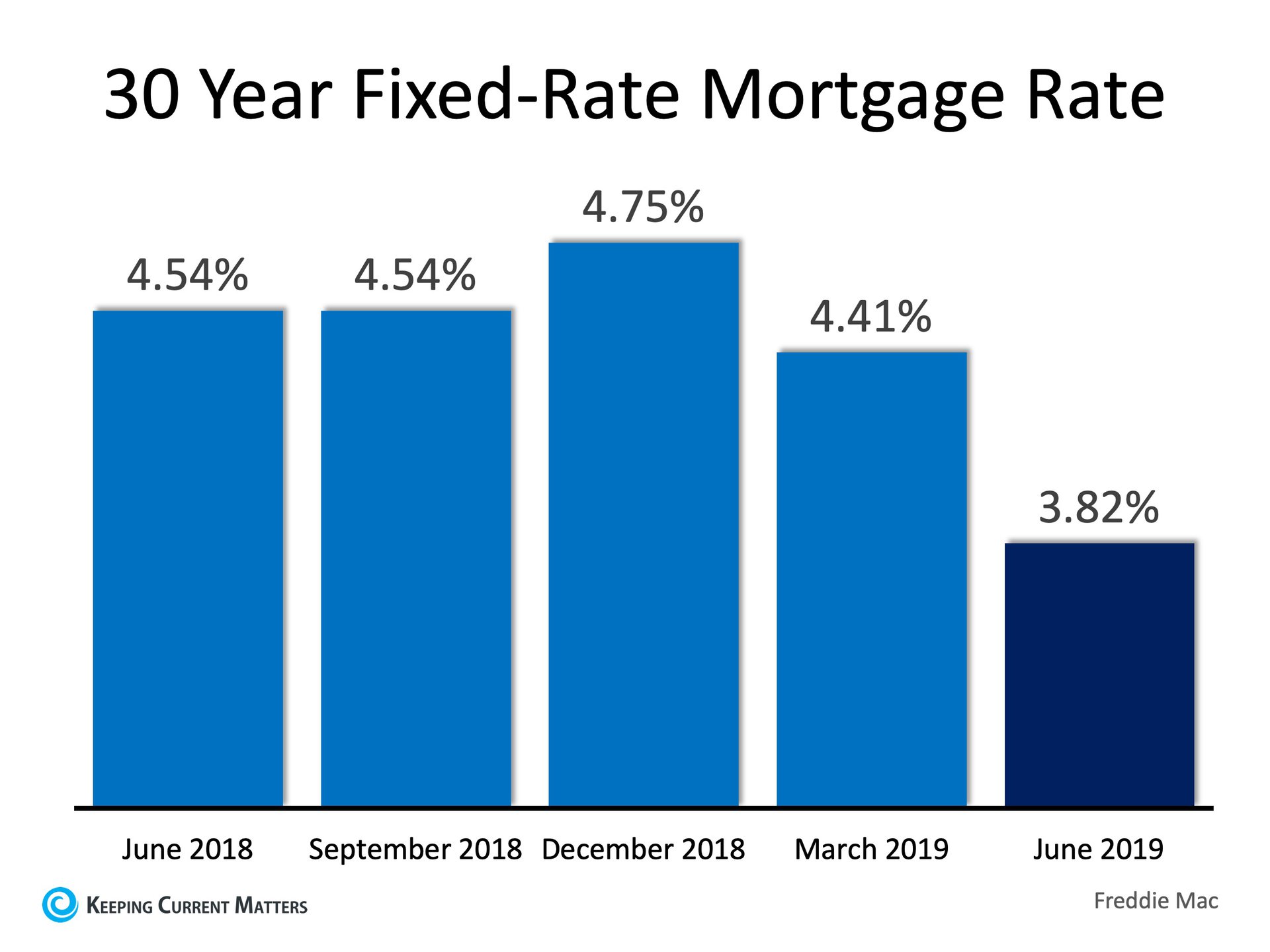
One of the most important things to consider when buying a home is the interest rate you will be charged to borrow the money. In our recent post we posed the question, “Are Low Interest Rates Here To Stay?” The latest information from Freddie Mac makes it appear they are. We are currently at a 21-month low in interest rates.3 Things to Know in the Housing Market Today! | Keeping Current Matters

2. Building Materials

Talk of tariffs could also affect the housing market. According to a recent article, the National Association of Home Builders reports that as much as $10 billion in goods imported from China are used in homebuilding. Depending on the outcome of the tariff and trade discussions between several countries, there could be as much as a 25% boost in the cost of building materials.

3. Economic Slowdown

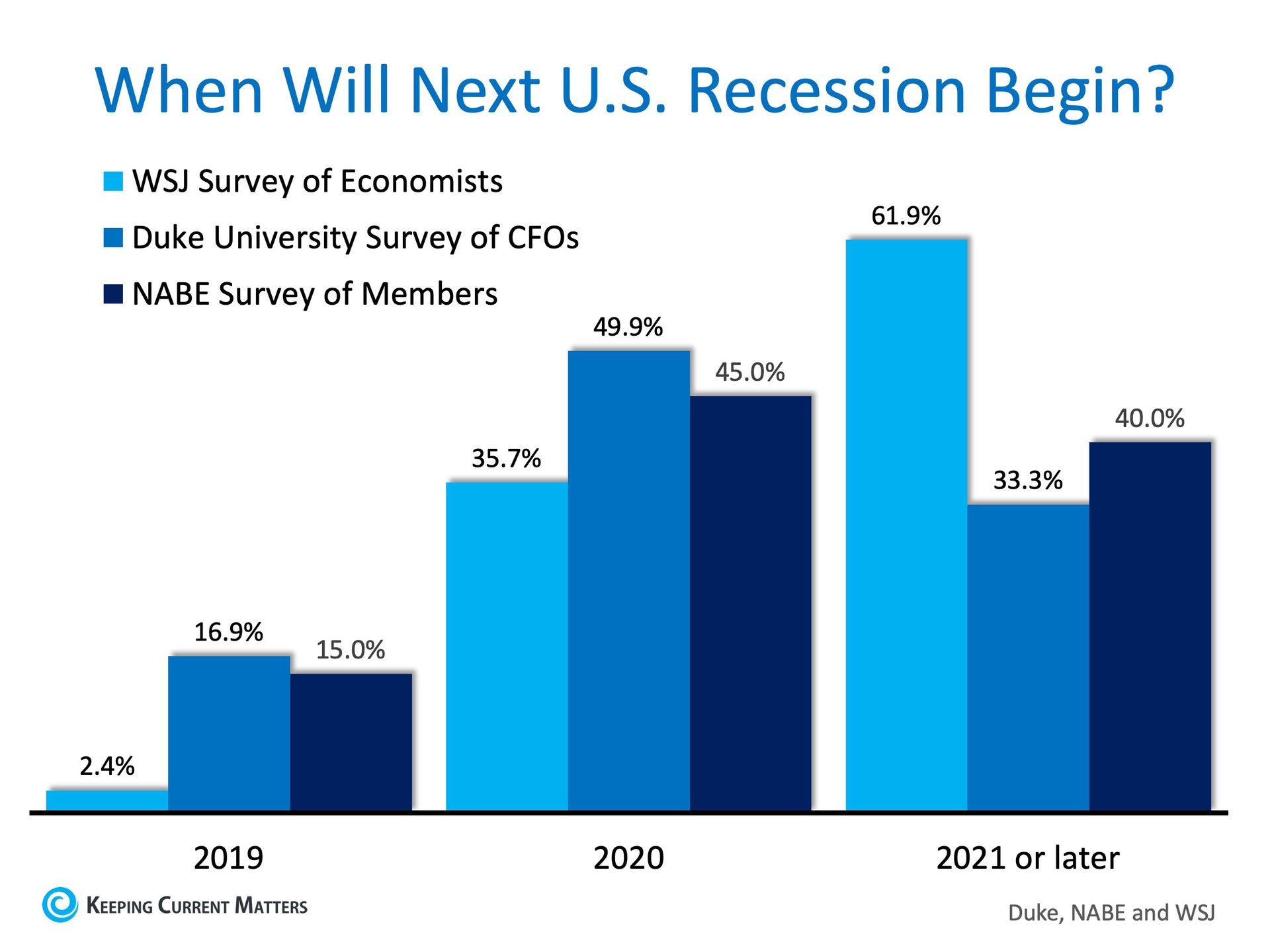
In a prior blog post on this topic, we began the year with many economic leaders thinking we could expect a recession in late 2019 or early 2020. As spring approached, we reported that economists had started to push that projection past 2020.  Now, three leading surveys indicate that it may begin in the next eighteen months.3 Things to Know in the Housing Market Today! | Keeping Current Matters

Bottom Line

We are in a strong housing market. Wages are increasing, home prices are appreciating, and mortgage rates are the lowest they have been in 21 months.  Whether you are thinking of buying or selling, it’s a great time to be in the market.

Wednesday, June 5, 2019

The Feeling You Get from Owning Your Home

We often talk about the financial reasons why buying a home makes sense. But, more often than not, the emotional reasons are the more powerful and compelling ones.

No matter what shape or size your living space is, the concept and feeling of home can mean different things to different people. Whether it’s a certain scent or a favorite chair, that feeling of safety and security you gain from owning your own home is simultaneously one of the greatest and most difficult to describe.


Frederick Peters, a contributor for Forbes, recently wrote about that feeling, and the pride that comes from owning your own home.
“As homeowners discover, living in an owned home feels different from living in a rented home. It’s not just that an owner can personalize the space; it touches a chord even more fundamental than that.
Homeownership enhances the longing for self-determination at the heart of the American Dream. First-time homeowners, young or old, radiate not only pride but also a sense of arrival, a sense of being where they belong. It cannot be duplicated by owning a 99-year lease.”

Bottom Line

Owning a home brings a sense of accomplishment and confidence that cannot be achieved through renting. If you are debating renewing your lease, meet with a local real estate professional first. They can help answer any questions you have about what your next steps should be and what is required in today’s market!

Tuesday, June 4, 2019

5 Lawn Care Mistakes That Can Destroy Your Yard


Everyone wants a lawn covered with lush green grass and verdant plants. But what mistakes are preventing you from achieving this? Read on to learn about some common lawn care mistakes and how to prevent them.


1. Cutting Grass Too Short
Experts advise cutting off no more than 30 percent of the grass blade in a single pass. Cutting your grass too short or trimming it down to half of its previous size might be appealing—after all, if your grass is shorter, it will take longer to grow back—but this is not good for the long-term health of your lawn.
In addition to damaging the blade, cutting your grass too short can indirectly damage the root system. This damage will limit the grass's ability to collect light and absorb water, leading to wilting or even plant death. Keeping your grass longer will help it to grow fuller and become more lush.

2. Using Only One Type of Seed
Using a mixture of seeds will result in a mixture of plant types. Different types of grass will survive better in different conditions. The different species will balance out each other's strengths and weaknesses, resulting in a more resilient lawn overall. This will make your turf more likely to survive extreme weather conditions such as prolonged heat or drought.

3. Ignoring the pH of the Soil
The optimal pH for grass is between 6.0 and 6.5. For reference, a neutral pH, such as that of water, is 7.0. This means that your lawn's soil should be slightly acidic in order to bolster plant growth. Sending away a soil sample for testing can be an easy way to get a gage on your lawn's pH. If the pH is out of whack, it can easily be adjusted using sulfur or lime treatments.

4. Forgetting to Sharpen Your Lawn Mower's Blade
A sharp blade will cut your grass more cleanly, while a dull blade can cause bruising and other damage to each blade of grass. Damaged blades of grass are more susceptible to death or disease, so using a sharp lawn mower blade can contribute to the overall health of your lawn.

Most people should sharpen their lawn mower blades approximately twice a year. A good sign that your blade is too dull is that your lawn mower is tearing or crushing your grass instead of cutting it cleanly.

5. Collecting Grass Clippings
Many lawn mowers come with an attached bag that will gather up the grass as it is cut. This is a visually appealing strategy, but it is not good for your lawn's long-term health. Instead, you should leave the grass clippings spread around your lawn. This self-mulching strategy will help fertilize your remaining grass. In particular, this is useful in maintaining your soil's nitrogen levels—a key factor in lawn health.


If you can avoid making these 5 common lawn care mistakes, you will enjoy a lush, green lawn throughout the year.