Showing posts with label Mortgage Rates. Show all posts

Thursday, July 18, 2019

The Surprising Profile of the Real Estate Investor


Over 10% of all residential homes are purchased by investors, and that number continues to rise. Who are these investors?

Many have speculated that the large institutional conglomerates such as Blackstone, American Homes 4 Rent, and Colony Starwood dominate investor purchases. However, a special report on investor home buying by CoreLogic, Don’t Call it a Comeback: Housing Investors Have Been Here for Years, shows this is not the case.

Ralph McLaughlin, CoreLogic’s Deputy Chief Economist and author of the report, explained his findings at the recent National Association of Real Estate Editors conference in Austin:
“Investor buying activity in the U.S. is at record highs. And our records go back confidently, about 20 years…
What’s going on and why? Well, it turns out, it’s not the big institutional guys that are leading the increase in home buying. It’s actually the smaller guys. It’s those that have bought between one and ten properties over this 20-year period, they’re the ones that are really leading the increase in investor home buying.”
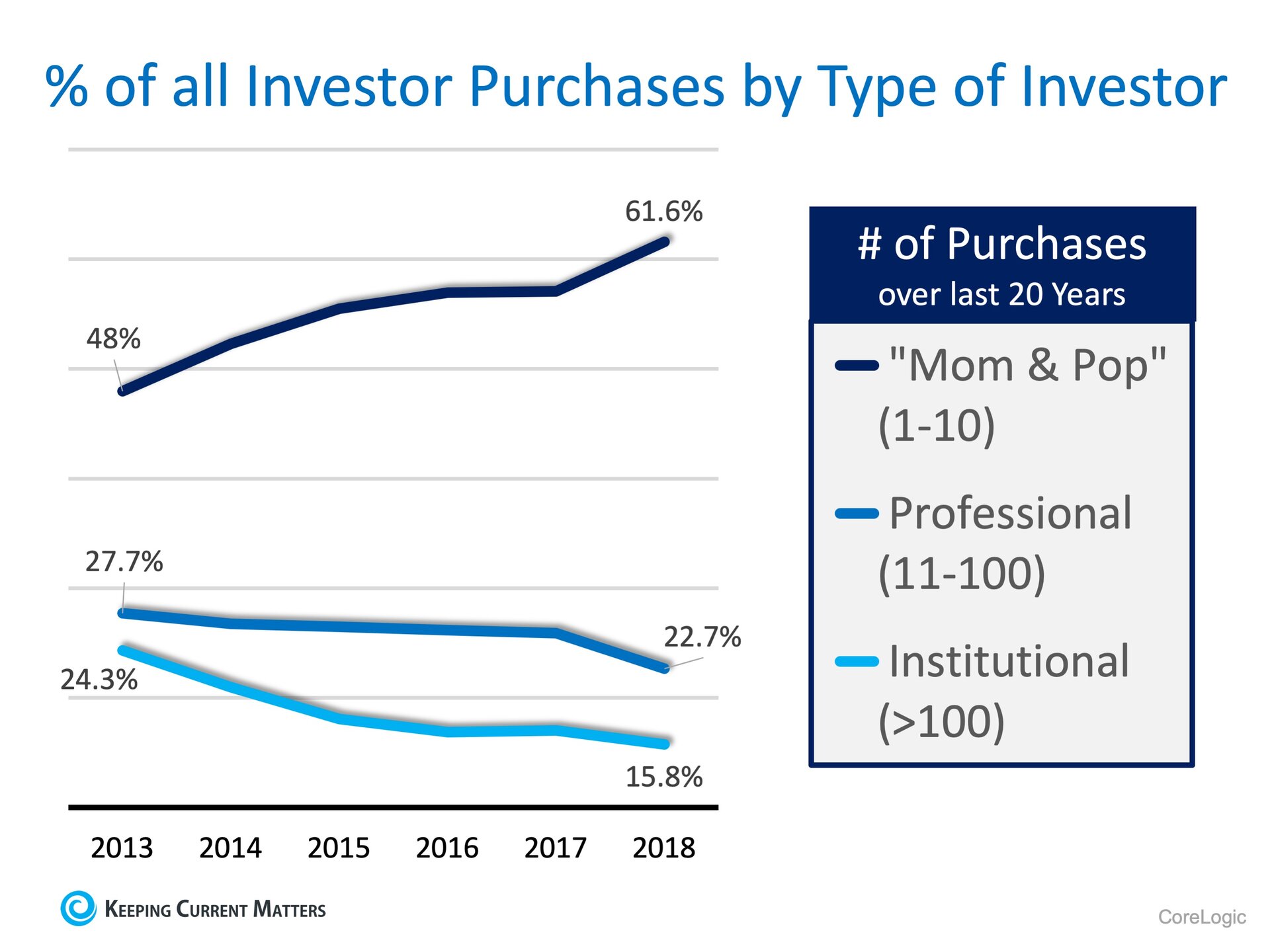
Here is the breakdown of the percentage of purchasers by type of investor over the last six years according to the report:The Surprising Profile of the Real Estate Investor | Keeping Current MattersAs the graph shows, the percentage of “Mom & Pop” investors is currently dominating the number of homes purchased by investors, as the percentage of homes purchased by both professional and institutional investors is falling.

Bottom Line

Most houses purchased by an investor are bought by small investors looking to diversify their financial portfolio by adding a real estate component. If you are investing in real estate as either a landlord or someone who fixes-up and flips the house, speak to a local real estate professional. They can help you build or liquidate your current portfolio of properties.

Thursday, July 11, 2019

Americans’ Powerful Belief in Homeownership as an Investment


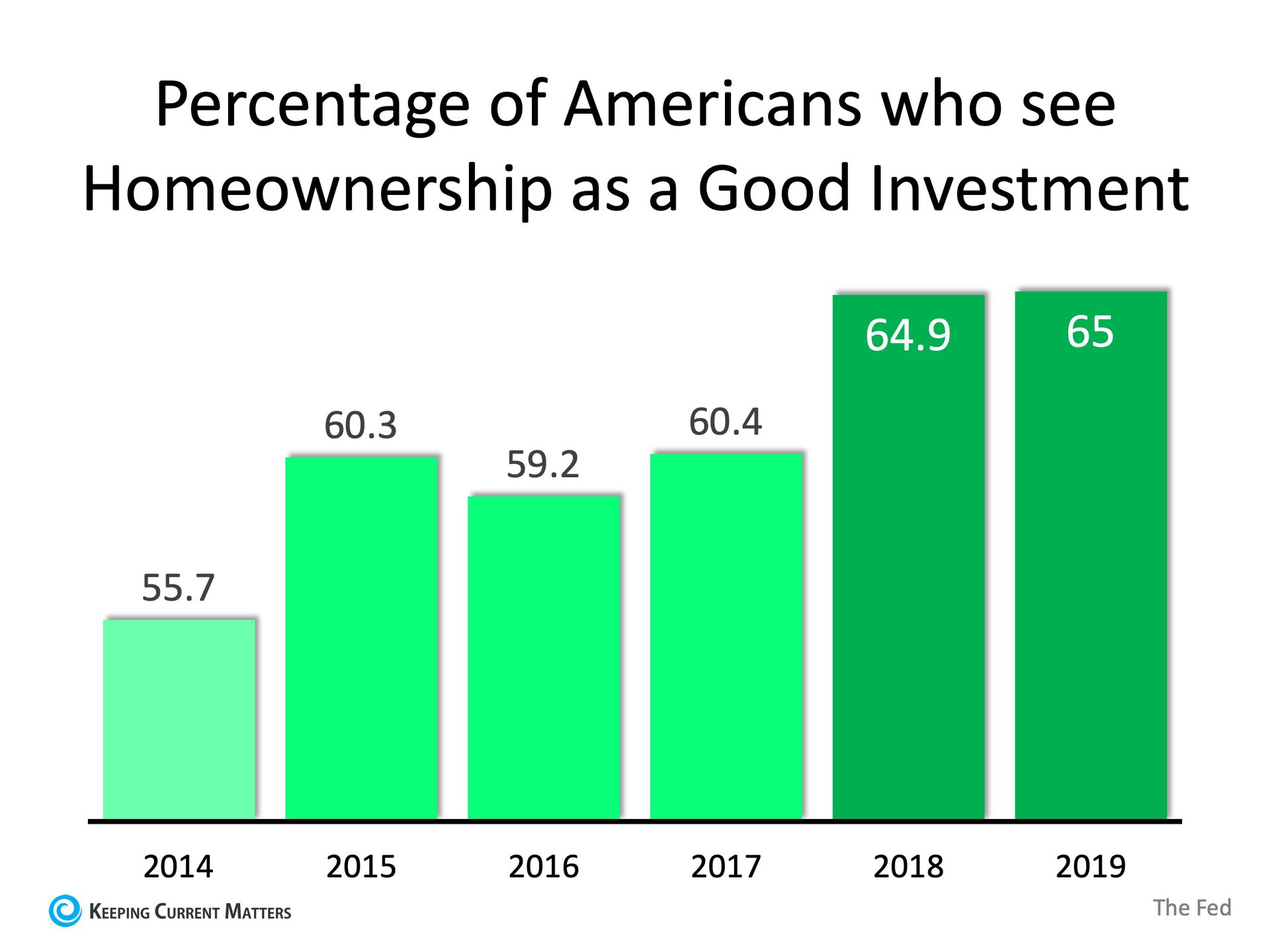
The Federal Reserve Bank (The Fed) recently released their 2019  Survey of Consumer Expectations Housing Survey. The survey reported that 65% of Americans believe homeownership is a good financial investment. Since 2014, the percentage has increased by over nine percent.Americans' Powerful Belief in Homeownership as an Investment | Keeping Current MattersThe Fed’s survey also showed that when the results are broken down by age, education, income, or region of the country, more than 55% of Americans in each category see homeownership as a good investment.

This coincides with a recent Gallup survey of Americans which revealed that real estate was their number one choice for the best long-term investment when compared to stocks, savings accounts or gold.

Bottom Line

Americans’ belief in residential real estate as a good financial investment continues to grow as the housing market returns to normalcy.

Tuesday, June 18, 2019

Empty Nest? 5 Changes Your Home Needs Now That It’s Kid-Free


The house you raised your family in has seen a lot — a lot of love and laughter and maybe a little turmoil. Now that your home is officially kid-free, it is in dire need of some enhancements so you can make a smooth transition from being a full-time parent to having a less hands-on relationship with your children.
Check out these five changes your home is begging for now that you have an empty nest.
First-Floor Guest Bedroom
Think about rearranging the layout of your home now that the kids are out of the house. You might already have plans to turn one of your kids’ bedrooms into a guest bedroom; however, if it’s on the second floor, consider using a room on the first floor. For now, you can use it for guests, but if you plan to stay in your home for the rest of your life, you may want your bedroom to be on the first floor when you get older.
Create Extra Space With Fewer Walls
If you have a few smaller rooms that were once kids’ bedrooms, consider knocking down a wall or two to create one larger space. It makes sense to have lots of smaller rooms if you have a house full of kids, but now that it’s just you or you and your spouse, you can keep one bedroom for guests and create a bigger room to serve a more meaningful purpose, such as a studio, office or home gym.
Kitchen Facelift 
With lots of people in the house, it can be tricky to do any kind of home upgrade or renovation. Now that you have an empty nest, consider making kitchen upgrades that you’ve been putting off. Does the tile need work? Do the cabinets need replacing or maybe just some paint? You could also update old appliances — now is the best time to do whatever needs to be done to bring your kitchen up to date.
Master Bath Enhancements 
With kids out of the house, you will have more time to yourself and hopefully to pamper yourself. Make some updates to the master bathroom by changing the counters and cabinets and/or adding ambient lighting with a dimmer. Add a bench in the shower and a heated towel rack. Replace towels with ones that are plush and soft. Do whatever is necessary to make your bathroom feel more like a spa. You deserve it!
Update Your Most-Used Furniture
Maybe you didn’t want to invest in high-end furniture while you were raising kids because you feared stains and smears on expensive items. However, now is the time to invest in a little luxury. You can transform your home into more of an adults’ house by swapping out some older pieces of furniture for something tasteful and refined.
Looking for even more ways to update your home? Give us a call today! We love sharing our expertise.

Friday, August 17, 2018

The Cost of Waiting: Interest Rates Edition


Interest rates are projected to increase steadily heading into 2019. The higher your interest rate, the more money you end up paying for your home and the higher your monthly payment will be. Rates are still low right now – don’t wait until they hit 5% to start searching for your dream home!

Monday, April 17, 2017

Retire Without Rent

If you want to retire without rent, you need to start planning your mortgage now. We’ve compiled some stats about retirement age incomes and developed a formula to ensure anybody can go into their golden years with equity under their belt and bills off their minds.


Retirement age is 65. The average social security payout per month is $1,180.80. The average 401k at the time of retirement is just north of $100,000 as of 2015, meaning there’s a monthly payout of roughly $270.77. Unfortunately the average mortgage payment in the U.S. is $1,061. That’s almost the entirety of an retiree’s expected $1,451.57 monthly income.

The average age for a first time home buyer is 31, and the average income is $61,800. So if you buy a house at 31 and get a 30 year fixed rate mortgage, that still leaves you 4 years for unforeseen circumstances and major upgrades. Then you can retire at 65 with equity and no debts!

Thursday, March 16, 2017

Smart Ways to Pay Off Your Mortgage Early


It's a goal as cherished as early retirement. Everyone who buys a home for keeps dreams of the day they make their last house payment. Sadly, the majority of homeowners in the U.S. never even get close. However, there are some smart ways, some tried and true, some you may not have thought about, that will allow you to pay off your mortgage early.

Old-fashioned methods can work. The difficulty is disciplining yourself to actually follow through. Step one to paying off your mortgage early is to make a plan. Keep in mind that Rome wasn't built in a day and you are not going to pay off your mortgage in a few months, maybe not even in a couple of years. But here are some smart ways to go about paying off early.

Make Savings Automatic. Saying you are setting aside $200 per month for your payoff amount (above and beyond your regular monthly payments) sounds good, but it only works if you actually do it. Open up a savings account just for your remaining balance, and make that monthly percentage automatic.

Put Extra Away. Saving every month is a great start. But when you get that income tax refund, instead of going on a shopping spree, put it in your payoff savings account. Any extra money — a bonus, a lottery ticket win, a small inheritance — should all largely go to your payoff savings account.

Ditch the Waste. All work and no play makes you a very dull boy or girl, so ditching the waste doesn't mean cutting off your cable, although that could add up to a couple thousand dollars a year. It means buy some Folgers instead of stopping at Starbucks every morning for a cup of Joe.

Think about it; $4 a day, five days a week, for 52 weeks each year. That's over a thousand dollars a year just for a cup of coffee you could make at home for a few cents a week. Here are some other wasteful expenses you can ditch and how much you could save each year.
  • Your Unused Gym Membership – or even your used one — is $40 or $50 dollars a month. That adds up over time. You can exercise at home for free, and modest home equipment will pay for itself.
  • The Latest Gadgets – Changing your cell phone plan alone can save you around $100 per month.
  • Cook a Meal – Fast food, the movies, sit-down restaurants — they all eat up $100 a week out of your budget. That's right, you're talking potentially over $5,000 per year you could be saving just by eating in and streaming a movie instead of paying $15 per ticket at the box office.
  • Carpool and Walk – If your corner store is literally down the street, walk or ride a bike, don't drive. When you go to work, find a carpool. You'll be surprised how much money you can save on transportation with just those two ideas.

Thursday, March 2, 2017

Lower Property Taxes

The most likely case for lower property taxes is that you bought your house at a time when the economy was doing much better. At that time, you would have paid more for your home than it would be valued at now. Because of the higher price tag, you naturally paid more in taxes. Lowering your property taxes isn’t a particularly difficult process, but it is a process nonetheless. And with upfront expenses like a potential assessment of your property, it may be a case of “you need money to save money.” But if you the market was more inflated at the time of your home purchase than it is now, lowering your property tax will be beneficial in the long run! #PropertyTax

Tuesday, February 28, 2017

5 Key Reasons to Have a Home Inspection Before You Buy


It’s easy to get swept up in the excitement of buying a new home and forget to make the important decision to have a home inspection performed before you sign the contract.

Home inspections are an instrumental part of the home-buying process that can save you a lot of time and money in the long run. Remember that a home appraisal and a home inspection are not the same thing. Appraisals will not provide you with a detailed look at a property that can help uncover deep-rooted problems and potential pitfalls.

Here are five great reasons to have a home inspection before you buy:

Don’t Judge a Book by Its Cover
Especially for those buying newer construction, a home inspection may feel like a waste of money. No matter the age of the home, there can be costly troubles unknown to the average buyer. Problems with wiring, plumbing and easement may not be visible during a showing and you’ll want to get an expert opinion.

Save Money

Home inspections generally cost from $300 to $500 depending on size and age of the home. That’s a good sum, but perhaps think of it this way: Those who skip out on the expense may realize in a few years that an inspection is much cheaper than rewiring the entire house.

Negotiate
One of the advantages of having a home inspection performed before you buy is the power it might give you to negotiate a lower price. If a home you’re really interested in is on the edge of your price range, information gathered during the home inspection may give you the bargaining power to talk down the price. You can also insert language into a purchase contract that allows you to back out of an agreement if the inspection turns up problems.

Seller’s Repairs
Not only are you able to negotiate a lower price, many buyers include clauses in their contract requiring the seller to make the repairs necessary before any money is exchanged. If the seller is unwilling to complete the repairs, estimate the cost and ask them to take that amount off the total. Solid facts about the quality and condition of the home can give you valuable bargaining power.

Know What You’re Buying

In the end the most important reason to have a home inspection before you buy is to really know what you’re buying. Research your potential home like you would any other major purchase. The more you know, the fewer surprises there will be down the road. Home inspectors can help you make a decision based on your current budget as well as your future time and money investment.

Thursday, February 23, 2017

The Impact of Homeownership on Family Health


The National Association of Realtors recently released a study titled 'Social Benefits of Homeownership and Stable Housing.’ The study confirmed a long-standing belief of most Americans:
“Owning a home embodies the promise of individual autonomy and is the aspiration of most American households. Homeownership allows households to accumulate wealth and social status, and is the basis for a number of positive social, economic, family and civic outcomes.”
Today, we want to cover the section of the report that quoted several studies concentrating on the impact homeownership has on the health of family members. Here are some of the major findings on this issue revealed in the report:
  • There is a strong positive relationship between living in poor housing and a range of health problems, including respiratory conditions such as asthma, exposure to toxic substances, injuries and mental health. Homes of owners are generally in better condition than those of renters.
  • Findings reveal that increases in housing wealth were associated with better health outcomes for homeowners.
  • Low-income people who recently became homeowners reported higher life satisfaction, higher self-esteem, and higher perceived control over their lives.
  • Homeowners report higher self-esteem and happiness than renters. For example, homeowners are more likely to believe that they can do things as well as anyone else, and they report higher self-ratings on their physical health even after controlling for age and socioeconomic factors.
  • Renters who become homeowners not only experience a significant increase in housing satisfaction but also obtain a higher satisfaction even in the same home in which they resided as renters.
  • Social mobility variables, such as the family financial situation and housing tenure during childhood and adulthood, impacted one’s self-rated health.
  • Homeowners have a significant health advantage over renters, on average. Homeowners are 2.5 percent more likely to have good health. When adjusting for an array of demographic, socioeconomic, and housing–related characteristics, the homeowner advantage is even larger at 3.1 percent.

Bottom Line

People often talk about the financial benefits of homeownership. As we can see, there are also social benefits of owning your own home.

Tuesday, February 21, 2017

Access: A Key Component in Getting Your House SOLD!


So, you’ve decided to sell your house. You’ve hired a real estate professional to help you with the entire process, and they have asked you what level of access you want to provide to potential buyers. There are four elements to a quality listing. At the top of the list is Access, followed by Condition, Financing, and Price. There are many levels of access that you can provide to your agent so that he or she can show your home.Here are five levels of access that you can give to buyers, along with a brief description:

  1. Lockbox on the Door – this allows buyers the ability to see the home as soon as they are aware of the listing, or at their convenience.
  2. Providing a Key to the Home – although the buyer’s agent may need to stop by an office to pick up the key, there is little delay in being able to show the home.
  3. Open Access with a Phone Call – the seller allows showing with just a phone call’s notice.
  4. By Appointment Only (example: 48 Hour Notice) – Many buyers who are relocating for a new career or promotion start working in that area prior to purchasing their home. They often like to take advantage of free time during business hours (such as their lunch break) to view potential homes. Because of this, they may not be able to plan their availability far in advance or may be unable to wait 48 hours to see the house.
  5. Limited Access (example: the home is only available on Mondays or Tuesdays at 2pm or for only a couple of hours a day) - This is the most difficult way to be able to show your house to potential buyers.
In a competitive marketplace, access can make or break your ability to get the price you are looking for, or even sell your house at all. 

Monday, February 13, 2017

3 Questions to Ask If You Want to Buy Your Dream Home

If you are debating purchasing a home right now, you are probably getting a lot of advice. Though your friends and family will have your best interest at heart, they may not be fully aware of your needs and what is currently happening in the real estate market. Ask yourself the following 3 questions to help determine if now is a good time for you to buy in today’s market.

1. Why am I buying a home in the first place?

This is truly the most important question to answer. Forget the finances for a minute. Why did you even begin to consider purchasing a home? For most, the reason has nothing to do with money. For example, a survey by Braun showed that over 75% of parents say “their child’s education is an important part of the search for a new home.” This survey supports a study by the Joint Center for Housing Studies at Harvard University which revealed that the top four reasons Americans buy a home have nothing to do with money. They are:
  • A good place to raise children and for them to get a good education
  • A place where you and your family feel safe
  • More space for you and your family
  • Control of that space
What does owning a home mean to you? What non-financial benefits will you and your family gain from owning a home? The answer to that question should be the biggest reason you decide to purchase or not.

2. Where are home values headed?

According to the latest Existing Home Sales Report from the National Association of Realtors (NAR), the median price of homes sold in December (the latest data available) was $232,200, up 4.0% from last year. This increase also marks the 58th consecutive month with year-over-year gains. If we look at the numbers year over year, CoreLogic forecasted a rise by 4.7% from December 2016 to December 2017. On a home that costs $250,000 today, that same home will cost you an additional $11,750 if you wait until next year.

What does that mean to you?

Simply put, with prices increasing each month, it might cost you more if you wait until next year to buy. Your down payment will also need to be higher in order to account for the higher price of the home you wish to buy.

3. Where are mortgage interest rates headed?

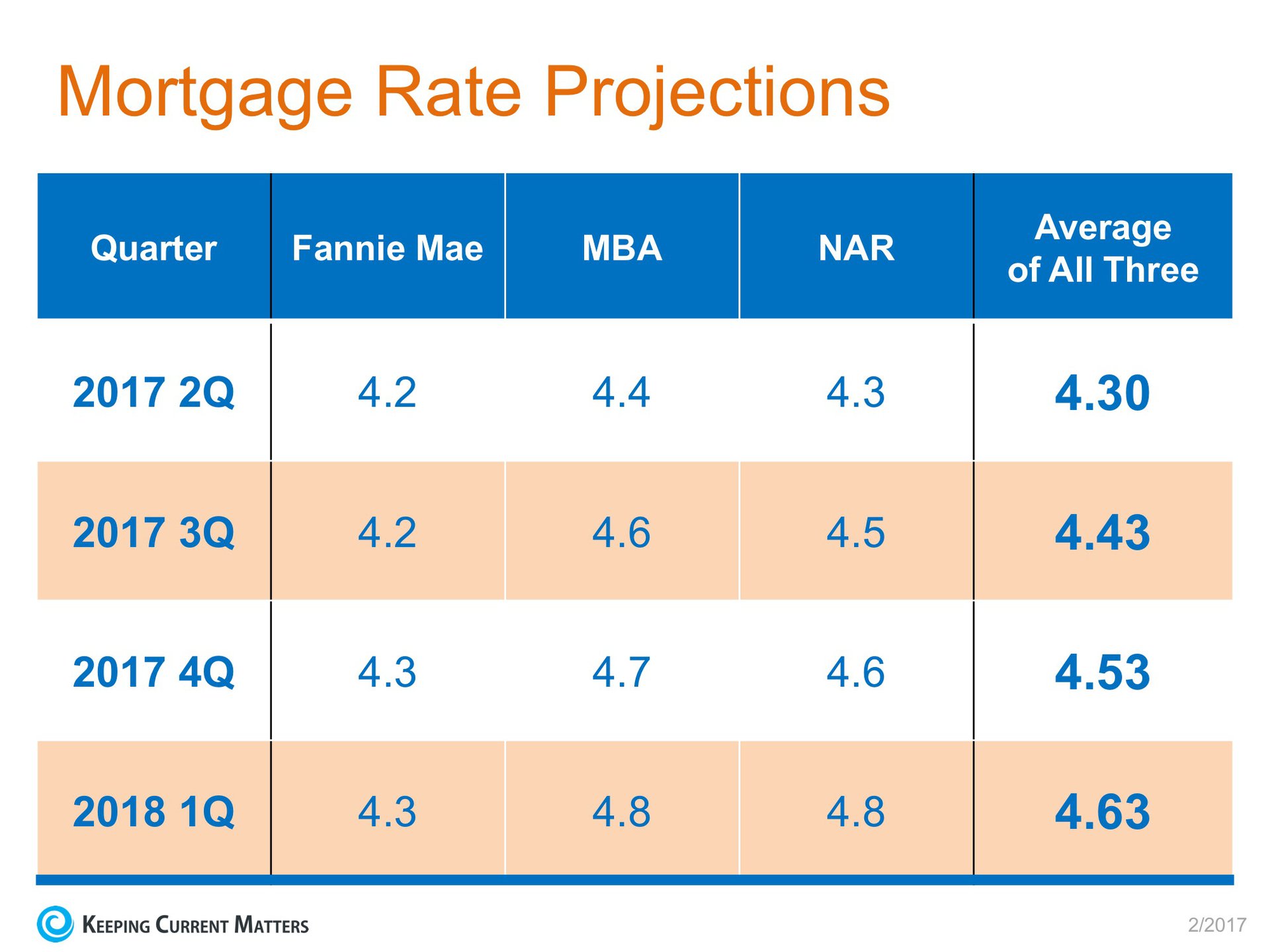
A buyer must be concerned about more than just prices. The ‘long-term cost’ of a home can be dramatically impacted by even a small increase in mortgage rates. The Mortgage Bankers Association (MBA), the National Association of Realtors, and Fannie Mae have all projected that mortgage interest rates will increase over the next twelve months, as you can see in the chart below: 3 Questions to Ask If You Want to Buy Your Dream Home | Keeping Current Matters

Bottom Line

Only you and your family will know for certain if now is the right time to purchase a home. Answering these questions will help you make that decision.

Monday, February 6, 2017

15 vs 30 Year Fixed Rate Mortgage

The main differences between 15- and 30-year loans are straightforward. Fifteen-year loans have higher monthly payments, but you pay less interest, while 30-year terms have lower monthly payments, but you pay significantly more for the house in the long run.


Monday, January 23, 2017

Have You Saved Enough for Closing Costs?


There are many potential homebuyers, and even sellers, who believe that they need at least a 20% down payment in order to buy a home or move on to their next home. Time after time, we have dispelled this myth by showing that many loan programs allow you to put down as little as 3% (or 0% with a VA loan). If you have saved up your down payment and are ready to start your home search, one other piece of the puzzle is to make sure that you have saved enough for your closing costs. Freddie Mac defines closing costs as: 
“Closing costs, also called settlement fees, will need to be paid when you obtain a mortgage. These are fees charged by people representing your purchase, including your lender, real estate agent, and other third parties involved in the transaction. Closing costs are typically between 2 and 5% of your purchase price.”
  • We’ve recently heard from many first-time homebuyers that they wished that someone had let them know that closing costs could be so high. If you think about it, with a low down payment program, your closing costs could equal the amount that you saved for your down payment. Here is a list of just some of the fees/costs that may be included in your closing costs, depending on where the home you wish to purchase is located:Government recording costs
  • Appraisal fees
  • Credit report fees
  • Lender origination fees
  • Title services (insurance, search fees)
  • Tax service fees
  • Survey fees
  • Attorney fees
  • Underwriting fees

Is there any way to avoid paying closing costs?

Work with your lender and real estate agent to see if there are any ways to decrease or defer your closing costs. There are no-closing mortgages available, but they end up costing you more in the end with a higher interest rate, or by wrapping the closing costs into the total cost of the mortgage (meaning you’ll end up paying interest on your closing costs). Home buyers can also negotiate with the seller over who pays these fees. Sometimes the seller will agree to assume the buyer’s closing fees to get the deal finalized, which is known in the industry as ‘seller’s concession.’

Bottom Line
Speak with your lender and agent early and often to determine how much you’ll be responsible for at closing. Finding out you’ll need to come up with thousands of dollars right before closing is not a surprise anyone is ever looking forward to. 

Thursday, January 19, 2017

8 Things Not To Do In Your Quest To Buy A House

Got pre-approved to buy a home? Already have your dream home under contract? Got extra cash from your 2016 tax returns for a down-payment? Make sure your home buying process goes smoothly.


Wednesday, January 18, 2017

What is an Earnest Money Deposit? (Due Diligence)

Earnest money is a deposit made to a seller showing the buyer's good faith in a transaction. Often used in real estate transactions, earnest money allows the buyer additional time when seeking financing. Earnest money is typically held jointly by the seller and buyer in a trust or escrow account.

Thursday, January 12, 2017

Why You Should Never Skip A Home Inspection

Before you buy a home, one of the things you should do is to have the home checked out by a professional home inspector. When you are purchasing a home, you want to know every strength and weakness your new home has. Having this information before you close is paramount for negotiations as well as maintaining your new home for the long term. Comprehensive residential inspections cover moisture, mold, attic, termite, structural, roofing, insulation, plumbing systems, heating and cooling systems, electrical wiring and electrical systems inspections. Never skip a home inspection.


Tuesday, January 10, 2017

You Need a Professional on Your Team When Buying a Home


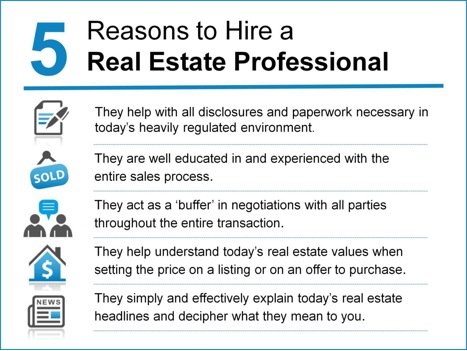
Many people wonder whether they should hire a real estate professional to assist them in buying their dream home or if they should first try to do it on their own. In today's market: you need an experienced professional!

You Need an Expert Guide if You Are Traveling a Dangerous Path

The field of real estate is loaded with land mines; you need a true expert to guide you through the dangerous pitfalls that currently exist. Finding a home that is priced appropriately and is ready for you to move into can be tricky. An agent listens to your wants and needs, and can sift through the homes that do not fit within the parameters of your "dream home." A great agent will also have relationships with mortgage professionals and other experts that you will need in securing your dream home.

You Need a Skilled Negotiator

In today's market, hiring a talented negotiator could save you thousands, perhaps tens of thousands of dollars. Each step of the way - from the original offer to the possible renegotiation of that offer after a home inspection, to the possible cancellation of the deal based on a troubled appraisal - you need someone who can keep the deal together until it closes. Realize that when an agent is negotiating their commission with you, they are negotiating their own salary; the salary that keeps a roof over their family's head; the salary that puts food on their family's table. If they are quick to take less when negotiating for themselves and their families, what makes you think they will not act the same way when negotiating for you and your family? If they were Clark Kent when negotiating with you, they will not turn into Superman when negotiating with the buyer or seller in your deal.

Bottom Line

Famous sayings become famous because they are true. You get what you pay for. Just like a good accountant or a good attorney, a good agent will save you money...not cost you money.