Showing posts with label Investing. Show all posts

Tuesday, September 24, 2019

Should You Fix Your House Up or Sell Now?


With the fall season upon us, change is in the air. For many families, children are growing up and moving out of the house, maybe leaving for college or taking a jump into the working world. Parents are finding themselves as empty nesters for the first time. The question inevitably arises: is it finally time to downsize?

If you’re pondering that thought, you may also be wondering if you should fix-up your house before you sell it, or go straight to the market as-is, allowing a potential buyer to do the updates and remodeling. If you’re one of the many homeowners this camp, here are a few tips to help you decide which way to go.

1. Analyze Your Market

A real estate professional can help you to understand your market and the potential level of buyer interest and demand for your home. Are you in a seller’s market or a buyer’s market? This can change based on the price range of your home, too. A professional can also give you some insight on what you can change or remodel, and how to declutter your house to make it attractive to buyers in your area.

2. Get an Inspector

Right now, the average length of time a family stays in a home is between 9-10 years. That’s a little longer than the historical average, so if you’ve been living in your home for a while, it might be time to make some significant improvements. Think: electrical system, HVAC units, roof, siding, etc. An inspector can give you a better idea of the condition of your home, if it is up to current code standards, and recommendations on how to have your house ready before you put it on the market.

3. Decide If You Need to Remodel

You may also be thinking about driving buyer appeal with something like a kitchen or a bathroom remodel. If so, first dig into the market value of your home, and compare it to the actual cost of the remodel. A local real estate professional can help you determine your home’s market value, and you’ll want to get a few quotes from contractors on the potential remodel pricing as well. Once you have those two factors narrowed down, you can to decide if a remodel will give you a return on your investment when you sell. Oftentimes, it is actually more advantageous to price your house to sell, list it competitively, and then let the buyer pick the colors they want for their bathroom tiles and the type of countertop they prefer. The 2019 Cost vs. Value Report in Remodeling Magazine compares the average cost for remodeling projects with the value those projects typically retain at resale.

Bottom Line

Nationwide, inventory is low, meaning there is less than the 6-month housing supply needed for a normal market. This drives buyer demand, creating a perfect time to sell. If you’re considering selling your house, sit down with a local real estate professional. Partner with someone who can help you confidently determine what will be the best choice for you and your family.

Friday, March 24, 2017

Why a Good Home Appraisal is Important

A good home appraisal is one of the most important components of getting approved for a mortgage. This appraisal ultimately decides just how much a bank is willing to lend to you, and a bad appraisal can kill your plans for a new home faster than a bad credit score. A home appraisal is the best way for a lender to see if they wont lose their seat on the deal.


The lender wants to make sure that they have an asset that they can sell to get their money back in case of default. The home appraisal is also a way for you to see if the home you are wanting is overpriced or not.

Lets say that John Doe wants to secure a mortgage on a home that cost $180,000. His credit score is very good, yet the home only appraises for $150,000.

Will John get his loan? You better believe he won't. The sale price will have to be lowered for the lender to consider to loan John the money. This is also a warning for John, that the home that he is trying to secure may be overpriced.

So what does an appraiser look for?
An appraisal usually starts with an inspection of the inside and outside of your home, as well as sale and ask prices for comparable homes in the area.The appraiser will create a report for the lender that includes:
  • An explanation of how the appraiser determined the value of the property
  • The size and condition of the house and other permanent fixtures, along with a description of any improvements that have been made and the materials used
  • Statements regarding serious structural problems, such as wet basements and cracked foundations
  • Notes about the surrounding area, such as new or established development, rural acreage, and so on
  • Evaluation of recent market trends of the area that may affect the value
  • Comparative market analysis that supports the appraisal: maps, photographs and sketches

An important thing to note is that, an appraiser is not a home inspector. An appraiser will make note of obvious issues but does not inspect the home to see if it is up to code. For this you will actually need to hire someone to do a home inspection to avoid any costly nightmares in the future if something is wrong with the house.

How much is this going to cost me?
Appraisals typically cost in the range of $300- $400. This price can change though depending on the location of the property, square footage of the home, or property type. The appraiser’s fees are usually included in the closing costs of the home, unless a deal on the property is not made.

Is it time to throw in the towel if the appraisal is too low?

First you need to see why the appraisal was low. It could be something that the homeowner could correct, or the home could be overpriced. If it is overpriced see if the homeowner would come down on their price. You can also request another appraisal on the home, keep in mind that you are the one paying for these appraisals.

As a seller what can you do to make up for a bad appraisal?

The first thing you need to do is see why it was appraised lower, it could be because of maintenance or repairs. If this is the case, you can get another appraisal after they have been fixed. Another way to increase the appraisal price is cosmetics, especially in an older home. New paint, appliances, carpet and replacement windows are all ways to add to the value of your home.

Tuesday, February 21, 2017

Access: A Key Component in Getting Your House SOLD!


So, you’ve decided to sell your house. You’ve hired a real estate professional to help you with the entire process, and they have asked you what level of access you want to provide to potential buyers. There are four elements to a quality listing. At the top of the list is Access, followed by Condition, Financing, and Price. There are many levels of access that you can provide to your agent so that he or she can show your home.Here are five levels of access that you can give to buyers, along with a brief description:

  1. Lockbox on the Door – this allows buyers the ability to see the home as soon as they are aware of the listing, or at their convenience.
  2. Providing a Key to the Home – although the buyer’s agent may need to stop by an office to pick up the key, there is little delay in being able to show the home.
  3. Open Access with a Phone Call – the seller allows showing with just a phone call’s notice.
  4. By Appointment Only (example: 48 Hour Notice) – Many buyers who are relocating for a new career or promotion start working in that area prior to purchasing their home. They often like to take advantage of free time during business hours (such as their lunch break) to view potential homes. Because of this, they may not be able to plan their availability far in advance or may be unable to wait 48 hours to see the house.
  5. Limited Access (example: the home is only available on Mondays or Tuesdays at 2pm or for only a couple of hours a day) - This is the most difficult way to be able to show your house to potential buyers.
In a competitive marketplace, access can make or break your ability to get the price you are looking for, or even sell your house at all. 

Monday, February 6, 2017

15 vs 30 Year Fixed Rate Mortgage

The main differences between 15- and 30-year loans are straightforward. Fifteen-year loans have higher monthly payments, but you pay less interest, while 30-year terms have lower monthly payments, but you pay significantly more for the house in the long run.


Friday, February 3, 2017

Get Ready to Buy A House

Still a ways away from buying, but want to be responsible? No matter your timeline, these tips will help every aspiring homeowner get ready…

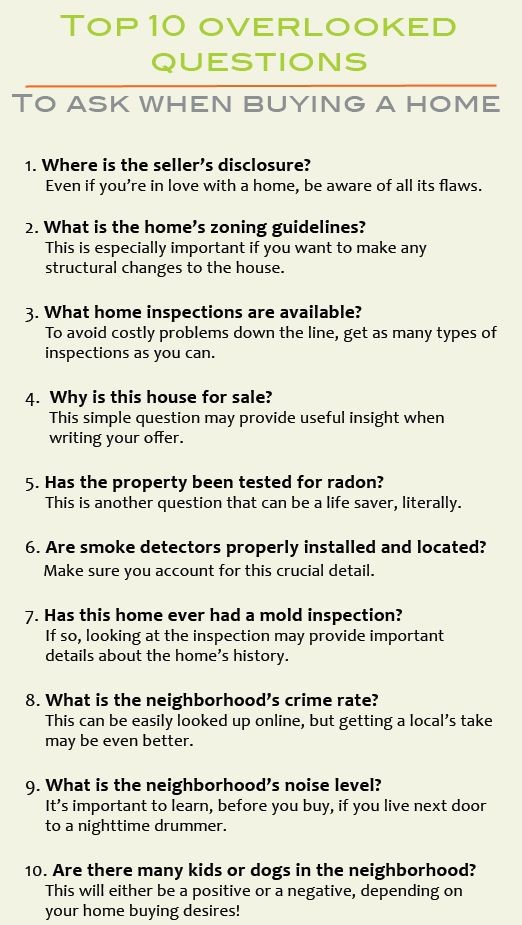
Top 10 Overlooked Questions To Ask When Buying A Home

Buying a home can be overwhelming. So many things to know and so many questions to ask. Check out our list of Top 10 Overlooked Questions to Ask When Buying a Home-- they might come in handy! Call me if you still have questions!


Tuesday, January 17, 2017

5 Myths About Real Estate Reality TV Explained


Have you ever been flipping through the channels, only to find yourself glued to the couch in an HGTV binge session? We’ve all been there… watching entire seasons of “Love it or List it,” “Fixer Upper,” “House Hunters,” “Property Brothers,” and so many more, just in one sitting. When you’re in the middle of your real estate themed show marathon, you might start to think that everything you see on TV must be how it works in real life, but you may need a reality check.

Reality TV Show Myths vs. Real Life:

Myth #1: Buyers look at 3 homes and make a decision to purchase one of them.

Truth: There may be buyers who fall in love and buy the first home they see, but according to the National Association of Realtors the average homebuyer tours 10 homes as a part of their search.

Myth #2: The houses the buyers are touring are still for sale.

Truth: The reality is being staged for TV. Many of the homes being shown are already sold and are off the market.

Myth #3: The buyers haven’t made a purchase decision yet.

Truth: Since there is no way to show the entire buying process in a 30-minute show, TV producers often choose buyers who are further along in the process and have already chosen a home to buy.

Myth #4: If you list your home for sale, it will ALWAYS sell at the Open House.

Truth: Of course this would be great! Open houses are important to guarantee the most exposure to buyers in your area, but are only a PIECE of the overall marketing of your home. Just realize that many homes are sold during regular listing appointments as well.

Myth #5: Homeowners make a decision about selling their home after a 5-minute conversation.

Truth: Similar to the buyers portrayed on the shows, many of the sellers have already spent hours deliberating the decision to list their homes and move on with their lives/goals.

Bottom Line

Having an experienced professional on your side while navigating the real estate market is the best way to guarantee that you can make the home of your dreams a reality!

Friday, December 16, 2016

The Difference Your Interest Rate Makes


The Impact Your Interest Rate Has on Your Buying Power: Your monthly housing cost is directly tied to the price of the home you purchase and the interest rate you secure for your mortgage. Over the last 30 years, interest rates have fluctuated greatly with rates in the double digits in the 1980s, all the way down to the near 4% we are experiencing now. Your purchasing power is greatly impacted by the interest rate you secure. Act now before rates go up!

Thursday, November 17, 2016

From Empty Nest to Full House... Multigenerational Families Are Back!

Multigenerational homes are coming back in a big way! In the 1950s, about 21%, or 32.2 million Americans shared a roof with their grown children or parents. According to a recent Pew Research Center report, the number of multigenerational homes dropped to as low as 12% in 1980 but has shot back up to 19%, roughly 60.6 million people, as recently as 2014. Multigenerational households typically occur when adult children (over the age of 25) either choose to, or need to, remain living in their parent's home, and then have children of their own. These households also occur when grandparents join their adult children and grandchildren in their home. According to the National Association of Realtors' (NAR) 2016 Profile of Home Buyers and Sellers, 11% of home buyers purchased multigenerational homes last year.


The top 3 reasons for purchasing this type of home were:
  • To take care of aging parents (19%)
  • Cost savings (18%, up from 15% last year)
  • Children over the age of 18 moving back home (14%, up from 11% last year)
Donna Butts, Executive Director of Generations United, points out that, "As the face of America is changing, so are family structures. It shouldn't be a taboo or looked down upon if grown children are living with their families or older adults are living with their grown children." For a long time, nuclear families, (a couple and their dependent children), became the accepted norm, but John Graham, co-author of "Together Again: A Creative Guide to Successful Multigenerational Living," says, "We're getting back to the way human beings have always lived in - extended families." This shift can be attributed to several social changes over the decades. Growing racial and ethnic diversity in the U.S. population helps explain some of the rise in multigenerational living. The Asian and Hispanic populations are more likely to live in multigenerational family households and these two groups are growing rapidly. Additionally, women are a bit more likely to live in multigenerational conditions than are their male counterparts (20% vs. 18%, respectively). Last but not least, basic economics. Carmen Multhauf, co-author of the book "Generational Housing: Myth or Mastery for Real Estate," brings to light the fact that rents and home prices have been skyrocketing in recent years. She says that, "The younger generations have not been able to save," and often struggle to get good-paying jobs.

Bottom Line

Multigenerational households are making a comeback. While it is a shift from the more common nuclear home, these households might be the answer that many families are looking for as home prices continue to rise in response to a lack of housing inventory.

Wednesday, November 16, 2016

You Can Never Have TMI about PMI

When it comes to buying a home, whether it is your first time or your fifth, it is always important to know all the facts. With the large number of mortgage programs available that allow buyers to purchase a home with a down payment below 20%, you can never have Too Much Information (TMI) about Private Mortgage Insurance (PMI).

What is Private Mortgage Insurance (PMI)?

Freddie Mac defines PMI as:
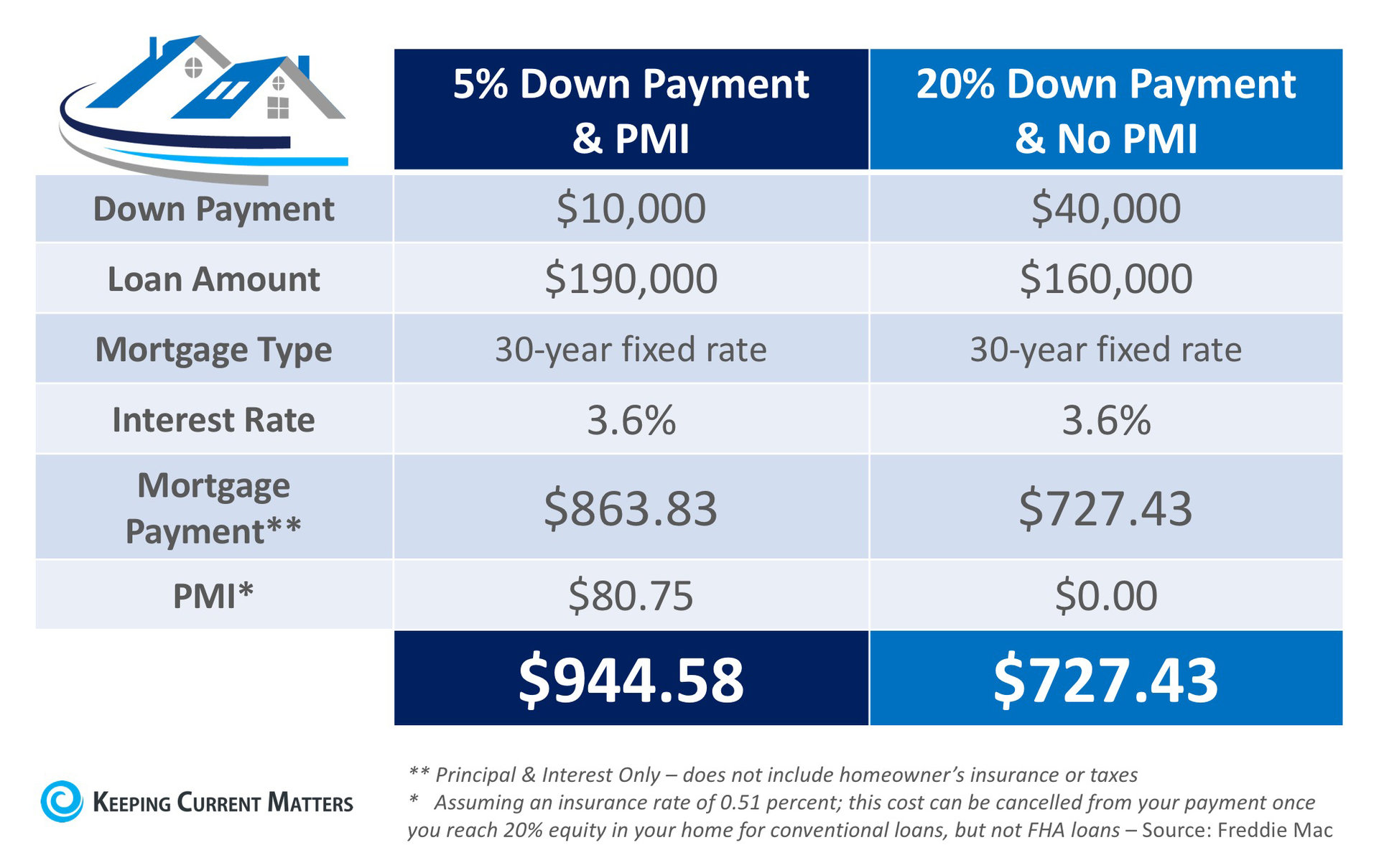
"An insurance policy that protects the lender if you are unable to pay your mortgage. It's a monthly fee, rolled into your mortgage payment, that is required for all conforming, conventional loans that have down payments less than 20%. Once you've built equity of 20% in your home, you can cancel your PMI and remove that expense from your mortgage payment."
As the borrower, you pay the monthly premiums for the insurance policy, and the lender is the beneficiary. Freddie Mac goes on to explain that:
"The cost of PMI varies based on your loan-to-value ratio - the amount you owe on your mortgage compared to its value - and credit score, but you can expect to pay between $30 and $70 per month for every $100,000 borrowed."
According to the National Association of Realtors, the average down payment for all buyers last year was 10%. For first-time buyers, that number dropped to 6%, while repeat buyers put down 14% (no doubt aided by the sale of their home). This just goes to show that for a large number of buyers last year, PMI did not stop them from buying their dream homes. Here's an example of the cost of a mortgage on a $200,000 home with a 5% down payment & PMI, compared to a 20% down payment without PMI: You Can Never Have TMI about PMI | Keeping Current Matters
The larger the down payment you can make, the lower your monthly housing cost will be, but Freddie Mac urges you to remember:
"It's no doubt an added cost, but it's enabling you to buy now and begin building equity versus waiting 5 to 10 years to build enough savings for a 20% down payment."

Bottom Line

If you have questions about if you should buy now or wait until you've saved a larger down payment, meet with a professional in your area who can explain your market's conditions and help you make the best decision for you and your family.

Tuesday, November 15, 2016

A Lack of Listings Remains 'Huge' Challenge in the Market


The housing crisis is finally in the rearview mirror as the real estate market moves down the road to a complete recovery. Home values are up, home sales are up, and distressed sales (foreclosures & short sales) are at their lowest mark in over 8 years. This has been, and will continue to be, a great year for real estate. However, there is one thing that may cause the industry to tap the brakes: a lack of housing inventory. According to the National Association of Realtors (NAR), buyer traffic and demand continues to be the strongest it has been in years. The supply of homes for sale has not kept up with this demand and has driven prices up in many areas as buyers compete for their dream home. Traditionally, the winter months create a natural slowdown in the market. Jonathan Smoke, Chief Economist at realtor.com, points to low interest rates as one of the many reasons why buyers are still out in force looking for a home of their own.
"Overall, the fundamental trends we have been seeing all year remain solidly in place as we enter the traditionally slower sales season, and pent-up demand remains substantial as buyers seek to get a home under contract while rates remain so low."
NAR's Chief Economist, Lawrence Yun, points out that the inventory shortage we are currently experiencing isn't a new challenge by any means:
"Inventory has been extremely tight all year and is unlikely to improve now that the seasonal decline in listings is about to kick in. Unfortunately, there won't be much relief from new home construction, which continues to be grossly inadequate in relation to demand."

Bottom Line

Healthy labor markets and job growth have created more and more buyers who are not just ready and willing to buy but are also able to. If you are debating whether or not to put your home on the market this year, now is the time to take advantage of the demand in the market.

Tuesday, November 8, 2016


Always use a professional...for one of the biggest expenses in life, never try to go it alone, or worse, use an amateur. If you’re thinking about buying a home in 2017, you need to take action now.

Thursday, November 3, 2016

What the current housing shortage means for you

If you've been thinking of trading up to a more luxurious home, you'll want to read this.

You may have heard that we're in the middle of a housing shortage.

It's certainly true for mid-market and lower-priced homes.

The number of such homes on the national market has declined over 40% in the last four years, and prices have increased accordingly.

There are a few different reasons behind this.

Builders have been focusing mostly on higher-priced homes. Investors have turned many lower-priced homes into rentals. More people are looking to buy thanks to historically low mortgage rates.

So yes, there’s a shortage...but what does this mean for you?

First, if you're looking to sell your home, the current market offers a great opportunity.

Thanks to the shortage in the market, you can sell your home more quickly.

This summer, the typical home stayed on the market for just 35 days, and 47% of homes sold in less than a month. Compare that to 2012, when the typical home was on the market for over two months!

You can also sell your home for more in today’s market. Prices are 5.3% higher now than they were a year ago, and many homes end up selling for more than their asking price.

Curious about how much your home is worth in the current market?

Taking into account recent sales, I can give you a good estimate of the current value of your home.

I mentioned that now is also a good time to trade up to a bigger, higher-priced home.

You see, prices of top-tier homes have grown at a slower rate than mid- and low-priced homes. In addition, 16% of top-tier homes over the last year sold for less than their asking price.

There is also a greater supply of premium homes — they now make up 46% of available homes on the market.

This means it’s a great time to buy a top-tier home.

What kinds of homes are for sale right now?

Wednesday, November 2, 2016

How Long Do Families Stay in a Home?


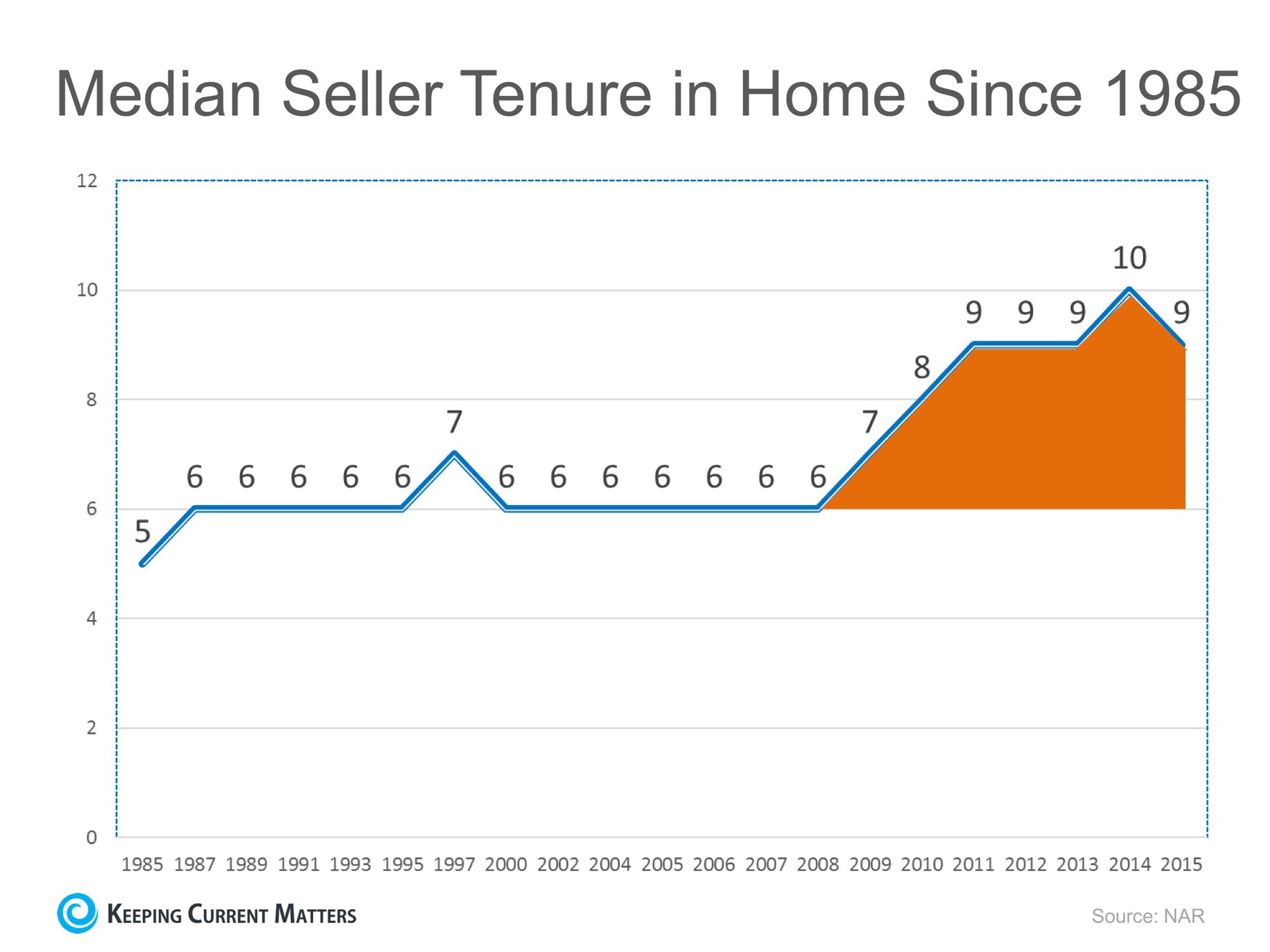
The National Association of Realtors (NAR) keeps historic data on many aspects of homeownership. One of the data points that has changed dramatically is the median tenure of a family in a home. As the graph below shows, for over twenty years (1985-2008), the median tenure averaged exactly six years. However, since 2008, that average is almost nine years - an increase of almost 50%. How Long Do Families Stay in a Home? | Keeping Current Matters

Why the dramatic increase?

The reasons for this change are plentiful. The top two reasons are:
  1. The fall in home prices during the housing crisis left many homeowners in a negative equity situation (where their home was worth less than the mortgage on the property).
  2. The uncertainty of the economy made some homeowners much more fiscally conservative about making a move.
However, with home prices rising dramatically over the last several years, over 90% of homes with a mortgage are now in a positive equity situation with 70% of them having at least 20% equity. And, with the economy coming back and wages starting to increase, many homeowners are in a much better financial situation than they were just a few short years ago.

What does this mean for housing?

Many believe that a large portion of homeowners are not in a house that is best for their current family circumstances. They could be baby boomers living in an empty, four-bedroom colonial, or a millennial couple planning to start a family that currently lives in a one-bedroom condo. These homeowners are ready to make a move. Since the lack of housing inventory is a major challenge in the current housing market, this could be great news.

Monday, October 31, 2016

Taking the Fear out of the Mortgage Process


A considerable number of potential buyers shy away from jumping into the real estate market due to their uncertainty about the buying process. A specific cause for concern tends to be mortgage qualification.

For many, the mortgage process can be scary, but it doesn't have to be!

In order to qualify in today's market, you'll need to have saved for a down payment (the average down payment on all loans was 11% last month, with many buyers putting down 3% or less), a stable income and good credit history. Throughout the entire home buying process, you will interact with many different professionals, all of which perform necessary roles. These professionals are also valuable resources for you. Once you're ready to apply, here are 5 easy steps that Freddie Mac suggests to follow:
  1. Find out your current credit history & score - even if you don't have perfect credit, you may already qualify for a loan. The average FICO Score of all closed loans in September was 731, according to Ellie Mae.
  2. Start gathering all of your documentation - income verification (such as W-2 forms or tax returns), credit history, and assets (such as bank statements to verify your savings).
  3. Contact a professional - your real estate agent will be able to recommend a loan officer that can help you develop a spending plan, as well as determine how much home you can afford.
  4. Consult with your lender - he or she will review your income, expenses, and financial goals in order to determine the type and amount of mortgage you qualify for.
  5. Talk to your lender about pre-approval - a pre-approval letter provides an estimate of what you might be able to borrow (provided your financial status doesn't change), and demonstrates to home sellers that you are serious about buying!

Bottom Line

Do your research, reach out to professionals, stick to your budget, and be sure that you are ready to take on the financial responsibilities of becoming a homeowner.

Friday, October 28, 2016

Buying a Home Can Be Scary... Know the Facts

Some Highlights: 36% of Americans think they need a 20% down payment to buy a home. 44% of Millennials who purchased a home this year have put down less than 10%. 8% of loan applications were approved last month. The average credit score of approved loans was 731 in September.