Showing posts with label New Homes. Show all posts

Friday, January 10, 2020

Are Smart Homes Here to Stay?


There’s been quite a bit of hype about smart homes in recent years. These aren’t the top-to-bottom smart homes that were envisioned by science fiction for years, of course. Those were houses that had a central artificial intelligence that controlled everything and inevitably went rogue at some point. Instead, modern smart homes are usually traditional homes just like the one that you live in. They’ve simply been enhanced with sensors and devices and the occasional digital assistant.

Some people are thrilled with how technology is changing the way we interact with our home environment. Others aren’t quite so happy with the direction that this trend is heading. Love them or hate them, though – there’s one thing that you need to accept: The smart home isn’t going away.

What Makes a Smart Home?

A smart home is one that has a variety of sensors and controls within it that give you additional information or functionality when it comes to your home. This can range from information like whether you left the front door unlocked or what the temperature is in your living room to functions such as controlling your lights with your voice. Some smart homes use a central hub or device to control everything, while others use components that connect via wifi and are controlled by your phone. Some smart homes feature appliances or other major fixtures that have “smart” capabilities while others just use devices or sensors to make day-to-day life more convenient. Because of the device-based nature of modern smart homes, homeowners can choose exactly the components they want to help make the smart home installation meet their specific needs.

Smart Home Devices

There are a wide range of smart home devices available for homeowners. Some of these are fairly well known, such as smart thermostats that feature programmable temperature controls that “learn” how best to keep you comfortable. Others are less common but very handy, such as leak sensors that alert you when your pipes leak or window sensors that let you check to see whether your windows or locked or unlocked. You can get smart lighting that can be controlled remotely and can even change colors, smart locks that you can lock and unlock with your phone or a key fob, smart smoke and CO2 detectors, motion sensors that activate security cameras but that are able to ignore pets and small animals… the list is quite extensive. Most of these devices are programmable so you can automate specific tasks, or can at least be paired with things such as a digital assistant (like Amazon Echo devices or Google Home) to schedule automation and even voice control.

Safety and Privacy

There are a number of advantages to using smart devices, including saving money and increasing convenience in your daily life. However, some people have security and privacy concerns as well. Some smart devices have been exploited in the past, allowing hackers to listen in or speak through the devices to people in a smart home. Some devices featuring video also raise security concerns as people worry that others will be able to record them going throughout their day. While these are valid concerns, security breaches and flaws are taken seriously by manufacturers. The majority of cases where unwanted access has occurred were either due to flaws that have since been patched or due to someone gaining access to the password that secures the devices. This is why it’s important for those who buy smart devices to use strong passwords on their accounts and to make sure that their devices have up-to-date software, as these two actions will mitigate the majority of security concerns.

Get Smart

Whether you already have smart home devices installed or you’re just curious, there are installers and consultants who can help you determine exactly how your home could be a little smarter.

Friday, December 13, 2019

VA Loan Limits Removed


Veterans are no longer restricted to a loan limit beginning January 1, 2020.  Previously, veterans were limited by the same restrictions set by the Federal Housing Finance Agency on conforming loans.  While these limits were national in nature, there were exceptions for high-cost counties and jumbo loan procedures.

The elimination of loan limits doesn't mean that veterans will have unlimited borrowing power.  Buyers must still qualify with enough income and credit requirements to meet the lender's requirements to qualify for the loan.

Lenders can set their own in-house maximum loan amounts which means it could vary from lender to lender.  Veterans who have an active VA loan or have defaulted on a previous VA loan are still limited by the previous loan limits.

The VA funding fee is increasing on January 1, 2020 to 2.3% of the loan amount for "first-use" borrowers from the previous fee of 2.15%.  Subsequent use borrowers will pay 3.6% of the loan amount instead of the current 3.3%.

Beginning in 2020, the funding fees will be the same for regular military, National Guard and reservists.  At the same time, Purple Heart recipients are exempt from paying the VA funding fee.
It is recommended that a veteran, as well as any buyer, be pre-approved before beginning the home buying process.  Veterans can find answers to specific questions they may have from a qualified and trusted loan professional.

Wednesday, June 5, 2019

The Feeling You Get from Owning Your Home

We often talk about the financial reasons why buying a home makes sense. But, more often than not, the emotional reasons are the more powerful and compelling ones.

No matter what shape or size your living space is, the concept and feeling of home can mean different things to different people. Whether it’s a certain scent or a favorite chair, that feeling of safety and security you gain from owning your own home is simultaneously one of the greatest and most difficult to describe.


Frederick Peters, a contributor for Forbes, recently wrote about that feeling, and the pride that comes from owning your own home.
“As homeowners discover, living in an owned home feels different from living in a rented home. It’s not just that an owner can personalize the space; it touches a chord even more fundamental than that.
Homeownership enhances the longing for self-determination at the heart of the American Dream. First-time homeowners, young or old, radiate not only pride but also a sense of arrival, a sense of being where they belong. It cannot be duplicated by owning a 99-year lease.”

Bottom Line

Owning a home brings a sense of accomplishment and confidence that cannot be achieved through renting. If you are debating renewing your lease, meet with a local real estate professional first. They can help answer any questions you have about what your next steps should be and what is required in today’s market!

Friday, August 17, 2018

The Cost of Waiting: Interest Rates Edition


Interest rates are projected to increase steadily heading into 2019. The higher your interest rate, the more money you end up paying for your home and the higher your monthly payment will be. Rates are still low right now – don’t wait until they hit 5% to start searching for your dream home!

Friday, March 24, 2017

Why a Good Home Appraisal is Important

A good home appraisal is one of the most important components of getting approved for a mortgage. This appraisal ultimately decides just how much a bank is willing to lend to you, and a bad appraisal can kill your plans for a new home faster than a bad credit score. A home appraisal is the best way for a lender to see if they wont lose their seat on the deal.


The lender wants to make sure that they have an asset that they can sell to get their money back in case of default. The home appraisal is also a way for you to see if the home you are wanting is overpriced or not.

Lets say that John Doe wants to secure a mortgage on a home that cost $180,000. His credit score is very good, yet the home only appraises for $150,000.

Will John get his loan? You better believe he won't. The sale price will have to be lowered for the lender to consider to loan John the money. This is also a warning for John, that the home that he is trying to secure may be overpriced.

So what does an appraiser look for?
An appraisal usually starts with an inspection of the inside and outside of your home, as well as sale and ask prices for comparable homes in the area.The appraiser will create a report for the lender that includes:
  • An explanation of how the appraiser determined the value of the property
  • The size and condition of the house and other permanent fixtures, along with a description of any improvements that have been made and the materials used
  • Statements regarding serious structural problems, such as wet basements and cracked foundations
  • Notes about the surrounding area, such as new or established development, rural acreage, and so on
  • Evaluation of recent market trends of the area that may affect the value
  • Comparative market analysis that supports the appraisal: maps, photographs and sketches

An important thing to note is that, an appraiser is not a home inspector. An appraiser will make note of obvious issues but does not inspect the home to see if it is up to code. For this you will actually need to hire someone to do a home inspection to avoid any costly nightmares in the future if something is wrong with the house.

How much is this going to cost me?
Appraisals typically cost in the range of $300- $400. This price can change though depending on the location of the property, square footage of the home, or property type. The appraiser’s fees are usually included in the closing costs of the home, unless a deal on the property is not made.

Is it time to throw in the towel if the appraisal is too low?

First you need to see why the appraisal was low. It could be something that the homeowner could correct, or the home could be overpriced. If it is overpriced see if the homeowner would come down on their price. You can also request another appraisal on the home, keep in mind that you are the one paying for these appraisals.

As a seller what can you do to make up for a bad appraisal?

The first thing you need to do is see why it was appraised lower, it could be because of maintenance or repairs. If this is the case, you can get another appraisal after they have been fixed. Another way to increase the appraisal price is cosmetics, especially in an older home. New paint, appliances, carpet and replacement windows are all ways to add to the value of your home.

Wednesday, March 8, 2017

How Long Does It Take to Buy a House?

Find out the amount of time each step in the home buying process typically takes.

Buying a home generally takes two to three months, depending on factors including your credit, how long lender approval takes, and the act of searching for the right property. “It varies, but on average it takes between 30 and 45 days to buy a home,” said Nadeem Qureshi, real estate agent at Champions Real Estate Group.
 
The process of buying a house can be broken down into six steps, each of which takes a relatively predictable amount of time.

1. Fix Credit Report Errors Before You Buy a House: 8 Weeks

“Before you can consider purchasing a home or securing a mortgage, you need to make sure your credit is good,” said Qureshi. What’s considered good is subjective. The FHA currently offers loans with just 3.5 percent down for people with scores of at least 580, but that score might be too low to qualify for a conventional loan.
Credit scores are based on factors like credit usage and history of on-time payments. Mistakes in your report can sink your chances for a good interest rate, or even prevent you from being qualified. Order a credit report early in the house-buying process and search for errors to challenge. All three credit bureaus — TransUnion, Equifax and Experian — respond to disputes within 30 days. From there it takes another month for the changes to reflect.
 

2. Get Mortgage Preapproval or Mortgage Prequalification: 18 Days

“Smart shoppers will seek loan pre-approval prior to beginning their search for a home,” said Jason Haynes, broker associate at Century 21 Stopper & Associates. “I have a mortgage broker who I routinely work with, and given all the necessary information and paperwork, loan pre-approval can take less than 48 hours.”
According to CBS, however, that scenario is rare. Pre-approval requires borrowers to submit detailed, accurate records related to their finances, credit history, income, assets and debt for review by loan officers and underwriters.
That can happen in two or three days, or as many as 45 days, but those timelines are outliers. The average is about 18 days from the start of the process to finish.

3. Find a Real Estate Agent: 1 to 30 Days

“There is no real method to choosing an agent,” Haynes said. “I’ve been told I was chosen because I ‘looked like a nice guy on the website.’ Plus, picking an agent can take only a few minutes in the online world.”
 
But spending a few weeks researching can’t hurt — especially if you’re buying your first home. Buyers need to trust their agents and vet them to ensure they’re diligent, competent and honest.
Get references from friends and family, and hire someone local with intimate knowledge of the area in which you want to buy. Ask questions like:
  • How long have you been in the business?
  • Is real estate your full-time job?
  • How many buyers do you work with at once, on average?

4. Research Potential Houses and Neighborhoods: 3 Weeks

“Searching for homes has become much more streamlined,” said Haynes. “With websites such as Zillow.com and Trulia.com, buyers can often create a short list of properties before reaching out to an agent.” Sites like these can be used to filter specific search parameters and help estimate the expenses associated with closing on a house.
“It’s a good idea to break up your housing criteria into needs, wants and desires,” said Candy Miles-Crocker, associate broker at Long and Foster Real Estate, Inc. “Needs are those amenities that the buyer simply can’t live without. Wants are those amenities that would be nice. Desires are those amenities that would be over-the-top wonderful.”

5. Find the Right House and Make an Offer: Varies

“After the initial meeting, the realtor will send the buyer various listings that meet their criteria, and the buyer can decide if they would like to see any of the properties,” said Miles-Crocker. “But once the buyer finds a house that they love, the process moves extremely quickly.”
That process is different for everyone. “I’ve had had couples take one day and couples that take up to one year,” said Qureshi.
“Once the offer is written and signed by the buyer, the realtor will present the offer and the seller has three options: accept, reject or counter,” said Miles-Crocker.
How long does it take to close on a house? That depends a lot on the next step: the inspection.
 

6. Get a House Inspection: 1 Week

“A home inspection is the single most important thing you can invest in when purchasing your home,” said Daniel Garcia, realtor with RE/MAX. “The consumer and real estate agent can only see cosmetic defects while walking through a property, whereas a home inspector will conduct a thorough inspection.”
A home might seem great, but if it needs repairs or has any issues, you need to make sure it’s still worth your money, Garcia said.
An inspection will take up to three hours, but getting the inspector to the house can take up to one week. Most real estate agents can recommend an inspector with whom they frequently work, but buyers can select their own inspector.
The house-buying process is different for everyone, and the average time to buy a house varies by homebuyer. Almost without exception, however, buyers will encounter these six steps.

Tuesday, February 28, 2017

5 Key Reasons to Have a Home Inspection Before You Buy


It’s easy to get swept up in the excitement of buying a new home and forget to make the important decision to have a home inspection performed before you sign the contract.

Home inspections are an instrumental part of the home-buying process that can save you a lot of time and money in the long run. Remember that a home appraisal and a home inspection are not the same thing. Appraisals will not provide you with a detailed look at a property that can help uncover deep-rooted problems and potential pitfalls.

Here are five great reasons to have a home inspection before you buy:

Don’t Judge a Book by Its Cover
Especially for those buying newer construction, a home inspection may feel like a waste of money. No matter the age of the home, there can be costly troubles unknown to the average buyer. Problems with wiring, plumbing and easement may not be visible during a showing and you’ll want to get an expert opinion.

Save Money

Home inspections generally cost from $300 to $500 depending on size and age of the home. That’s a good sum, but perhaps think of it this way: Those who skip out on the expense may realize in a few years that an inspection is much cheaper than rewiring the entire house.

Negotiate
One of the advantages of having a home inspection performed before you buy is the power it might give you to negotiate a lower price. If a home you’re really interested in is on the edge of your price range, information gathered during the home inspection may give you the bargaining power to talk down the price. You can also insert language into a purchase contract that allows you to back out of an agreement if the inspection turns up problems.

Seller’s Repairs
Not only are you able to negotiate a lower price, many buyers include clauses in their contract requiring the seller to make the repairs necessary before any money is exchanged. If the seller is unwilling to complete the repairs, estimate the cost and ask them to take that amount off the total. Solid facts about the quality and condition of the home can give you valuable bargaining power.

Know What You’re Buying

In the end the most important reason to have a home inspection before you buy is to really know what you’re buying. Research your potential home like you would any other major purchase. The more you know, the fewer surprises there will be down the road. Home inspectors can help you make a decision based on your current budget as well as your future time and money investment.

Thursday, February 23, 2017

Retire Without Rent

If you want to retire without rent, you need to start planning your mortgage now. We’ve compiled some stats about retirement age incomes and developed a formula to ensure anybody can go into their golden years with equity under their belt and bills off their minds.

Retirement age is 65. The average social security payout per month is $1,180.80. The average 401k at the time of retirement is just north of $100,000 as of 2015, meaning there’s a monthly payout of roughly $270.77. Unfortunately the average mortgage payment int he U.S. is $1,061. That’s almost the entirety of an retiree’s expected $1,451.57 monthly income.
The average age for a first time home buyer is 31, and the average income is $61,800. So if you buy a house at 31 and get a 30 year fixed rate mortgage, that still leaves you 4 years for unforeseen circumstances and major upgrades. Then you can retire at 65 with equity and no debts!

The Impact of Homeownership on Family Health


The National Association of Realtors recently released a study titled 'Social Benefits of Homeownership and Stable Housing.’ The study confirmed a long-standing belief of most Americans:
“Owning a home embodies the promise of individual autonomy and is the aspiration of most American households. Homeownership allows households to accumulate wealth and social status, and is the basis for a number of positive social, economic, family and civic outcomes.”
Today, we want to cover the section of the report that quoted several studies concentrating on the impact homeownership has on the health of family members. Here are some of the major findings on this issue revealed in the report:
  • There is a strong positive relationship between living in poor housing and a range of health problems, including respiratory conditions such as asthma, exposure to toxic substances, injuries and mental health. Homes of owners are generally in better condition than those of renters.
  • Findings reveal that increases in housing wealth were associated with better health outcomes for homeowners.
  • Low-income people who recently became homeowners reported higher life satisfaction, higher self-esteem, and higher perceived control over their lives.
  • Homeowners report higher self-esteem and happiness than renters. For example, homeowners are more likely to believe that they can do things as well as anyone else, and they report higher self-ratings on their physical health even after controlling for age and socioeconomic factors.
  • Renters who become homeowners not only experience a significant increase in housing satisfaction but also obtain a higher satisfaction even in the same home in which they resided as renters.
  • Social mobility variables, such as the family financial situation and housing tenure during childhood and adulthood, impacted one’s self-rated health.
  • Homeowners have a significant health advantage over renters, on average. Homeowners are 2.5 percent more likely to have good health. When adjusting for an array of demographic, socioeconomic, and housing–related characteristics, the homeowner advantage is even larger at 3.1 percent.

Bottom Line

People often talk about the financial benefits of homeownership. As we can see, there are also social benefits of owning your own home.

Monday, February 20, 2017

Buying a home makes sense socially and financially, as rents are predicted to increase substantially in the next year. Protect yourself from rising rents by locking in your housing cost with a mortgage payment now. timgrissett.com


Tuesday, February 14, 2017

First Comes Love... Then Comes Mortgage?


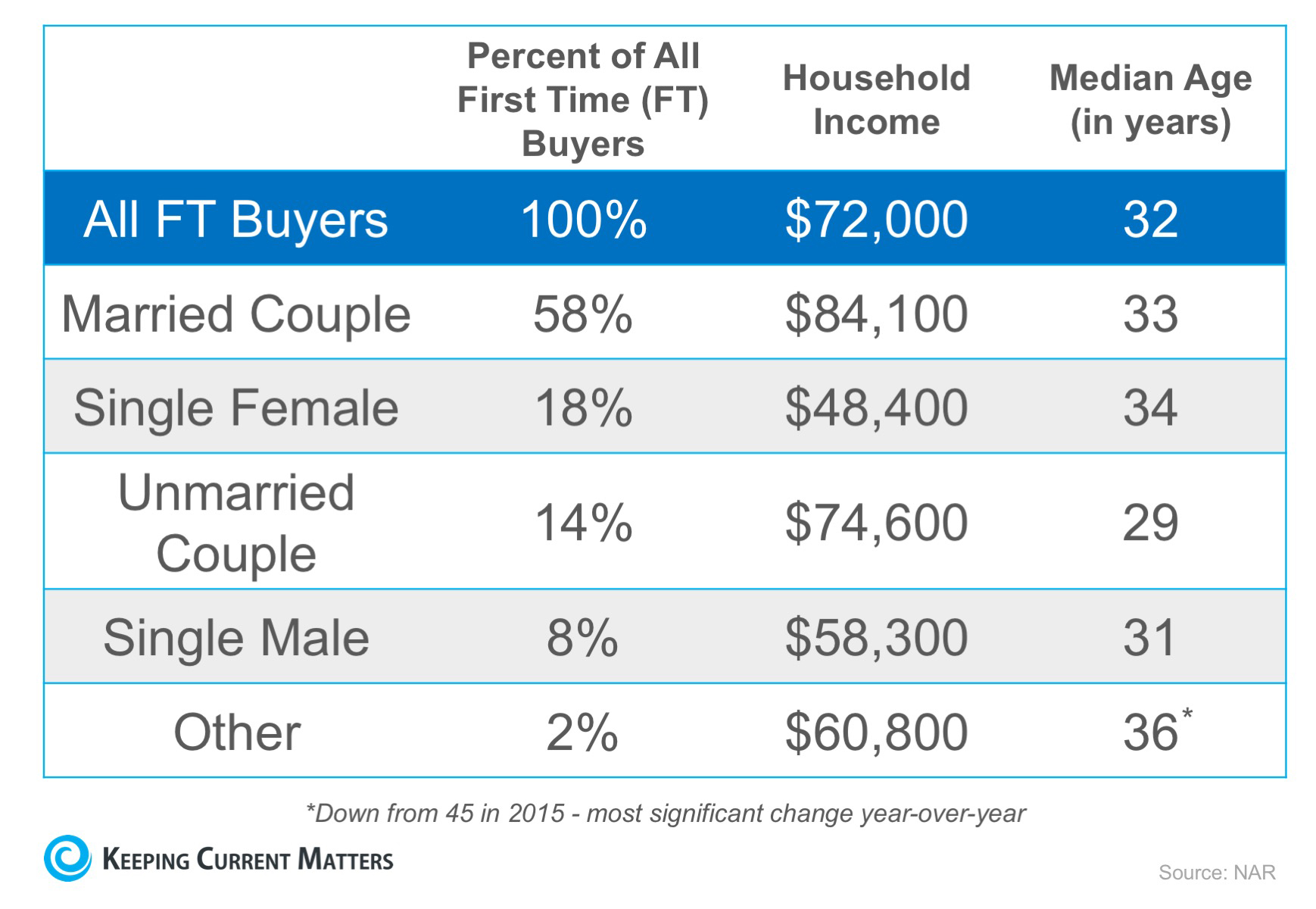
According to the National Association of REALTORS most recent Profile of Home Buyers & Sellers, married couples once again dominated the first-time homebuyer statistics in 2016 at 58% of all buyers. It is no surprise that having two incomes to save for down payments and contribute to monthly housing costs makes buying a home more attainable. But, many couples are also deciding to buy a home before spending what would be a down payment on a wedding, as unmarried couples made up 14% of all first-time buyers last year. If you’re single, don’t fret! Single women made up 18% of first-time buyers in 2016, while single men accounted for 8% of buyers. One recent article pointed to a sense of responsibility and commitment that drives many single women to want to own their home, rather than rent. Here is the breakdown of all first-time homebuyers in 2016 by percentage of all buyers, income, and age: First Comes Love… Then Comes Mortgage? | Keeping Current Matters

Bottom Line

You may not be that much different than those who have already purchased their first homes. Meet with a local real estate professional today who can help determine if your dream home is already within your grasp. 

#RealtorPets

When making decisions about buying, selling or renovating their homes, Americans take their pets pretty seriously. This according to a report out Monday from the National Association of Realtors®. The 2017 Animal House: Remodeling Impact report found that 81% of respondents said that animal-related considerations play a role when deciding on their next living situation.


Friday, February 3, 2017

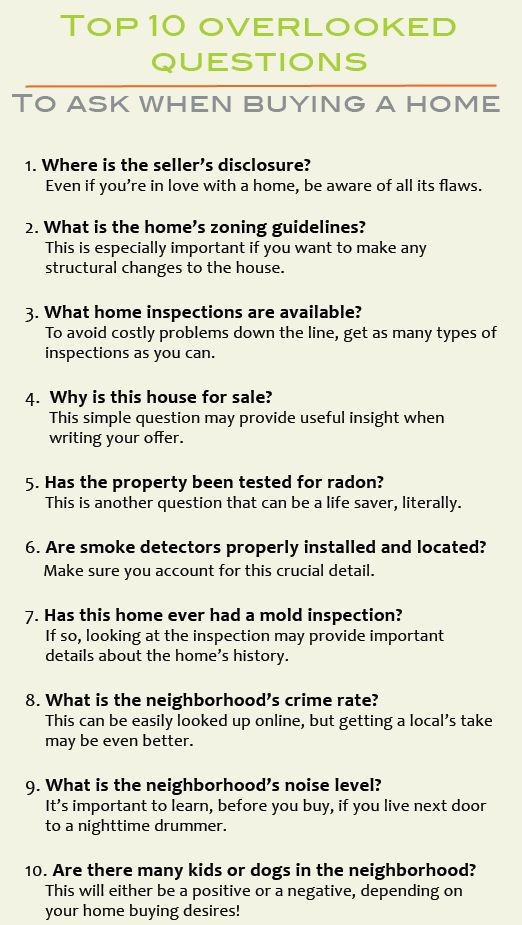
Top 10 Overlooked Questions To Ask When Buying A Home

Buying a home can be overwhelming. So many things to know and so many questions to ask. Check out our list of Top 10 Overlooked Questions to Ask When Buying a Home-- they might come in handy! Call me if you still have questions!


Thursday, February 2, 2017

How To Save For A Downpayment

Saving for a new home has just become easier. Both Fannie Mae and Freddie Mac say they will now buy mortgages with as little as 3% down, a big drop from the old 5% minimum. Even though conforming loans are now easier to qualify for because down payment requirements have been reduced, there’s still the matter of saving not only for a down payment but also for closing costs and a reserve fund for the inevitable repairs and other expenses that come with home ownership.

Thursday, December 22, 2016

Student Loans = Higher Credit Scores


According to a recent analysis by CoreLogic, Millennial renters (aged 20-34) who have student loan debt also have higher credit scores than those who do not have student loans. This may come as a surprise, as there is so much talk about student loans burdening Millennials and holding them back from many milestones that previous generations have been able to achieve (i.e. homeownership, investing for retirement). CoreLogic used the information provided on rental applications and the applicants' credit history from credit bureaus to determine if there was a correlation between student loan debt and credit scores. The analysis concluded that:
"Student loan debt did not prevent millennials from access to credit even though it may delay their homebuying decisions."
In fact, those with a higher amount of debt actually had higher credit scores.
"Renters with student loan debt have higher average credit scores than those without; and those with higher debt amounts have higher average credit scores than those with lower student loan debt amounts."

Bottom Line

Millennials are on pace to become the most educated generation in our nation's history, with that comes a pretty big bill for education. But there is a light at the end of the tunnel:
"Despite the fact that student loan debt has grown into the nation's second largest consumer debt, following mortgage, and has created a significant financial burden for millennials, it does not appear to prevent millennials from accessing credit."

First Time Home Buyer Vocab

The main difference between a pre-approval and a loan application is that there is no specific property when a pre-approval is issued. A pre-approval means that your mortgage consultant will gather all the necessary information to give you a full approval, subject to a successful appraisal… giving you the same negotiating strength as a cash buyer. It also means that you will be able to close your loan quickly and the seller can move into their new home faster.


Thursday, December 15, 2016

New Homes

New Construction: The master bathroom has a large stone and tile glass-enclosed shower stall, complete with a bench. A small chandelier hangs above the large soaking tub. The dark-wood vanity is topped with marble. What do you think?