Showing posts with label Short Sales. Show all posts

Monday, September 23, 2019

Is Your House “Priced to Sell Immediately”?


In today’s real estate market, more houses are coming to market every day. Eager buyers are searching for their dream homes, so setting the right price for your house is one of the most important things you can do.

According to CoreLogic’s latest Home Price Index, home values have risen at over 6% a year over the past two years, but have started to slow to 3.6% over the last 12 months. By this time next year, CoreLogic predicts home values will be 5.4% higher.

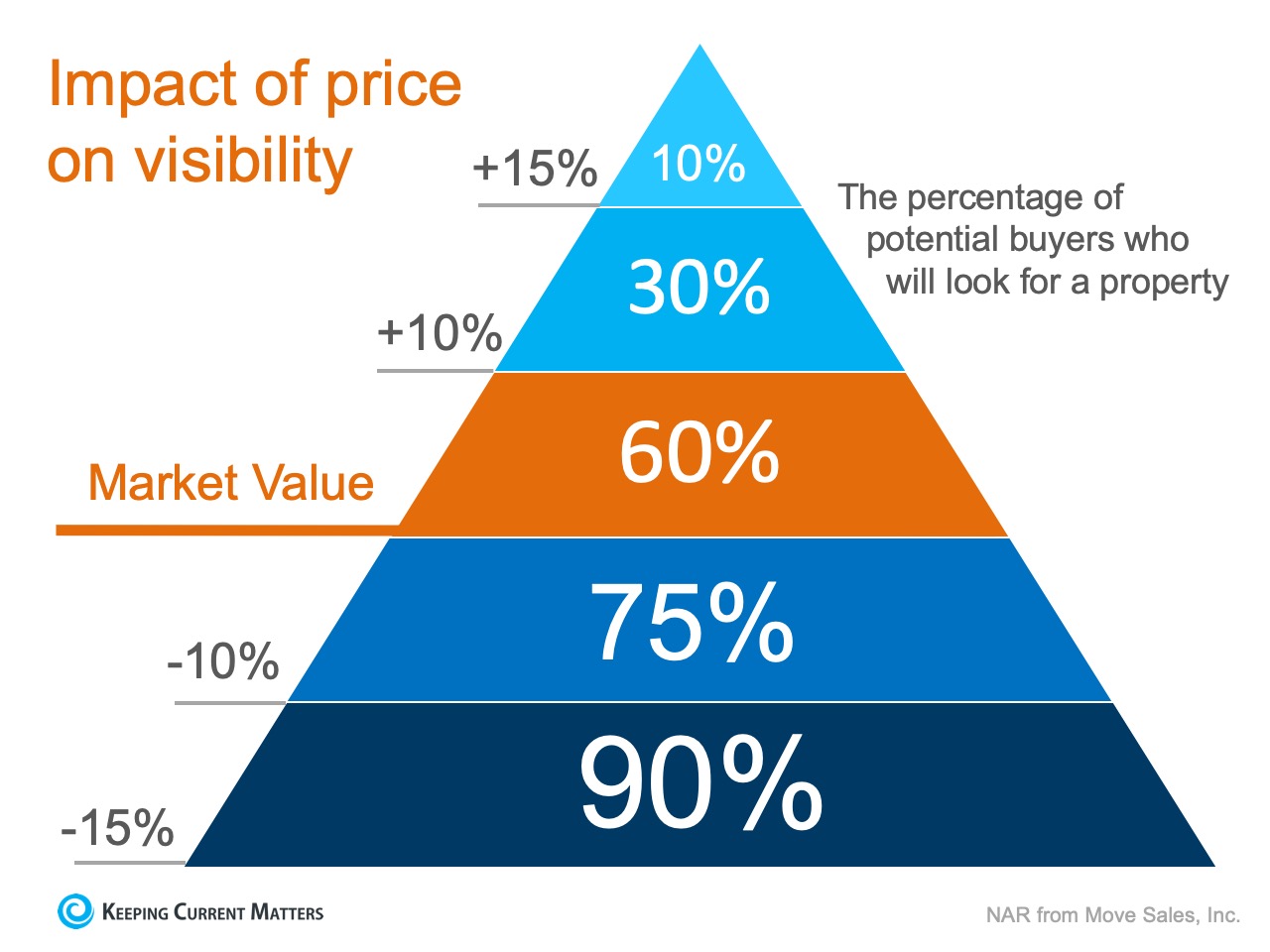
With prices slowing from their previous pace, homeowners must realize that pricing their homes a little over market value to leave room for negotiation will actually dramatically decrease the number of buyers who will see their listing (see the chart below).Is Your House “Priced to Sell Immediately”? | Keeping Current Matters Instead of the seller trying to ‘win’ the negotiation with one buyer, they should price their house so demand for the home is maximized. By doing so, the seller will not be negotiating with a buyer over the price, but will instead have multiple buyers competing with each other over the house.

The secret is making sure your house is Priced To Sell Immediately (PTSI). That way, your home will be seen by the most potential buyers. It will sell at a great price before more competition comes to the market.

Bottom Line

If you’re debating listing your house for sale, reach out to a local real estate professional to discuss how to price your home appropriately and maximize your exposure.

Wednesday, June 5, 2019

The Feeling You Get from Owning Your Home

We often talk about the financial reasons why buying a home makes sense. But, more often than not, the emotional reasons are the more powerful and compelling ones.

No matter what shape or size your living space is, the concept and feeling of home can mean different things to different people. Whether it’s a certain scent or a favorite chair, that feeling of safety and security you gain from owning your own home is simultaneously one of the greatest and most difficult to describe.


Frederick Peters, a contributor for Forbes, recently wrote about that feeling, and the pride that comes from owning your own home.
“As homeowners discover, living in an owned home feels different from living in a rented home. It’s not just that an owner can personalize the space; it touches a chord even more fundamental than that.
Homeownership enhances the longing for self-determination at the heart of the American Dream. First-time homeowners, young or old, radiate not only pride but also a sense of arrival, a sense of being where they belong. It cannot be duplicated by owning a 99-year lease.”

Bottom Line

Owning a home brings a sense of accomplishment and confidence that cannot be achieved through renting. If you are debating renewing your lease, meet with a local real estate professional first. They can help answer any questions you have about what your next steps should be and what is required in today’s market!

Monday, March 27, 2017

Selling A Home "As-Is"


Fixer-uppers can be a challenge  to market. Many prospective home buyers are looking for a move-in ready home that will be reliable. Some people are turned off by the idea of having to invest time and money in renovations, and the fear of the unknown is enough to have them overlook any properties that are being sold as-is. Despite the number of homeowners who disregard any fixer-uppers, there is a lot of potential in selling a home as-is. If you’re looking to sell your home quickly, then listing it as-is could be the right option for you. With the right marketing knowledge, you can find qualified buyers, market a fixer-upper at the right price and get it sold quickly and for more money. Contact me today if you have questions about listing your home "As-Is". 

Wednesday, March 8, 2017

How Long Does It Take to Buy a House?

Find out the amount of time each step in the home buying process typically takes.

Buying a home generally takes two to three months, depending on factors including your credit, how long lender approval takes, and the act of searching for the right property. “It varies, but on average it takes between 30 and 45 days to buy a home,” said Nadeem Qureshi, real estate agent at Champions Real Estate Group.
 
The process of buying a house can be broken down into six steps, each of which takes a relatively predictable amount of time.

1. Fix Credit Report Errors Before You Buy a House: 8 Weeks

“Before you can consider purchasing a home or securing a mortgage, you need to make sure your credit is good,” said Qureshi. What’s considered good is subjective. The FHA currently offers loans with just 3.5 percent down for people with scores of at least 580, but that score might be too low to qualify for a conventional loan.
Credit scores are based on factors like credit usage and history of on-time payments. Mistakes in your report can sink your chances for a good interest rate, or even prevent you from being qualified. Order a credit report early in the house-buying process and search for errors to challenge. All three credit bureaus — TransUnion, Equifax and Experian — respond to disputes within 30 days. From there it takes another month for the changes to reflect.
 

2. Get Mortgage Preapproval or Mortgage Prequalification: 18 Days

“Smart shoppers will seek loan pre-approval prior to beginning their search for a home,” said Jason Haynes, broker associate at Century 21 Stopper & Associates. “I have a mortgage broker who I routinely work with, and given all the necessary information and paperwork, loan pre-approval can take less than 48 hours.”
According to CBS, however, that scenario is rare. Pre-approval requires borrowers to submit detailed, accurate records related to their finances, credit history, income, assets and debt for review by loan officers and underwriters.
That can happen in two or three days, or as many as 45 days, but those timelines are outliers. The average is about 18 days from the start of the process to finish.

3. Find a Real Estate Agent: 1 to 30 Days

“There is no real method to choosing an agent,” Haynes said. “I’ve been told I was chosen because I ‘looked like a nice guy on the website.’ Plus, picking an agent can take only a few minutes in the online world.”
 
But spending a few weeks researching can’t hurt — especially if you’re buying your first home. Buyers need to trust their agents and vet them to ensure they’re diligent, competent and honest.
Get references from friends and family, and hire someone local with intimate knowledge of the area in which you want to buy. Ask questions like:
  • How long have you been in the business?
  • Is real estate your full-time job?
  • How many buyers do you work with at once, on average?

4. Research Potential Houses and Neighborhoods: 3 Weeks

“Searching for homes has become much more streamlined,” said Haynes. “With websites such as Zillow.com and Trulia.com, buyers can often create a short list of properties before reaching out to an agent.” Sites like these can be used to filter specific search parameters and help estimate the expenses associated with closing on a house.
“It’s a good idea to break up your housing criteria into needs, wants and desires,” said Candy Miles-Crocker, associate broker at Long and Foster Real Estate, Inc. “Needs are those amenities that the buyer simply can’t live without. Wants are those amenities that would be nice. Desires are those amenities that would be over-the-top wonderful.”

5. Find the Right House and Make an Offer: Varies

“After the initial meeting, the realtor will send the buyer various listings that meet their criteria, and the buyer can decide if they would like to see any of the properties,” said Miles-Crocker. “But once the buyer finds a house that they love, the process moves extremely quickly.”
That process is different for everyone. “I’ve had had couples take one day and couples that take up to one year,” said Qureshi.
“Once the offer is written and signed by the buyer, the realtor will present the offer and the seller has three options: accept, reject or counter,” said Miles-Crocker.
How long does it take to close on a house? That depends a lot on the next step: the inspection.
 

6. Get a House Inspection: 1 Week

“A home inspection is the single most important thing you can invest in when purchasing your home,” said Daniel Garcia, realtor with RE/MAX. “The consumer and real estate agent can only see cosmetic defects while walking through a property, whereas a home inspector will conduct a thorough inspection.”
A home might seem great, but if it needs repairs or has any issues, you need to make sure it’s still worth your money, Garcia said.
An inspection will take up to three hours, but getting the inspector to the house can take up to one week. Most real estate agents can recommend an inspector with whom they frequently work, but buyers can select their own inspector.
The house-buying process is different for everyone, and the average time to buy a house varies by homebuyer. Almost without exception, however, buyers will encounter these six steps.

Tuesday, February 21, 2017

Access: A Key Component in Getting Your House SOLD!


So, you’ve decided to sell your house. You’ve hired a real estate professional to help you with the entire process, and they have asked you what level of access you want to provide to potential buyers. There are four elements to a quality listing. At the top of the list is Access, followed by Condition, Financing, and Price. There are many levels of access that you can provide to your agent so that he or she can show your home.Here are five levels of access that you can give to buyers, along with a brief description:

  1. Lockbox on the Door – this allows buyers the ability to see the home as soon as they are aware of the listing, or at their convenience.
  2. Providing a Key to the Home – although the buyer’s agent may need to stop by an office to pick up the key, there is little delay in being able to show the home.
  3. Open Access with a Phone Call – the seller allows showing with just a phone call’s notice.
  4. By Appointment Only (example: 48 Hour Notice) – Many buyers who are relocating for a new career or promotion start working in that area prior to purchasing their home. They often like to take advantage of free time during business hours (such as their lunch break) to view potential homes. Because of this, they may not be able to plan their availability far in advance or may be unable to wait 48 hours to see the house.
  5. Limited Access (example: the home is only available on Mondays or Tuesdays at 2pm or for only a couple of hours a day) - This is the most difficult way to be able to show your house to potential buyers.
In a competitive marketplace, access can make or break your ability to get the price you are looking for, or even sell your house at all. 

Monday, February 6, 2017

4 Tips To Sell Your Home Quickly

A quick and profitable sale is the goal in mind when selling your home. Who doesn’t want their home to sell quickly and for the best price? timgrissett.com


Thursday, December 29, 2016

Start 2017 Off Right... List Your House for Sale


As we are about to bring in the New Year, families across the country will be deciding if this is the year that they will sell their current house and move into their dream home. Many will decide that it is smarter to wait until the spring "buyer's market" to list their house. In the past, that might have made sense. However, this winter is not like recent years. The recent jump in mortgage rates has forced buyers off the fence and into the market, resulting in incredibly strong demand RIGHT NOW!! At the same time, inventory levels of homes for sale have dropped dramatically as compared to this time last year. Here is a chart showing the decrease in inventory levels by category:

Bottom Line

Demand for your home is very strong right now while your competition (other homes for sale) is at a historically low level. If you are thinking of selling in 2017, now may be the time. 

Wednesday, December 14, 2016

The #1 Reason to Sell Now... Not Next Spring

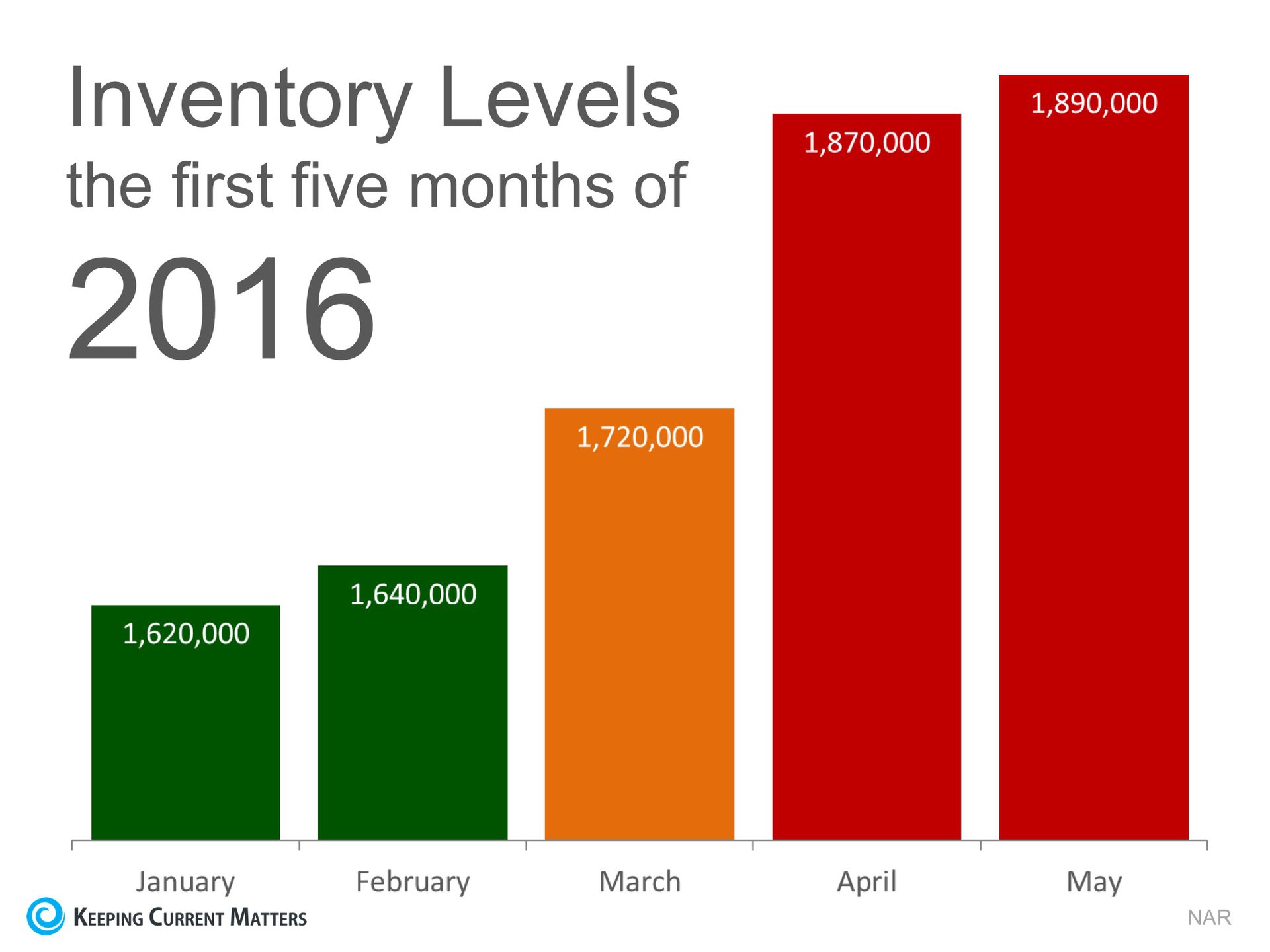
The price of any item (including residential real estate) is determined by 'supply and demand'. If many people are looking to buy an item and the supply of that item is limited, the price of that item increases. According to the National Association of Realtors (NAR), the supply of homes for sale dramatically increases every spring. As an example, here is what happened to housing inventory at the beginning of 2016: The #1 Reason to Sell Now... Not Next Spring | Keeping Current Matters

Putting your home on the market now instead of waiting for increased competition in the spring might make a lot of sense.

Bottom Line

Buyers in the market during the winter months are truly motivated purchasers. They want to buy now. With limited inventory currently available in most markets, sellers are in a great position to negotiate.

Wednesday, November 23, 2016

Thinking of Selling? Don't Overlook an Outdated Kitchen, Buyers Won't

If you are planning on listing your home for sale, make sure that you don't overlook the condition of your kitchen. A recent article on realtor.com listed "7 Signs Your Kitchen Is Way Overdue for a Renovation," in which they warned:
"Dated kitchens--just like bathrooms--are a major barrier for resale. Buyers want modern amenities and styling, and most aren't interested in renovating post-purchase."


Kitchen remodels can be pricey, with many complete remodels costing $20,000 or more. But not every kitchen needs a full remodel. There are many smaller projects that will help buyers see themselves trying their favorite Pinterest recipe in your home! Here are a couple of project ideas that, if you're handy or know someone who is, could end up boosting your home's value without breaking the bank:
  • Are the cabinets in good shape but need an update? A new coat of paint and some updated hardware will instantly freshen up the space and drastically change the feel of the room all for under $300.
  • A new backsplash to match the freshly painted cabinets updates the space and adds some style while staying under $200, depending on the size of the room.
  • If the kitchen seems dark, consider adding LED under cabinet lighting for around $40.
  • If replacing the countertops in the kitchen isn't within your budget, consider using a top coat to cover the current countertops.
If you decide to complete a full remodel of your outdated kitchen, you can expect a 67% return on a $30,000 upgrade (the national median cost). The benefits of a kitchen remodel aren't purely financial, according to Houselogic:
"Eighty-two percent of homeowners said their updated kitchen gave them a greater desire to be at home, and 95% were happy or satisfied with the result."

Bottom Line

Kitchens and bathrooms are often make or break for buyers when touring a home or searching through photo galleries online. Consult a local real estate professional who can help you identify which small projects could pay off big!

Tuesday, November 22, 2016

Why Are Mortgage Interest Rates Increasing?

According to Freddie Mac's latest Primary Mortgage Market Survey, the 30-year fixed rate mortgage interest rate jumped up to 3.94% last week. Interest rates had been hovering around 3.5% since June, and many are wondering why there has been such a significant increase so quickly. Why did rates go up?

Whenever there is a presidential election, there is uncertainty in the markets as to who will win. One way that this is noticeable is through the actions of investors. As many investors pull their funds from the more volatile and less predictive stock market and instead, choose to invest in Treasury Bonds. When this happens, the interest rate on Treasury Bonds does not have to be as high to entice investors to buy them, so interest rates go down. Once the elections are over and a President has been elected, investors return to the stock market and other investments, leaving the Treasury to raise rates to make bonds more attractive again. Simply put, the better the economy, the higher interest rates will go. For a more detailed explanation of the many factors that contribute to whether interest rates go up or down, you can follow this link to Investopedia.The Good News

Even though rates are closer to 4% than they have been in nearly 6 months, they are still slightly below where we started 2016, at 3.97%. The great news is that even at 4%, rates are still significantly lower than they have been over the last 4 decades, as you can see in the chart below.


Any increase in interest rate will impact your monthly housing costs when you secure a mortgage to buy your home. A recent Wall Street Journal article points out that,"While still only roughly half the average over the past 45 years, according to Freddie Mac, the quick rise has lenders worried that home loans could become more expensive far sooner than anticipated." Tom Simons, a Senior Economist at Jefferies LLC, touched on another possible outcome for higher rates:"First-time buyers look at the monthly total, at what they can afford, so if the mortgage is eaten up by a higher interest expense then there's less left over for price, for the principal. Buyers will be shopping in a lower price bracket; thus demand could shift a bit."

Bottom Line

Interest rates are impacted by many factors, and even though they have increased recently, rates would have to reach 9.1% for renting to be cheaper than buying. Rates haven't been that high since January of 1995, according to Freddie Mac.

Thursday, November 10, 2016

Getting ready to sell? Move your property fast – and for the highest price possible – with these affordable tricks. These easy changes will make your home more attractive to potential buyers, and you can start at any stage in the selling process. timgrissett.com


Wednesday, November 9, 2016

Real Estate Hidden Gems

Pricing a home is more art than science. Get beyond the standard information you can search online like square footage, bedrooms, bathrooms, year built, etc. Homebuyers should be on the lookout for some of these hidden gems that may be undervalued (or not even included) in the listing price.


Thursday, November 3, 2016

What the current housing shortage means for you

If you've been thinking of trading up to a more luxurious home, you'll want to read this.

You may have heard that we're in the middle of a housing shortage.

It's certainly true for mid-market and lower-priced homes.

The number of such homes on the national market has declined over 40% in the last four years, and prices have increased accordingly.

There are a few different reasons behind this.

Builders have been focusing mostly on higher-priced homes. Investors have turned many lower-priced homes into rentals. More people are looking to buy thanks to historically low mortgage rates.

So yes, there’s a shortage...but what does this mean for you?

First, if you're looking to sell your home, the current market offers a great opportunity.

Thanks to the shortage in the market, you can sell your home more quickly.

This summer, the typical home stayed on the market for just 35 days, and 47% of homes sold in less than a month. Compare that to 2012, when the typical home was on the market for over two months!

You can also sell your home for more in today’s market. Prices are 5.3% higher now than they were a year ago, and many homes end up selling for more than their asking price.

Curious about how much your home is worth in the current market?

Taking into account recent sales, I can give you a good estimate of the current value of your home.

I mentioned that now is also a good time to trade up to a bigger, higher-priced home.

You see, prices of top-tier homes have grown at a slower rate than mid- and low-priced homes. In addition, 16% of top-tier homes over the last year sold for less than their asking price.

There is also a greater supply of premium homes — they now make up 46% of available homes on the market.

This means it’s a great time to buy a top-tier home.

What kinds of homes are for sale right now?

Wednesday, November 2, 2016

How Long Do Families Stay in a Home?


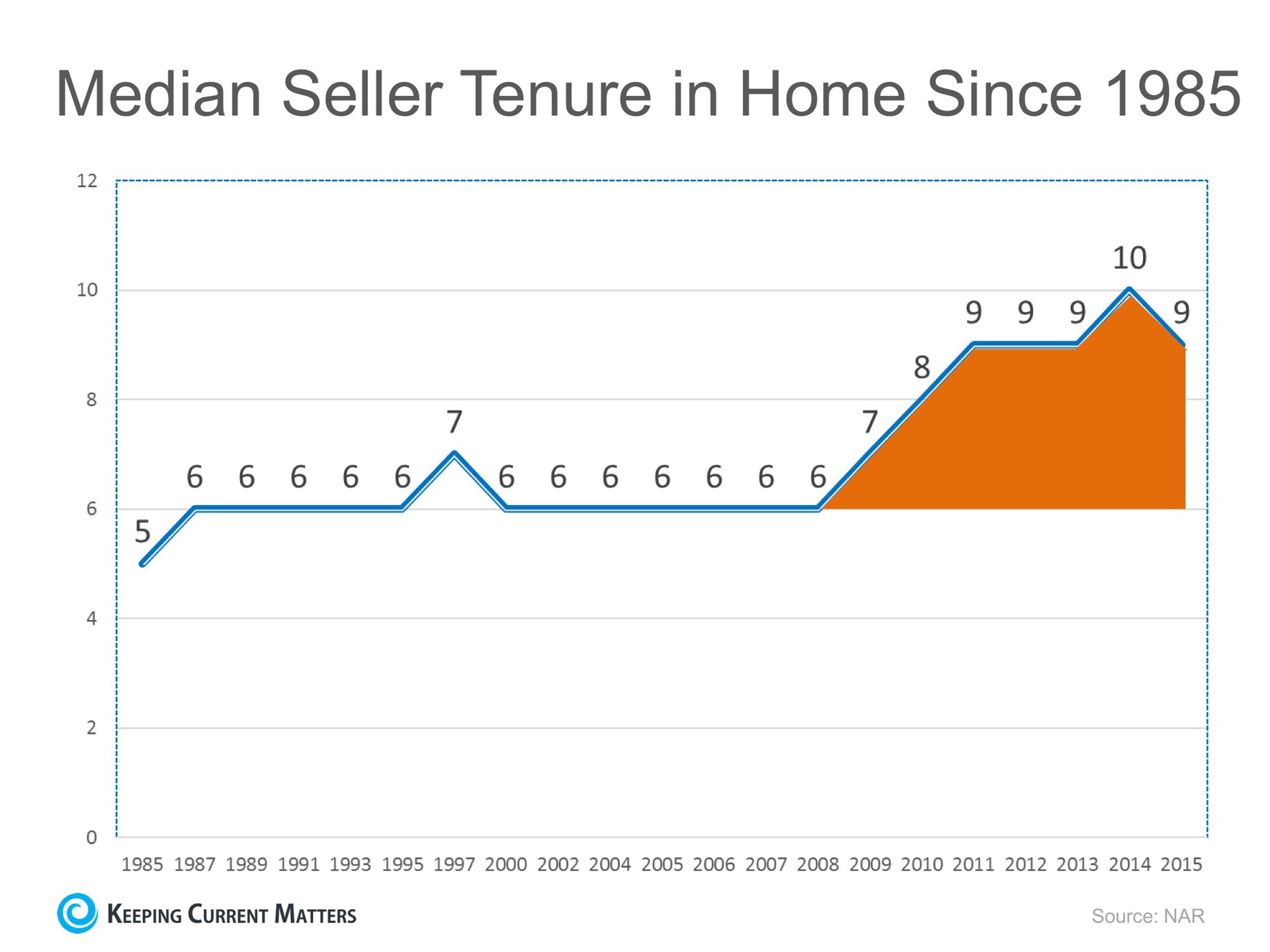
The National Association of Realtors (NAR) keeps historic data on many aspects of homeownership. One of the data points that has changed dramatically is the median tenure of a family in a home. As the graph below shows, for over twenty years (1985-2008), the median tenure averaged exactly six years. However, since 2008, that average is almost nine years - an increase of almost 50%. How Long Do Families Stay in a Home? | Keeping Current Matters

Why the dramatic increase?

The reasons for this change are plentiful. The top two reasons are:
  1. The fall in home prices during the housing crisis left many homeowners in a negative equity situation (where their home was worth less than the mortgage on the property).
  2. The uncertainty of the economy made some homeowners much more fiscally conservative about making a move.
However, with home prices rising dramatically over the last several years, over 90% of homes with a mortgage are now in a positive equity situation with 70% of them having at least 20% equity. And, with the economy coming back and wages starting to increase, many homeowners are in a much better financial situation than they were just a few short years ago.

What does this mean for housing?

Many believe that a large portion of homeowners are not in a house that is best for their current family circumstances. They could be baby boomers living in an empty, four-bedroom colonial, or a millennial couple planning to start a family that currently lives in a one-bedroom condo. These homeowners are ready to make a move. Since the lack of housing inventory is a major challenge in the current housing market, this could be great news.

Monday, October 31, 2016

Taking the Fear out of the Mortgage Process


A considerable number of potential buyers shy away from jumping into the real estate market due to their uncertainty about the buying process. A specific cause for concern tends to be mortgage qualification.

For many, the mortgage process can be scary, but it doesn't have to be!

In order to qualify in today's market, you'll need to have saved for a down payment (the average down payment on all loans was 11% last month, with many buyers putting down 3% or less), a stable income and good credit history. Throughout the entire home buying process, you will interact with many different professionals, all of which perform necessary roles. These professionals are also valuable resources for you. Once you're ready to apply, here are 5 easy steps that Freddie Mac suggests to follow:
  1. Find out your current credit history & score - even if you don't have perfect credit, you may already qualify for a loan. The average FICO Score of all closed loans in September was 731, according to Ellie Mae.
  2. Start gathering all of your documentation - income verification (such as W-2 forms or tax returns), credit history, and assets (such as bank statements to verify your savings).
  3. Contact a professional - your real estate agent will be able to recommend a loan officer that can help you develop a spending plan, as well as determine how much home you can afford.
  4. Consult with your lender - he or she will review your income, expenses, and financial goals in order to determine the type and amount of mortgage you qualify for.
  5. Talk to your lender about pre-approval - a pre-approval letter provides an estimate of what you might be able to borrow (provided your financial status doesn't change), and demonstrates to home sellers that you are serious about buying!

Bottom Line

Do your research, reach out to professionals, stick to your budget, and be sure that you are ready to take on the financial responsibilities of becoming a homeowner.

Wednesday, October 26, 2016

Real Estate Tip of the Day!

Real Estate Tip of the Day: Are you selling a home? Will a Buyer know the use of that room you're storing all the kids toys in?