Showing posts with label Home. Show all posts

Tuesday, June 25, 2019

Planting an Edible Garden


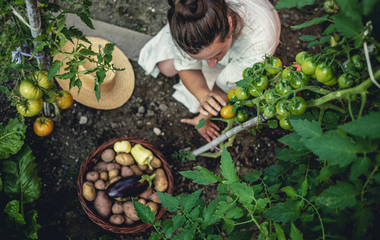
While flower gardens are beautiful and peaceful, homeowners today are increasingly interested in planting small-scale edible gardens. The resulting produce may be better tasting than anything you can get in a supermarket. While you aren't likely to create a sustainable farm, you can have access to fresh produce straight from the garden whenever it's ready to harvest. From leafy greens to herbs and from fruits to vegetables, what you put into an edible garden is exactly what you get it out of it. Here are some tips on planting an edible garden.
The Style of Your Edible Garden
If you plan to sell your home in the future, it's especially important to pay attention to the style of your garden. For example, some people create an edible garden around already existing flower beds in their yard. Or they may use raised beds or pots if they're concerned about the impact of planting on their lawn.
Some cities allow homeowners to have a vegetable garden in their front yard. If that is a part of the culture of your city, it could be seen as a benefit for future resale. Before you plant anything, decide how you want it to look now and in the future.
What to Plant in Your Edible Garden
As long as you can eat it and it can grow in your climate, anything is possible in an edible garden. Popular home garden plants include:
  • Tomatoes.
  • Herbs.
  • Peppers.
  • Potatoes.
  • Carrots.
If you have the yard for it, consider planting a fruit or nut tree. These take a longer time before your first harvest, but there's nothing like apples fresh off the tree in the fall.
Soil and Sun Considerations
You'll need to take into account the amount and timing of the sunlight in your yard to determine how to plant your edible garden. Different plants require different levels and hours of sunlight, so start tracking how the sun hits your property throughout the day during the summer.
You may also want to evaluate your soil and supplement it with additional nutrients if it isn't conducive to growing things. An issue with your soil is also a great reason to consider using raised beds or pots, because they allow you to choose whatever type of soil you need.
Involve the Whole Family 
The idea of planting an edible garden is to enhance your life. It's a great activity for all ages, and you can get the entire family involved. Everyone can have a job, no matter how young or old. Gardening together can be a great bonding experience for the whole family.
You also get the satisfaction of your harvest. You can share your bounty with friends and neighbors, especially if you plant more than you can use before it spoils. Edible gardens pay for themselves very quickly.
Do you want more tips on growing an edible garden for you home? Contact us today.

Thursday, June 6, 2019

What is Important to Boomers when Selling their House?


If you are a “baby boomer” (born between 1946 and 1964), you may be thinking about selling your current home. Your children may have finally moved out. Your large, four-bedroom house with three bathrooms no longer fits the bill. Taxes are too high.

Utilities are too expensive. Cleaning and repair are too difficult. You may be ready to move into a home that better fits your current lifestyle. Many fellow boomers have already made the move you may be considering.

The National Association of Realtors recently released their 2019 Home Buyer and Seller Generational Report. The report revealed many interesting tidbits about both categories of baby boomers: younger boomers (ages 54 to 63) and older boomers (64 to72). Here are a few of the more interesting topics.

Percentage of Buyers who Looked Online First

  • All Buyers: 44%
  • Younger Boomers: 46%
  • Older Boomers: 44%

Where Boomers Found the Home They Purchased

The two major ways buyers found the home they purchased:
  • All buyers: 50% on the internet, 28% through a real estate agent
  • Younger Boomers: 46% on the internet, 33% through a real estate agent
  • Older Boomers: 36% on the internet, 35% through a real estate agent

Distance Seller Moved

The distance between the home they purchased and the home they recently sold was much greater for boomers than the average seller.
  • All sellers: 20 miles
  • Younger Boomers: 27 miles
  • Older Boomers: 50 miles

Tenure in Previous Home of Seller

The percentage of older boomers who lived in their previous home for more than 20 years was almost twice the amount of the average seller.
  • All sellers: 16%
  • Younger Boomers: 20%
  • Older Boomers: 31%

Primary Reason to Sell their Previous Home

  • Want to move closer to friends or family
  • Home too large
  • Retirement

View of Homeownership as a Financial Investment

  • 83% of Younger Boomers see homeownership as a good investment
  • 82% of Older Boomers see homeownership as a good investment

Bottom Line

If you are a boomer and thinking about selling, now might be the time to contact an agent to help determine your options.

Tuesday, June 4, 2019

5 Lawn Care Mistakes That Can Destroy Your Yard


Everyone wants a lawn covered with lush green grass and verdant plants. But what mistakes are preventing you from achieving this? Read on to learn about some common lawn care mistakes and how to prevent them.


1. Cutting Grass Too Short
Experts advise cutting off no more than 30 percent of the grass blade in a single pass. Cutting your grass too short or trimming it down to half of its previous size might be appealing—after all, if your grass is shorter, it will take longer to grow back—but this is not good for the long-term health of your lawn.
In addition to damaging the blade, cutting your grass too short can indirectly damage the root system. This damage will limit the grass's ability to collect light and absorb water, leading to wilting or even plant death. Keeping your grass longer will help it to grow fuller and become more lush.

2. Using Only One Type of Seed
Using a mixture of seeds will result in a mixture of plant types. Different types of grass will survive better in different conditions. The different species will balance out each other's strengths and weaknesses, resulting in a more resilient lawn overall. This will make your turf more likely to survive extreme weather conditions such as prolonged heat or drought.

3. Ignoring the pH of the Soil
The optimal pH for grass is between 6.0 and 6.5. For reference, a neutral pH, such as that of water, is 7.0. This means that your lawn's soil should be slightly acidic in order to bolster plant growth. Sending away a soil sample for testing can be an easy way to get a gage on your lawn's pH. If the pH is out of whack, it can easily be adjusted using sulfur or lime treatments.

4. Forgetting to Sharpen Your Lawn Mower's Blade
A sharp blade will cut your grass more cleanly, while a dull blade can cause bruising and other damage to each blade of grass. Damaged blades of grass are more susceptible to death or disease, so using a sharp lawn mower blade can contribute to the overall health of your lawn.

Most people should sharpen their lawn mower blades approximately twice a year. A good sign that your blade is too dull is that your lawn mower is tearing or crushing your grass instead of cutting it cleanly.

5. Collecting Grass Clippings
Many lawn mowers come with an attached bag that will gather up the grass as it is cut. This is a visually appealing strategy, but it is not good for your lawn's long-term health. Instead, you should leave the grass clippings spread around your lawn. This self-mulching strategy will help fertilize your remaining grass. In particular, this is useful in maintaining your soil's nitrogen levels—a key factor in lawn health.


If you can avoid making these 5 common lawn care mistakes, you will enjoy a lush, green lawn throughout the year.

Friday, May 24, 2019

The Impact Staging Your Home Has On Your Sale Price


Some Highlights:

  • The National Association of Realtors surveyed their members & released the findings of their Profile of Home Staging.
  • 62% of seller’s agents say that staging a home decreases the amount of time a home spends on the market.
  • 50% of staged homes saw a 1-10% increase in dollar-value offers from buyers.
  • 77% of buyer’s agents said staging made it easier for buyers to visualize the home as their own.
  • The top rooms to stage in order to attract more buyers are the living room, master bedroom, kitchen, and dining room.

Thursday, April 13, 2017

Home Mortgages: Rates Up, Requirements Easing


The media has extensively covered the rise in mortgage interest rates since last fall (from 3.42% last September to the current 4.1% according to Freddie Mac). However, a less covered aspect of the mortgage market is that requirements to get a mortgage have eased while rates have risen. The Mortgage Bankers Association (MBA) quantifies the availability of mortgage credit each month with their Mortgage Credit Availability Index (MCAI). According to the MBA, the MCAI is:
“A summary measure which indicates the availability of mortgage credit at a point in time.”
The higher the index, the easier it is to get a mortgage. Here is a chart showing the MCAI over the last several months as rates have increased. Home Mortgages: Rates Up, Requirements Easing | Keeping Current Matters

Have requirements for attaining a mortgage actually eased?

Yes. Here are two examples:
  1. FICO® Score – the credit score which helps determine a buyer’s eligibility. The score required to attain a mortgage has been falling over the last five months:
Home Mortgages: Rates Up, Requirements Easing | Keeping Current Matters
  1. Down Payment Requirement – the percentage of the purchase price necessary to place as a down payment on a home. To make this point, let’s look at the percentage of first-time buyers who have put less than 5% down over the last several years as compared to the 1st quarter of 2017:
Home Mortgages: Rates Up, Requirements Easing | Keeping Current Matters

Bottom Line

Whether you are a current homeowner looking to move to a home that will better serve your family’s current needs, or a first-time buyer looking for a starter home, it is easier to get a mortgage today than it has been at any other time in the last ten years.

Wednesday, February 22, 2017

Thursday, February 16, 2017

Thursday, January 12, 2017

Why You Should Never Skip A Home Inspection

Before you buy a home, one of the things you should do is to have the home checked out by a professional home inspector. When you are purchasing a home, you want to know every strength and weakness your new home has. Having this information before you close is paramount for negotiations as well as maintaining your new home for the long term. Comprehensive residential inspections cover moisture, mold, attic, termite, structural, roofing, insulation, plumbing systems, heating and cooling systems, electrical wiring and electrical systems inspections. Never skip a home inspection.