Showing posts with label #SelfDirectedIRA #RealEstateInvesting. Show all posts

Wednesday, January 15, 2020

Homes Are More Affordable Today, Not Less Affordable


There’s a current narrative that owning a home today is less affordable than it has been in the past. The reason some are making this claim is because house prices have substantially increased over the last several years.

It’s not, however, just the price of a home that matters.

Homes, in most cases, are purchased with a mortgage. The current mortgage rate is a major component of the affordability equation. Mortgage rates have fallen by over a full percentage point since December 2018. Another major piece of the affordability equation is a buyer’s income. The median family income has risen by approximately 3% over the last year.

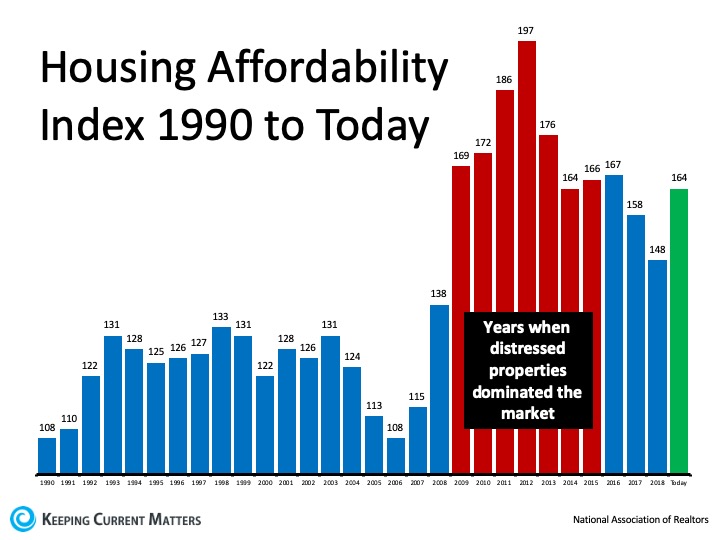
The National Association of Realtors (NAR) releases a monthly Housing Affordability Index. The latest index shows that home affordability is better today than at almost any point over the last 30 years. The index determines how affordable homes are based on the following:
“A Home Affordability Index value of 100 means that a family with the median income has exactly enough income to qualify for a mortgage on a median-priced home. An index of 120 signifies that a family earning the median income has 20 percent more than the level of income needed pay the mortgage on a median-priced home, assuming a 20 percent down payment so that the monthly payment and interest will not exceed 25 percent of this level of income (qualifying income).”
The higher the index, therefore, the more affordable homes are. Here is a graph showing the index since 1990:Homes Are More Affordable Today, Not Less Affordable | Keeping Current MattersObviously, affordability was better during the housing crash when distressed properties – foreclosures and short sales – sold at major discounts (2009-2015). Outside of that period, however, homes are more affordable today than any other year since 1990, except for 2016.

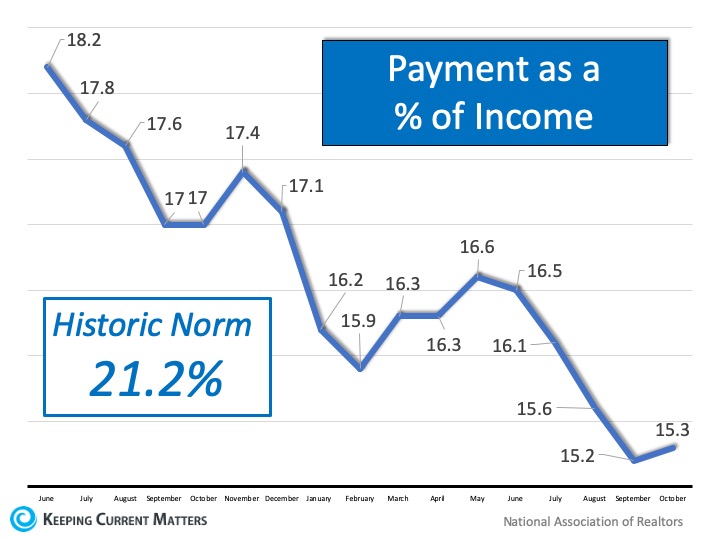
The report on the index also includes a section that calculates the mortgage payment on a median priced home as a percentage of the median national income. Historically, that percentage is just above 21%. Here are the percentages since June of 2018:Homes Are More Affordable Today, Not Less Affordable | Keeping Current MattersAgain, we can see that affordability is much better today than the historical average and has been getting better over the last year and a half.

Bottom Line

Whether you’re thinking about buying your first home or moving up to the home of your dreams, don’t let the false narrative about affordability prevent you from moving forward. From an affordability standpoint, this is one of the best times to buy in the last 30 years.

Tuesday, July 23, 2019

What Do I Need to Know About Mold?


There are few things that homeowners dread more than mold in the house. You’ve likely heard horror stories about people living with mold infestations that made them seriously ill. Is this just hype, or is there a real danger to having mold in your home? More importantly, what can you do if you find mold growing somewhere in the house?

What Is Mold?

Mold is a broad group of fungi, with thousands of species and subspecies around the world that typically prefer dark and damp habitats. Often fuzzy in appearance (though occasionally slimy or cottony), molds spread across materials and break them down to get the nutrients the mold needs to survive and thrive. Instead of seeds, molds release single-celled spores that in many cases are too small to see with the naked eye; these spores float through the air to land on a variety of surfaces, beginning growth once they find themselves in a suitable habitat. Though molds are made up of a number of individual stalks fibers, a connected clump of mold is considered to be a single living entity.

Types of Mold

There are several common types of mold that you might see around the house. While some of these may not be inherently dangerous, any mold can trigger reactions in anyone with an allergy or sensitivity. The five most common of these molds are:
  • Aspergillus: One of the most common indoor molds, it often appears green, blue-green or gray but can also appear white or even yellow.
  • Cladosporium: A black or green mold that has an appearance like ground pepper, it commonly grows on smooth surfaces like toilets and painted walls but can also grow in fabrics and rugs.
  • Ulocladium: A black mold that grows in wet areas, especially in cracks and corners; it is most common in homes with water damage and active leaks.
  • Aureobasidium: Varying in color from pink to brown or black, this mold most commonly grows behind wallpaper, on painted surfaces and on wood.
  • Stachybortrys: The infamous “black mold”, it features a slimy dark green or black color and thrives in areas that are damp and maintain high humidity for weeks.

Is Mold Actually Dangerous?

While many molds are allergens, most will not cause severe reactions unless you have a mold sensitivity or have other health problems that make you more prone to infection. However, some molds (such as black mold) actually are toxic and can make you very sick if you’re around them for too long. Symptoms of a mold allergy or toxic mold exposure can include a chronic cough, skin rashes, fatigue, difficulty focusing and even pain or infection in your sinuses, eyes and ears.

Mold Testing and Removal

If you suspect that you have mold problems, there are home tests available to help you identify the type of mold in your home. These should only be a first step, however, as they often aren’t enough to definitively show you the scope of your mold problem. Call in an expert to confirm the results of your test or take a scraping of the mold and have it analyzed. Be sure to wear a dust mask or other breathing protection if you aren’t sure what type of mold you’re dealing with until the problem is taken care of.

For many mold infestations, getting rid of leaks or other sources of humidity is a great way to slow or even stop mold growth. Mold can cause serious damage over time, however, so you may need professional mold removal and repair services if you can’t get the problem under control early.
Is your home in need of some serious mold removal?

Wednesday, July 3, 2019

Is Mortgage Debt out of Control?


The housing crisis of the last decade was partially caused by unhealthy levels of mortgage debt. Homeowners were using their homes as ATMs by refinancing and swapping their equity for cash.

When prices started to fall, many homeowners found themselves in a negative equity situation (where their mortgage was higher than the value of their home). As a result, they walked away. This caused prices to fall even further.


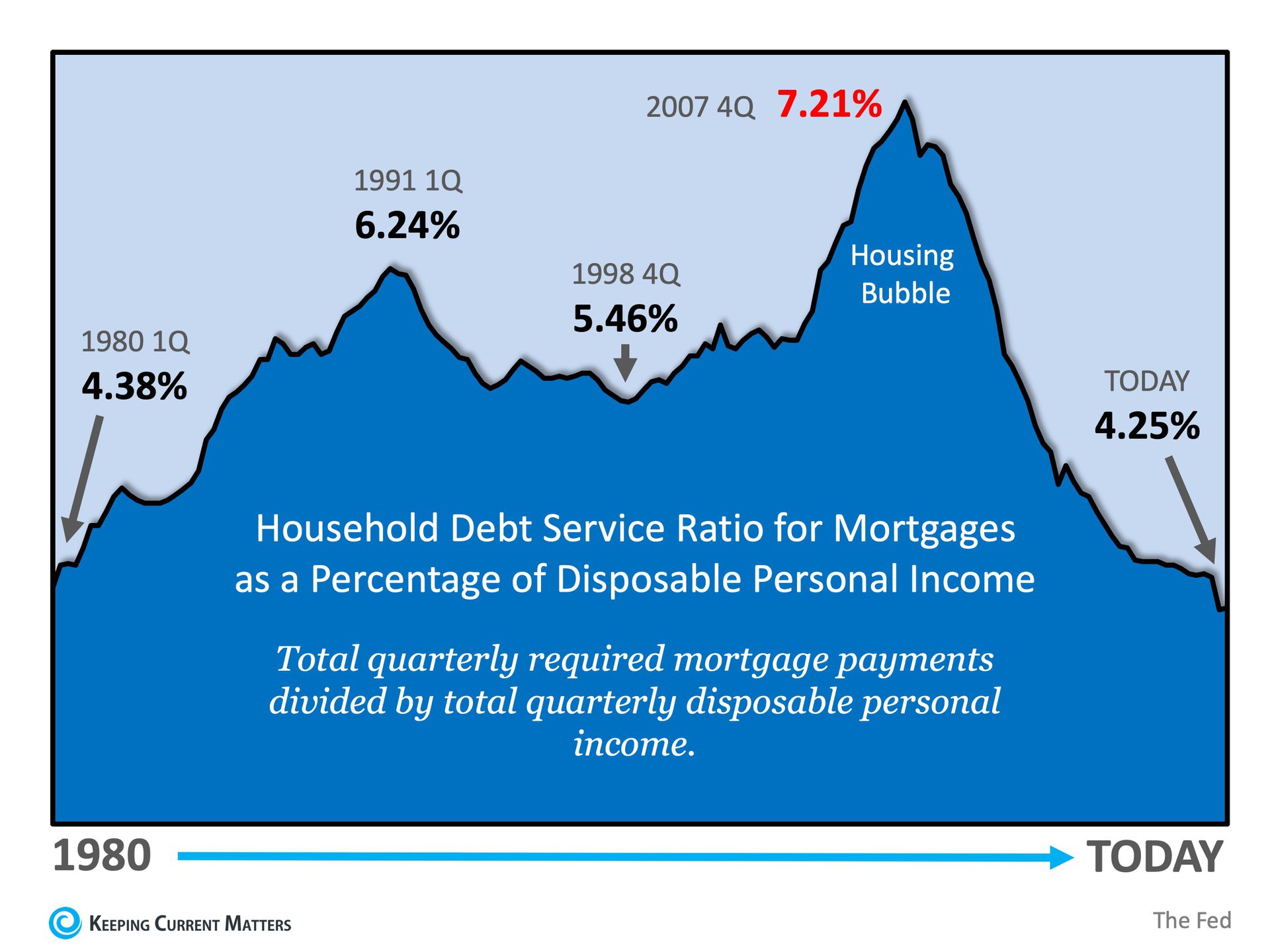
Headlines are again talking about record levels of mortgage debt, making the comparison to the challenges that preceded the housing crash. However, cumulative debt is not an important data point. If we look at the debt as a percentage of disposable personal income, we are at an all-time low.


Here’s a visual representation of mortgage debt as a percent of income:Is Mortgage Debt out of Control? | Keeping Current MattersFurthermore, according to a new report from ATTOM Data Solutions, more than 1-in-4 homes with a mortgage have at least 50% equity. The report explains:
“[O]ver 14.5 million U.S. properties were equity rich — where the combined estimated amount of loans secured by the property was 50 percent or less of the property’s estimated market value — up by more than 834,000 from a year ago to a new high as far back as data is available, Q4 2013.”

Bottom Line

Unlike 2008, homeowners have a comfortable level of mortgage debt and are sitting on massive amounts of home equity. They will not be walking away from their homes if the housing market begins to soften.

Wednesday, June 19, 2019

Summertime Selling Tips


Since school is out and the days are longer, summertime is the perfect time to put your house on the market. Take advantage of warmer weather to spruce up areas that need it. Make sure that when prospective buyers come to look at your home it gleams under the summer sun.

Freshen Up

It's amazing what a big difference a bit of freshening up can make. Indoor and outdoor spaces alike need to reflect the care you’ve given them. It's a good idea to patch holes in drywall, clean carpet and make any repairs that might be a safety concern. A fresh coat of paint can make a dramatic difference. Repaint any rooms that could use some brightening. You don't need to paint the exterior of your house to freshen it up. Try pressure washing siding and decking so that everything looks pristine.

Decorate More Generically

As precious as your family photos are, they are not ideal for potential homebuyers and can be distracting. Clear out any personal items in your home like photos, collections and award certificates. This also includes items that might be considered controversial, such as political flags or morally questionable paraphernalia. It’s not always easy, but it will help you sell more quickly in the long run.

Keep the Outdoors Great

Even if the sun can turn your skin to bronze, you don’t want the same effect on your lawn and garden. Water regularly to keep your grass lush and to make wilted flowers stand up tall and proud once more. Also, don’t underestimate the power of curb appeal; trimmed grass and hedges make a bigger difference than you might think.

Stage the Home

Once the house is clean and working like a well-oiled machine, make it even more beautiful with staging. Professionally staging the home means that furniture and decor are brought into the home by a decorator. This process makes for a clean and cohesive look. Staging can make a huge impact on people who are touring the house.
Use the brightest season of the year to highlight your home’s beauty. You already know it’s a gem, so show buyers why they should think so too!

Friday, May 24, 2019

The Impact Staging Your Home Has On Your Sale Price


Some Highlights:

  • The National Association of Realtors surveyed their members & released the findings of their Profile of Home Staging.
  • 62% of seller’s agents say that staging a home decreases the amount of time a home spends on the market.
  • 50% of staged homes saw a 1-10% increase in dollar-value offers from buyers.
  • 77% of buyer’s agents said staging made it easier for buyers to visualize the home as their own.
  • The top rooms to stage in order to attract more buyers are the living room, master bedroom, kitchen, and dining room.

Tuesday, May 21, 2019

Are Older Generations Really Not Selling Their Homes?

Many studies suggest one of the main reasons for the inventory shortage in today’s market of homes for sale is that older generations have chosen to “age in place” over moving.

The 2019 Home Buyers & Sellers Generational Trend Report by NAR clarifies this point!

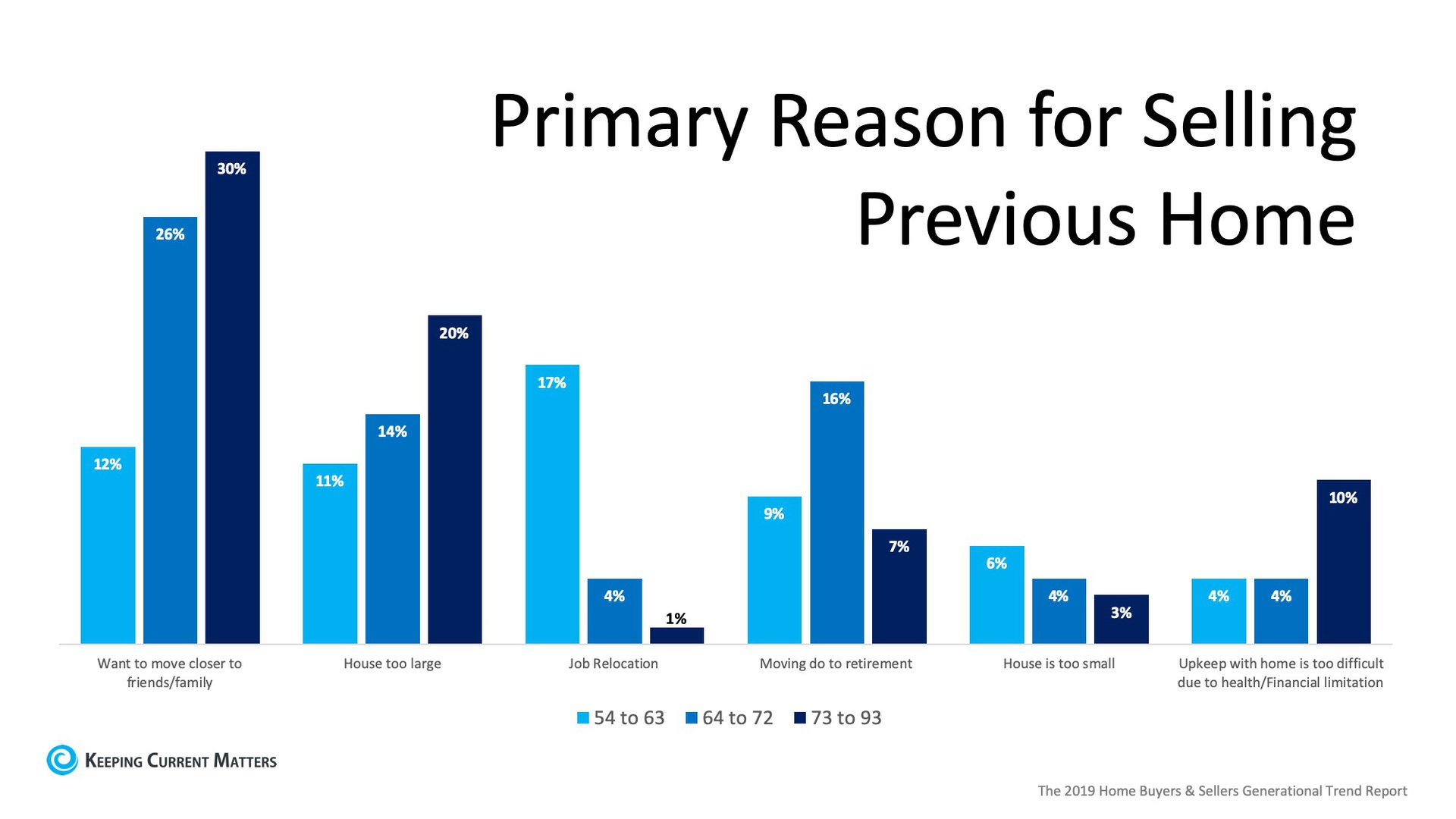
NAR’s findings show that Baby Boomers (43%) and the Silent Generation (12%) made up 56% of sellers in 2018! This means the majority of sellers last year were over the age of 54. This also shows these generations ARE moving!

The report also shared the reasons why they chose to move. According to the research, the top reason was a desire to be closer to friends and family. Below is a full breakdown:
Are Older Generations Really Not Selling their Homes? | Keeping Current Matters
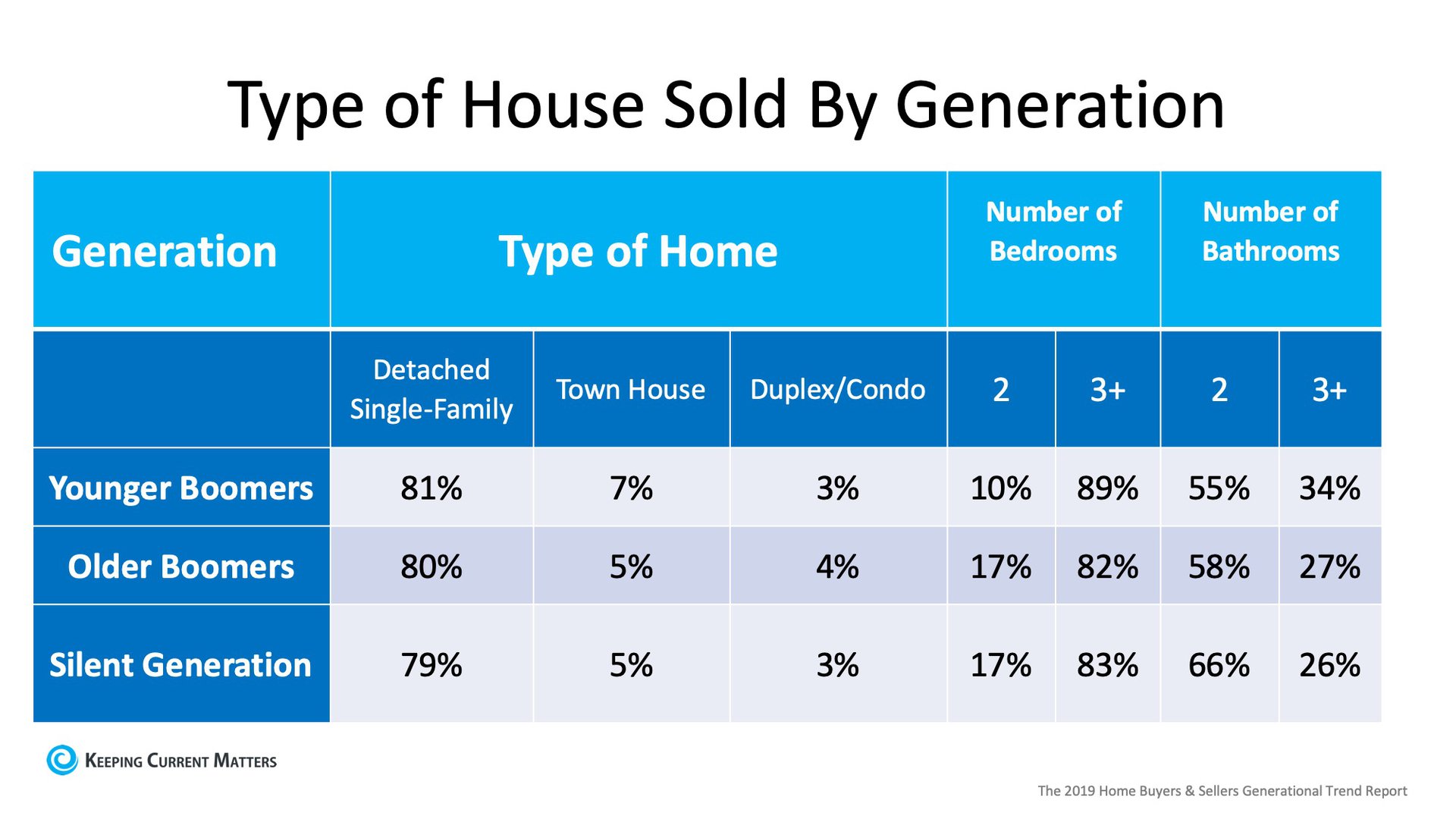
As we can see, they have plenty of reasons to sell their current home! But what type of homes are they trading in?Are Older Generations Really Not Selling their Homes? | Keeping Current Matters
Once again, the report demonstrated that older generations are not keeping that 3-bedroom, 2-bath colonial home. Instead, they are putting it on the market and moving on with their lives!

Bottom Line

If you are living in a house that no longer fits your needs, contact a local real estate professional who can help you find a home that will!