Showing posts with label Property Taxes. Show all posts

Monday, October 21, 2019

5 Tips for Starting Your Home Search


In today’s market, low inventory dominates the conversation in many areas of the country. It can often be frustrating to be a first-time homebuyer if you aren’t prepared. Here are five tips from realtor.com’s article, “How to Find Your Dream Home—Without Losing Your Mind.”
1. Get Pre-Approved for a Mortgage Before You Start Your Search
One way to show you’re serious about buying your dream home is to get pre-qualified or pre-approved for a mortgage. Even if you’re in a market that is not as competitive, understanding your budget will give you the confidence of knowing whether or not your dream home is within your reach. This will help you avoid the disappointment of falling in love with a home well outside your price range.
2. Know the Difference Between Your ‘Must-Haves’ and ‘Would-Like-To-Haves’
Do you really need that farmhouse sink in the kitchen to be happy with your home choice? Would a two-car garage be a convenience or a necessity? Before you start your search, list all the features of a home you would like. Qualify them as ‘must-haves’, ‘should-haves’, or ‘absolute-wish list’ items. This will help you stay focused on what’s most important.
3. Research and Choose a Neighborhood Where You Want to Live
Every neighborhood has unique charm. Before you commit to a home based solely on the house itself, take a test-drive of the area. Make sure it meets your needs for “amenities, commute, school district, etc. and then spend a weekend exploring before you commit.”
4. Pick a House Style You Love and Stick to It
Evaluate your family’s needs and settle on a style of home that will best serve those needs. Just because you’ve narrowed your search to a zip code doesn’t mean you need to tour every listing in that vicinity. An example from the article says, “if you have several younger kids and don’t want your bedroom on a different level, steer clear of Cape Cod–style homes, which typically feature two or more bedrooms on the upper level and the master on the main.”
5. Document Your Home Visits
Once you start touring homes, the features of each individual home will start to blur together. The article suggests keeping your camera handy and making notes on the listing sheet to document what you love and don’t love about each property you visit.

Bottom Line

In a high-paced, competitive environment, any advantage you can give yourself will help you on your path to buying your dream home.

Thursday, August 29, 2019

iBuyers: What Is the “Cost of Convenience” When Selling Your Home?


When thinking about selling their house, homeowners have many options. A relatively new option is using an “iBuyer.” What is an iBuyer?

According to Jovio, the definition is:
“A company or investor that uses Automated Valuation Models (AVMs) to make instant offers on homes. It allows sellers to close on a property quickly. Once sold, the company then turns around and resells the home for a profit.”
Today, there are many iBuyer companies such as OfferPad, Zillow Offers, Knock, Opendoor, and Perch. Even some more traditional companies offer the same or similar services (ex. Keller Williams, Redfin, Realogy). Ivy Zelman reported in her ‘Z’ Report that some traditional brokers are partnering with some of the larger iBuyers too:
“Keller Williams announced a partnership with Offerpad, aligning the largest franchise-based brokerage brand in the U.S. with the five-year-old iBuyer. The move follows Realogy’s partnership with Home Partners of America last year as an established brokerage player more directly providing an iBuyer alternative…
Likewise, in early July, Redfin and Opendoor announced a partnership, starting in Phoenix and Atlanta – aligning interests of the 13-year old, tech-enabled and value-focused brokerage with the largest and longest-standing iBuyer. Outside of these larger scale alliances, Zillow’s strategy has been to work with local brokerages as partners on a market-by-market basis.”

Does it make sense to sell your home to an iBuyer?

It depends. Collateral Analytics recently released a study which revealed the advantages and disadvantages of using an iBuyer. According to the study, if the homeowner is looking for the convenience of a quick sale with less uncertainty, using an iBuyer may make sense.
“iBuyers offer quicker closings for sellers who would like to avoid the uncertainty of knowing when and if their home will sell. For motivated sellers who want a predictable sale date and need to move, perhaps a long distance from the current location, there is no question that iBuyers have provided a welcome alternative to traditional brokerage.”
The study, however, also showed there is a cost for that convenience. Collateral Analytics explained:
“Traditional brokers fees generally range from 5% to 7% of the sales price…In addition to this cost, buyers typically pay some closing costs including lender related charges in the range of 1% to 3%.”
In contrast:
“iBuyers charge sellers a ‘convenience fee’ of 6% to 9.5%, some also charge the seller for fees typically paid by buyers at closing adding another 1% or more. Most iBuyers will inspect the home, assess a generous home repair allowance and negotiate a (an additional) credit to handle such repairs…Overall the total direct costs, ignoring repair credits, will run 7% to 10% for an iBuyer, versus the typical 5% to 9% combined seller and buyer costs with a traditional broker. Yet, that is not the end of the story or comparison.”
The study went on to explain how iBuyers need to charge even more because they have additional expenses beyond that of the traditional broker. They include:
  1. Carrying costs involving significant amounts of capital – The iBuyer must pay the expenses of the house between the time they purchase it and the time they sell it to a new buyer.
  2. Safeguarding the home risks – A home with an iBuyer ‘For Sale Sign’ alerts anyone passing that the house is vacant. The study suggests that these homes could become targets for vagrants and criminals.
  3. Adverse selection risks – The study explains that since iBuyers use computer models to determine their offer, they may be unaware of certain challenges in the neighborhood that could adversely impact the value.
  4. Potential home price declines – As the survey states:
“A downturn in home prices, not forecast by the iBuyer market analysts could be devastating as they ramp up their business platforms, particularly if the cost of capital increases. At the same time, downturns are precisely when the most sellers would want this option.”

Bottom Line

After taking a thorough look at the iBuyer platform, the study concludes that using an iBuyer is more expensive for the homeowner than the traditional brokerage model, but for some sellers, it may still make sense:
“These preliminary empirical results suggest that sellers are paying not just the difference in fees of 2% to 5% more than with traditional agencies, and a generous repair allowance, but another 3% to 5% or more to compensate the iBuyer for liquidity risks and carrying costs. In all, the typical cost to a seller appears to be in the range of 13% to 15% depending on the iBuyer vendor. For some sellers, needing to move or requiring quick extraction of equity, this is certainly worthwhile, but what percentage of the market will want this service remains to be seen.”

Thursday, June 27, 2019

Know What to Expect at Your Home Inspection


So you made an offer and it was accepted. Now, your next task is to have the home inspected prior to closing. Agents oftentimes make your offer contingent on a clean home inspection.

This contingency allows you to renegotiate the price you paid for the home, ask the sellers to cover repairs, or in some cases, to walk away. Your agent can advise you on the best course of action once the report is filed.

How to Choose an Inspector

Your agent will most likely have a short list of inspectors that they have worked with in the past that they can recommend to you. HGTV recommends that you consider the following five areas when choosing the right home inspector for you:
1. Qualifications – find out what’s included in your inspection and if the age or location of your home may warrant specific certifications or specialties.
2. Sample Reports – ask for a sample inspection report so you can review how thoroughly they will be inspecting your dream home. In most cases, the more detailed the report, the better.
3. References – do your homework – ask for phone numbers and names of past clients who you can call to ask about their experiences.
4. Memberships – Not all inspectors belong to a national or state association of home inspectors, and membership in one of these groups should not be the only way to evaluate your choice. Membership in one of these organizations often means that continued training and education are provided.
5. Errors & Omission Insurance – Find out what the liability of the inspector or inspection company is once the inspection is over. The inspector is only human, after all, and it is possible that they might have missed something they should have seen.
Ask your inspector if it’s okay for you to tag along during the inspection. That way they can point out anything that should be addressed or fixed.
Don’t be surprised to see your inspector climbing on the roof or crawling around in the attic and on the floors. The job of the inspector is to protect your investment and find any issues with the home, including but not limited to: the roof, plumbing, electrical components, appliances, heating & air conditioning systems, ventilation, windows, the fireplace and chimney, the foundation, and so much more!

Bottom Line

They say, ‘ignorance is bliss,’ but not when investing your hard-earned money into a home of your own. Work with a professional who you can trust to give you the most information possible about your new home so that you can make the most educated decision about your purchase.

Monday, April 17, 2017

Retire Without Rent

If you want to retire without rent, you need to start planning your mortgage now. We’ve compiled some stats about retirement age incomes and developed a formula to ensure anybody can go into their golden years with equity under their belt and bills off their minds.


Retirement age is 65. The average social security payout per month is $1,180.80. The average 401k at the time of retirement is just north of $100,000 as of 2015, meaning there’s a monthly payout of roughly $270.77. Unfortunately the average mortgage payment in the U.S. is $1,061. That’s almost the entirety of an retiree’s expected $1,451.57 monthly income.

The average age for a first time home buyer is 31, and the average income is $61,800. So if you buy a house at 31 and get a 30 year fixed rate mortgage, that still leaves you 4 years for unforeseen circumstances and major upgrades. Then you can retire at 65 with equity and no debts!

Tuesday, April 11, 2017

Renting Vs. Buying


There are many benefits to homeownership. One of the top benefits is being able to protect yourself from rising rents by locking in your housing cost for the life of your mortgage.

Thursday, March 30, 2017

Dream Home


What do you all think of this stately study, featuring wood panel walls and bamboo hardwoods?


Burn calories and work off stress in this user-friendly home gym that offers top-notch equipment and exercise accessories in a stylish setting with a great view of the backyard. What do you think?


As we know, the beautiful house is not about its price. The house architecture is the most important thing for its beautiful impression. You can get your own dream house by defining the house architecture theme. The serene layout with its chic appearance is also a good element that actually will bring nice accent. Beautiful is not always expensive. By using chic and compact layout on house design, you can still have mesmerizing home style with fabulous appearance. Are you ready to dream again?

Friday, March 24, 2017

Why a Good Home Appraisal is Important

A good home appraisal is one of the most important components of getting approved for a mortgage. This appraisal ultimately decides just how much a bank is willing to lend to you, and a bad appraisal can kill your plans for a new home faster than a bad credit score. A home appraisal is the best way for a lender to see if they wont lose their seat on the deal.


The lender wants to make sure that they have an asset that they can sell to get their money back in case of default. The home appraisal is also a way for you to see if the home you are wanting is overpriced or not.

Lets say that John Doe wants to secure a mortgage on a home that cost $180,000. His credit score is very good, yet the home only appraises for $150,000.

Will John get his loan? You better believe he won't. The sale price will have to be lowered for the lender to consider to loan John the money. This is also a warning for John, that the home that he is trying to secure may be overpriced.

So what does an appraiser look for?
An appraisal usually starts with an inspection of the inside and outside of your home, as well as sale and ask prices for comparable homes in the area.The appraiser will create a report for the lender that includes:
  • An explanation of how the appraiser determined the value of the property
  • The size and condition of the house and other permanent fixtures, along with a description of any improvements that have been made and the materials used
  • Statements regarding serious structural problems, such as wet basements and cracked foundations
  • Notes about the surrounding area, such as new or established development, rural acreage, and so on
  • Evaluation of recent market trends of the area that may affect the value
  • Comparative market analysis that supports the appraisal: maps, photographs and sketches

An important thing to note is that, an appraiser is not a home inspector. An appraiser will make note of obvious issues but does not inspect the home to see if it is up to code. For this you will actually need to hire someone to do a home inspection to avoid any costly nightmares in the future if something is wrong with the house.

How much is this going to cost me?
Appraisals typically cost in the range of $300- $400. This price can change though depending on the location of the property, square footage of the home, or property type. The appraiser’s fees are usually included in the closing costs of the home, unless a deal on the property is not made.

Is it time to throw in the towel if the appraisal is too low?

First you need to see why the appraisal was low. It could be something that the homeowner could correct, or the home could be overpriced. If it is overpriced see if the homeowner would come down on their price. You can also request another appraisal on the home, keep in mind that you are the one paying for these appraisals.

As a seller what can you do to make up for a bad appraisal?

The first thing you need to do is see why it was appraised lower, it could be because of maintenance or repairs. If this is the case, you can get another appraisal after they have been fixed. Another way to increase the appraisal price is cosmetics, especially in an older home. New paint, appliances, carpet and replacement windows are all ways to add to the value of your home.

Wednesday, March 8, 2017

How Long Does It Take to Buy a House?

Find out the amount of time each step in the home buying process typically takes.

Buying a home generally takes two to three months, depending on factors including your credit, how long lender approval takes, and the act of searching for the right property. “It varies, but on average it takes between 30 and 45 days to buy a home,” said Nadeem Qureshi, real estate agent at Champions Real Estate Group.
 
The process of buying a house can be broken down into six steps, each of which takes a relatively predictable amount of time.

1. Fix Credit Report Errors Before You Buy a House: 8 Weeks

“Before you can consider purchasing a home or securing a mortgage, you need to make sure your credit is good,” said Qureshi. What’s considered good is subjective. The FHA currently offers loans with just 3.5 percent down for people with scores of at least 580, but that score might be too low to qualify for a conventional loan.
Credit scores are based on factors like credit usage and history of on-time payments. Mistakes in your report can sink your chances for a good interest rate, or even prevent you from being qualified. Order a credit report early in the house-buying process and search for errors to challenge. All three credit bureaus — TransUnion, Equifax and Experian — respond to disputes within 30 days. From there it takes another month for the changes to reflect.
 

2. Get Mortgage Preapproval or Mortgage Prequalification: 18 Days

“Smart shoppers will seek loan pre-approval prior to beginning their search for a home,” said Jason Haynes, broker associate at Century 21 Stopper & Associates. “I have a mortgage broker who I routinely work with, and given all the necessary information and paperwork, loan pre-approval can take less than 48 hours.”
According to CBS, however, that scenario is rare. Pre-approval requires borrowers to submit detailed, accurate records related to their finances, credit history, income, assets and debt for review by loan officers and underwriters.
That can happen in two or three days, or as many as 45 days, but those timelines are outliers. The average is about 18 days from the start of the process to finish.

3. Find a Real Estate Agent: 1 to 30 Days

“There is no real method to choosing an agent,” Haynes said. “I’ve been told I was chosen because I ‘looked like a nice guy on the website.’ Plus, picking an agent can take only a few minutes in the online world.”
 
But spending a few weeks researching can’t hurt — especially if you’re buying your first home. Buyers need to trust their agents and vet them to ensure they’re diligent, competent and honest.
Get references from friends and family, and hire someone local with intimate knowledge of the area in which you want to buy. Ask questions like:
  • How long have you been in the business?
  • Is real estate your full-time job?
  • How many buyers do you work with at once, on average?

4. Research Potential Houses and Neighborhoods: 3 Weeks

“Searching for homes has become much more streamlined,” said Haynes. “With websites such as Zillow.com and Trulia.com, buyers can often create a short list of properties before reaching out to an agent.” Sites like these can be used to filter specific search parameters and help estimate the expenses associated with closing on a house.
“It’s a good idea to break up your housing criteria into needs, wants and desires,” said Candy Miles-Crocker, associate broker at Long and Foster Real Estate, Inc. “Needs are those amenities that the buyer simply can’t live without. Wants are those amenities that would be nice. Desires are those amenities that would be over-the-top wonderful.”

5. Find the Right House and Make an Offer: Varies

“After the initial meeting, the realtor will send the buyer various listings that meet their criteria, and the buyer can decide if they would like to see any of the properties,” said Miles-Crocker. “But once the buyer finds a house that they love, the process moves extremely quickly.”
That process is different for everyone. “I’ve had had couples take one day and couples that take up to one year,” said Qureshi.
“Once the offer is written and signed by the buyer, the realtor will present the offer and the seller has three options: accept, reject or counter,” said Miles-Crocker.
How long does it take to close on a house? That depends a lot on the next step: the inspection.
 

6. Get a House Inspection: 1 Week

“A home inspection is the single most important thing you can invest in when purchasing your home,” said Daniel Garcia, realtor with RE/MAX. “The consumer and real estate agent can only see cosmetic defects while walking through a property, whereas a home inspector will conduct a thorough inspection.”
A home might seem great, but if it needs repairs or has any issues, you need to make sure it’s still worth your money, Garcia said.
An inspection will take up to three hours, but getting the inspector to the house can take up to one week. Most real estate agents can recommend an inspector with whom they frequently work, but buyers can select their own inspector.
The house-buying process is different for everyone, and the average time to buy a house varies by homebuyer. Almost without exception, however, buyers will encounter these six steps.

Thursday, March 2, 2017

Lower Property Taxes

The most likely case for lower property taxes is that you bought your house at a time when the economy was doing much better. At that time, you would have paid more for your home than it would be valued at now. Because of the higher price tag, you naturally paid more in taxes. Lowering your property taxes isn’t a particularly difficult process, but it is a process nonetheless. And with upfront expenses like a potential assessment of your property, it may be a case of “you need money to save money.” But if you the market was more inflated at the time of your home purchase than it is now, lowering your property tax will be beneficial in the long run! #PropertyTax

Thursday, February 23, 2017

Retire Without Rent

If you want to retire without rent, you need to start planning your mortgage now. We’ve compiled some stats about retirement age incomes and developed a formula to ensure anybody can go into their golden years with equity under their belt and bills off their minds.

Retirement age is 65. The average social security payout per month is $1,180.80. The average 401k at the time of retirement is just north of $100,000 as of 2015, meaning there’s a monthly payout of roughly $270.77. Unfortunately the average mortgage payment int he U.S. is $1,061. That’s almost the entirety of an retiree’s expected $1,451.57 monthly income.
The average age for a first time home buyer is 31, and the average income is $61,800. So if you buy a house at 31 and get a 30 year fixed rate mortgage, that still leaves you 4 years for unforeseen circumstances and major upgrades. Then you can retire at 65 with equity and no debts!

The Impact of Homeownership on Family Health


The National Association of Realtors recently released a study titled 'Social Benefits of Homeownership and Stable Housing.’ The study confirmed a long-standing belief of most Americans:
“Owning a home embodies the promise of individual autonomy and is the aspiration of most American households. Homeownership allows households to accumulate wealth and social status, and is the basis for a number of positive social, economic, family and civic outcomes.”
Today, we want to cover the section of the report that quoted several studies concentrating on the impact homeownership has on the health of family members. Here are some of the major findings on this issue revealed in the report:
  • There is a strong positive relationship between living in poor housing and a range of health problems, including respiratory conditions such as asthma, exposure to toxic substances, injuries and mental health. Homes of owners are generally in better condition than those of renters.
  • Findings reveal that increases in housing wealth were associated with better health outcomes for homeowners.
  • Low-income people who recently became homeowners reported higher life satisfaction, higher self-esteem, and higher perceived control over their lives.
  • Homeowners report higher self-esteem and happiness than renters. For example, homeowners are more likely to believe that they can do things as well as anyone else, and they report higher self-ratings on their physical health even after controlling for age and socioeconomic factors.
  • Renters who become homeowners not only experience a significant increase in housing satisfaction but also obtain a higher satisfaction even in the same home in which they resided as renters.
  • Social mobility variables, such as the family financial situation and housing tenure during childhood and adulthood, impacted one’s self-rated health.
  • Homeowners have a significant health advantage over renters, on average. Homeowners are 2.5 percent more likely to have good health. When adjusting for an array of demographic, socioeconomic, and housing–related characteristics, the homeowner advantage is even larger at 3.1 percent.

Bottom Line

People often talk about the financial benefits of homeownership. As we can see, there are also social benefits of owning your own home.

Monday, February 13, 2017

3 Questions to Ask If You Want to Buy Your Dream Home

If you are debating purchasing a home right now, you are probably getting a lot of advice. Though your friends and family will have your best interest at heart, they may not be fully aware of your needs and what is currently happening in the real estate market. Ask yourself the following 3 questions to help determine if now is a good time for you to buy in today’s market.

1. Why am I buying a home in the first place?

This is truly the most important question to answer. Forget the finances for a minute. Why did you even begin to consider purchasing a home? For most, the reason has nothing to do with money. For example, a survey by Braun showed that over 75% of parents say “their child’s education is an important part of the search for a new home.” This survey supports a study by the Joint Center for Housing Studies at Harvard University which revealed that the top four reasons Americans buy a home have nothing to do with money. They are:
  • A good place to raise children and for them to get a good education
  • A place where you and your family feel safe
  • More space for you and your family
  • Control of that space
What does owning a home mean to you? What non-financial benefits will you and your family gain from owning a home? The answer to that question should be the biggest reason you decide to purchase or not.

2. Where are home values headed?

According to the latest Existing Home Sales Report from the National Association of Realtors (NAR), the median price of homes sold in December (the latest data available) was $232,200, up 4.0% from last year. This increase also marks the 58th consecutive month with year-over-year gains. If we look at the numbers year over year, CoreLogic forecasted a rise by 4.7% from December 2016 to December 2017. On a home that costs $250,000 today, that same home will cost you an additional $11,750 if you wait until next year.

What does that mean to you?

Simply put, with prices increasing each month, it might cost you more if you wait until next year to buy. Your down payment will also need to be higher in order to account for the higher price of the home you wish to buy.

3. Where are mortgage interest rates headed?

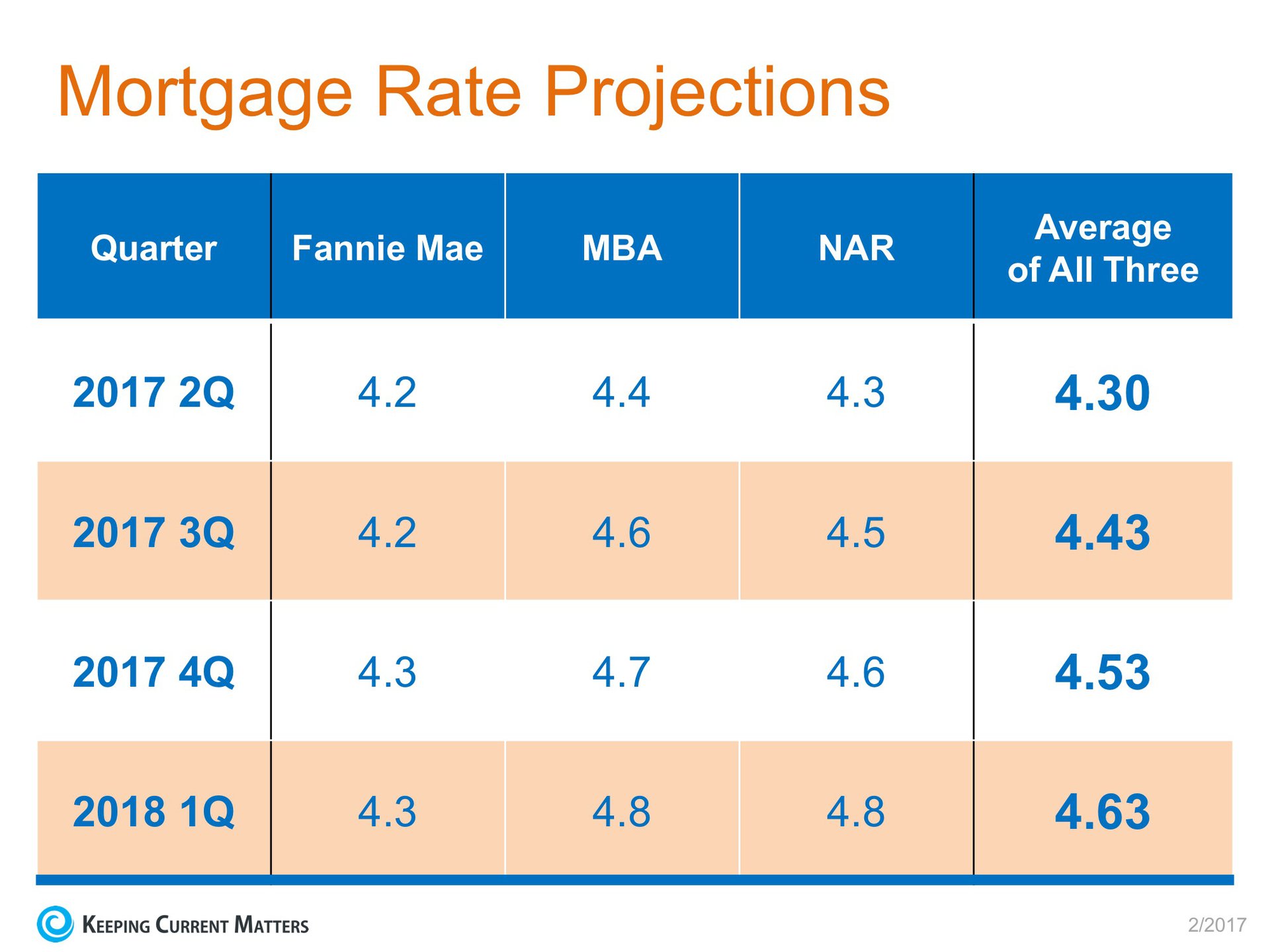
A buyer must be concerned about more than just prices. The ‘long-term cost’ of a home can be dramatically impacted by even a small increase in mortgage rates. The Mortgage Bankers Association (MBA), the National Association of Realtors, and Fannie Mae have all projected that mortgage interest rates will increase over the next twelve months, as you can see in the chart below: 3 Questions to Ask If You Want to Buy Your Dream Home | Keeping Current Matters

Bottom Line

Only you and your family will know for certain if now is the right time to purchase a home. Answering these questions will help you make that decision.

Friday, February 3, 2017

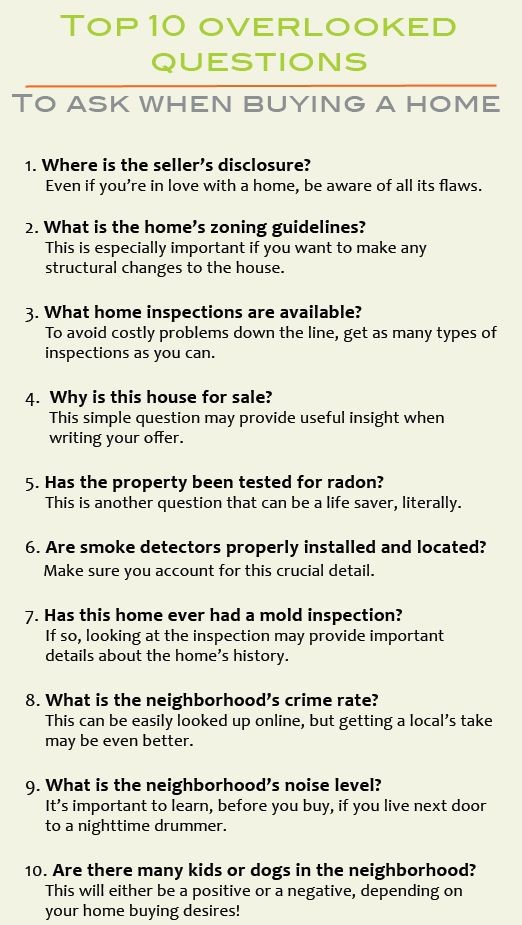
Top 10 Overlooked Questions To Ask When Buying A Home

Buying a home can be overwhelming. So many things to know and so many questions to ask. Check out our list of Top 10 Overlooked Questions to Ask When Buying a Home-- they might come in handy! Call me if you still have questions!


Tuesday, January 31, 2017

Lower Property Taxes

The most likely case for lower property taxes is that you bought your house at a time when the economy was doing much better. At that time, you would have paid more for your home than it would be valued at now. Because of the higher price tag, you naturally paid more in taxes. Lowering your property taxes isn’t a particularly difficult process, but it is a process nonetheless. And with upfront expenses like a potential assessment of your property, it may be a case of “you need money to save money.” But if the market was more inflated at the time of your home purchase than it is now, lowering your property tax will be beneficial in the long run!