Wednesday, January 15, 2020

Homes Are More Affordable Today, Not Less Affordable


There’s a current narrative that owning a home today is less affordable than it has been in the past. The reason some are making this claim is because house prices have substantially increased over the last several years.

It’s not, however, just the price of a home that matters.

Homes, in most cases, are purchased with a mortgage. The current mortgage rate is a major component of the affordability equation. Mortgage rates have fallen by over a full percentage point since December 2018. Another major piece of the affordability equation is a buyer’s income. The median family income has risen by approximately 3% over the last year.

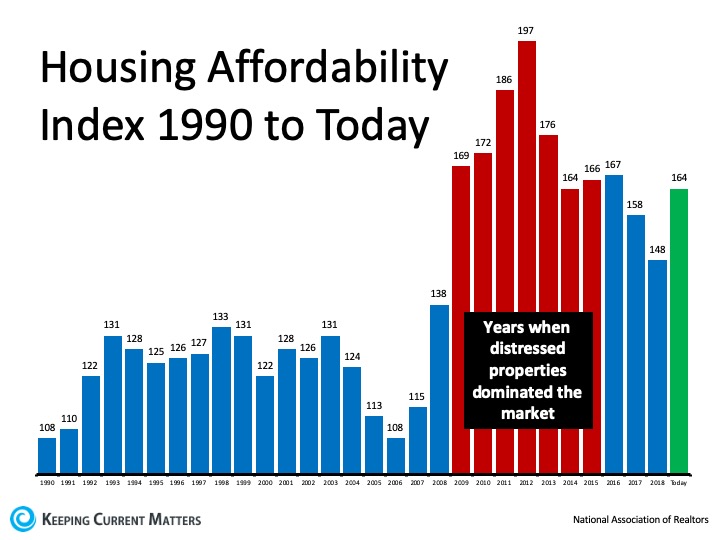
The National Association of Realtors (NAR) releases a monthly Housing Affordability Index. The latest index shows that home affordability is better today than at almost any point over the last 30 years. The index determines how affordable homes are based on the following:
“A Home Affordability Index value of 100 means that a family with the median income has exactly enough income to qualify for a mortgage on a median-priced home. An index of 120 signifies that a family earning the median income has 20 percent more than the level of income needed pay the mortgage on a median-priced home, assuming a 20 percent down payment so that the monthly payment and interest will not exceed 25 percent of this level of income (qualifying income).”
The higher the index, therefore, the more affordable homes are. Here is a graph showing the index since 1990:Homes Are More Affordable Today, Not Less Affordable | Keeping Current MattersObviously, affordability was better during the housing crash when distressed properties – foreclosures and short sales – sold at major discounts (2009-2015). Outside of that period, however, homes are more affordable today than any other year since 1990, except for 2016.

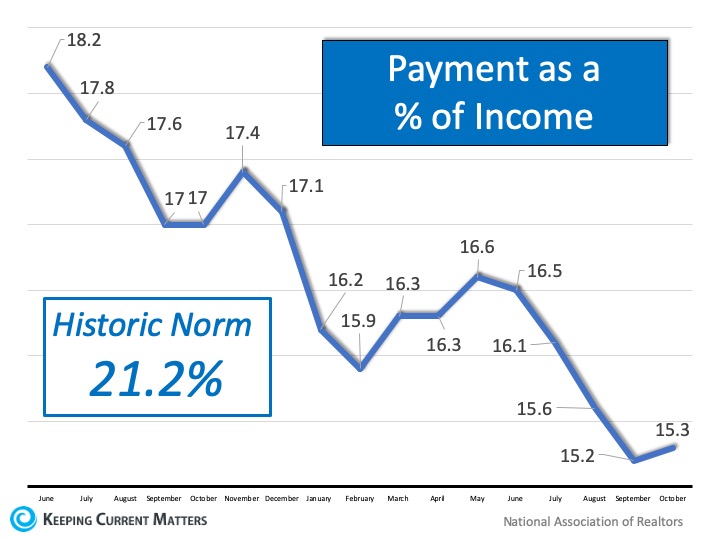
The report on the index also includes a section that calculates the mortgage payment on a median priced home as a percentage of the median national income. Historically, that percentage is just above 21%. Here are the percentages since June of 2018:Homes Are More Affordable Today, Not Less Affordable | Keeping Current MattersAgain, we can see that affordability is much better today than the historical average and has been getting better over the last year and a half.

Bottom Line

Whether you’re thinking about buying your first home or moving up to the home of your dreams, don’t let the false narrative about affordability prevent you from moving forward. From an affordability standpoint, this is one of the best times to buy in the last 30 years.

Tuesday, January 14, 2020

2020 Luxury Market Forecast


By the end of last year, many homeowners found themselves with more equity than they realized, and at the same time their wages were increasing. When those two factors unite, it can spark homeowners to think about making a move to a larger or more expensive home in the luxury space. That said, now is a perfect opportunity to take a look at the forecast for the 2020 luxury market.

Three Things to Think About in the 2020 Luxury Housing Market

1. Prices
The U.S. economy is strong today, with buying opportunities throughout the luxury end of the market. Thomas Veraguth, Strategist at UBS Global Wealth Management, says in Barrons.com,
“There’s a good link between luxury real estate prices and [economic] growth.”
Available inventory is a key element that can impact home prices. At the upper range, the inventory is greater in comparison to the entry-level market, making moving up to a luxury home a growing reality for many buyers right now.
2. Activity in the Market
With more buying opportunities at the higher end, we should start to see an increase in activity. The same article states,
“Affluent homebuyers will start to come out of the woodwork as they find rising luxury rents less appealing and sellers get even more negotiable on price.”
Buyers looking in the luxury market are taking the opportunity to negotiate on price in a segment where there are more choices, too. According to the Luxury Market Report, homes sold for an average of 96.94% of the list price in December.
Buyers are also getting more for their money with greater purchasing power due to the current low interest rates.
3. Buyers Are Coming Back
Keep in mind, buyers are often sellers too, especially those looking to move up. Homeowners with an entry-level home can take advantage of the inventory shortage at the lower end of the market, thus driving higher sales prices for their current homes. Combined with growing equity in the homes they’re listing, it’s a great time for those who are ready to make a luxury move.
The extra equity and greater purchasing power are bringing many buyers back to the market. The same article mentioned that,
“We’ve already seen buyers who’ve been on the sidelines for two years tread back into the market.”

Bottom Line

If you’re considering entering the luxury market, 2020 is shaping up to be a great year for those who are ready to make that move. Contact your local real estate professional to set your real estate plan for the year.

Monday, January 13, 2020

Financing Outside of Single-Family Homes


Most of the time, if you think about taking out a loan to purchase real estate, you’re likely picturing a single-family home. Depending on your needs and the properties available in the area you’re searching, though, you may find that other property types are actually a closer fit for you. Multi-family properties such as duplexes and similar units might end up being a better choice, or you could wind up shopping for a condo. You might even be in the market for a property that contains both commercial and residential aspects. Regardless of what you’re looking for, though, you should have options for financing your purchase.

Borrowing Differences

None of these property types are exactly rare, but they are outnumbered in the market by single-family dwellings. As such, the loans that you’re likely most familiar with are geared more toward those properties than properties for multiple families or dual-zoned use. Because of this, you need to be prepared for potential hurdles when you start looking for a loan. Lenders may have different requirements for these loans than they would for mortgages on a single-family unit, and some lenders may not offer loans for multi-family units or similar properties. This doesn’t mean that there are no loan options available, but you should be prepared for the possibility of a different borrowing experience.

Loan Options

When it comes down to it, many of the same options are available for purchasing multi-family units, condos and other properties as you would find when shopping for a loan for a single-family dwelling. Organizations such as the Federal Housing Administration (FHA), the Department of Housing and Urban Development (HUD) and others that are commonly used for single-family purchases also offer loan programs or insurance to cover these types of dwellings. Most local and national banks offer these loans as well, as do other mortgage lenders. With that said, you may have to meet different qualifications to get these loans than you would if borrowing to purchase a single-family home.

Qualifying for a Loan

Though specific qualifications may vary from one lender or program to the next, some of the most common items that are considered during qualification may include:
  • Larger down payments than what would typically be used for a single-family purchase
  • Reserve requirements of at least 2 percent and as high as 6 percent of the unpaid principal balance
  • For multi-family properties, a cap on the loan amount calculated on a per-unit basis
  • Minimum or maximum numbers of units within a property
  • Restrictions on any repairs that may be needed for the property
There are other qualifications that may be required by specific lenders before authorizing a loan for a condominium, multi-family dwelling or other less-common property. Depending on the property and the amount of the loan, higher credit scores, co-signers or other additional requirements may also be necessary.

Finding a Lender

As with any loan, it’s important to spend time looking for the best loan option to meet your needs. This is especially important with these types of loans, as in many cases you’ll be borrowing more than you would with a single-family mortgage and may be subject to more restrictions as well. Taking the time to explore different options and check with different lenders will help ensure that you get the best terms for your loan and will keep you from having to settle when it comes to buying the property you want.

Friday, January 10, 2020

Are Smart Homes Here to Stay?


There’s been quite a bit of hype about smart homes in recent years. These aren’t the top-to-bottom smart homes that were envisioned by science fiction for years, of course. Those were houses that had a central artificial intelligence that controlled everything and inevitably went rogue at some point. Instead, modern smart homes are usually traditional homes just like the one that you live in. They’ve simply been enhanced with sensors and devices and the occasional digital assistant.

Some people are thrilled with how technology is changing the way we interact with our home environment. Others aren’t quite so happy with the direction that this trend is heading. Love them or hate them, though – there’s one thing that you need to accept: The smart home isn’t going away.

What Makes a Smart Home?

A smart home is one that has a variety of sensors and controls within it that give you additional information or functionality when it comes to your home. This can range from information like whether you left the front door unlocked or what the temperature is in your living room to functions such as controlling your lights with your voice. Some smart homes use a central hub or device to control everything, while others use components that connect via wifi and are controlled by your phone. Some smart homes feature appliances or other major fixtures that have “smart” capabilities while others just use devices or sensors to make day-to-day life more convenient. Because of the device-based nature of modern smart homes, homeowners can choose exactly the components they want to help make the smart home installation meet their specific needs.

Smart Home Devices

There are a wide range of smart home devices available for homeowners. Some of these are fairly well known, such as smart thermostats that feature programmable temperature controls that “learn” how best to keep you comfortable. Others are less common but very handy, such as leak sensors that alert you when your pipes leak or window sensors that let you check to see whether your windows or locked or unlocked. You can get smart lighting that can be controlled remotely and can even change colors, smart locks that you can lock and unlock with your phone or a key fob, smart smoke and CO2 detectors, motion sensors that activate security cameras but that are able to ignore pets and small animals… the list is quite extensive. Most of these devices are programmable so you can automate specific tasks, or can at least be paired with things such as a digital assistant (like Amazon Echo devices or Google Home) to schedule automation and even voice control.

Safety and Privacy

There are a number of advantages to using smart devices, including saving money and increasing convenience in your daily life. However, some people have security and privacy concerns as well. Some smart devices have been exploited in the past, allowing hackers to listen in or speak through the devices to people in a smart home. Some devices featuring video also raise security concerns as people worry that others will be able to record them going throughout their day. While these are valid concerns, security breaches and flaws are taken seriously by manufacturers. The majority of cases where unwanted access has occurred were either due to flaws that have since been patched or due to someone gaining access to the password that secures the devices. This is why it’s important for those who buy smart devices to use strong passwords on their accounts and to make sure that their devices have up-to-date software, as these two actions will mitigate the majority of security concerns.

Get Smart

Whether you already have smart home devices installed or you’re just curious, there are installers and consultants who can help you determine exactly how your home could be a little smarter.

Thursday, January 9, 2020

There’s a Long Line of Buyers Waiting for Your House

If you’re following what’s happening in the housing market right now, you know that many people believe the winter months aren’t a good time to sell a home. As realtor.com Senior Economist George Ratiu recently noted,
“Sellers tend to be more reluctant to list during the colder time of year when the market typically makes a seasonal slowdown.”
However, a recent report by ShowingTime reveals how this year is different. Buyer activity is way up compared to the same time last year. The report explains,
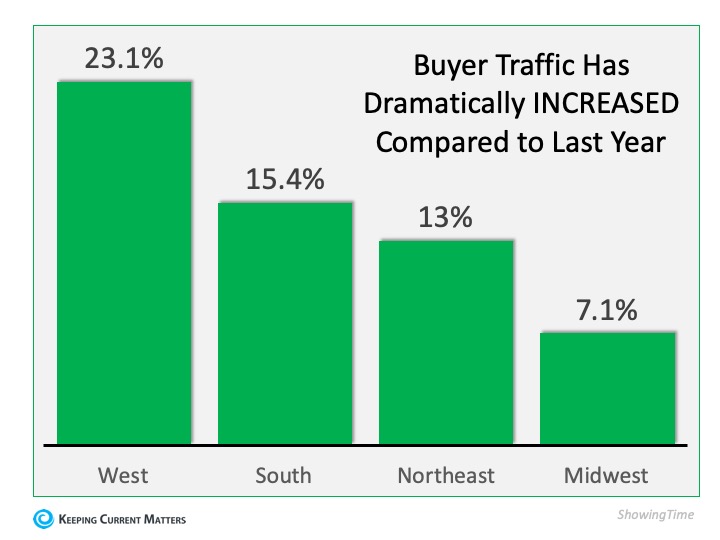
“The nation’s 12.6% growth in home showings compared to 2018 was the most significant jump in buyer traffic during the current four-month streak of year-over-year increases. The West Region saw the greatest growth in activity, with a 23.1% jump – the region’s greatest in the history of the Showing Index.”
The increase has spread across all four regions of the country, as the graph below shows:There’s a Long Line of Buyers Waiting for Your House | Keeping Current Matters

Bottom Line

Waiting for the “spring buyers’ market” may be a mistake this year. It seems the purchasers are already out and looking to buy.

Wednesday, January 8, 2020

Big Demand for Small Homes


Movies, TV shows, and celebrities often have us dreaming of owning large homes, but the reality for most people is quite different.
Since 2015, the square footage of newly built houses has been shrinking, according to Yahoo Finances. This is not projected to change as we continue into the beginning of the year.
“We expect this downsizing trend to continue in 2020, driven by a confluence of economic and demographic trends.”

Why are smaller homes trending now?

As noted in the article, there are a few main reasons for this demand:
  • “Many of today’s younger, millennial home buyers have expressed a preference for denser, more urban homes that are more walkable to shared amenities.”
  • “Today’s older homeowners are expressing a desire for smaller, less maintenance-heavy and more accessible (read: less stairs) homes as they age and move into newer homes.”
With these two demographic groups surging through the market, the demand for this type of home is rising. If you’re a homeowner with a smaller-scale house, now may be a great time to sell, as the demand for this end of the market is surely on the rise.

Bottom Line

The demand for smaller houses will continue to rise throughout 2020. Contact a local real estate professional to discuss what the housing inventory looks like in your neighborhood. It might be time for you to take advantage of this trend!

Tuesday, January 7, 2020

3 Benefits to Buying Your Dream Home This Year


Outside of a strong economy, low unemployment, and higher wages, there are three more great reasons why you may want to consider buying your dream home this year instead of waiting.

1. Buying a Home is a Great Investment

Several reports indicate that real estate is a good investment, topping other options such as gold, stocks, bonds, and savings. Why? Real estate helps build equity, a form of investing for you and your family. According to CoreLogic’s Equity Report,
“U.S. homeowners with mortgages (roughly 64% of all properties) have seen their equity increase by a total of nearly $457 billion since the third quarter 2018, an increase of 5.1%, year over year.”
This means the average homeowner gained approximately $5,300 in equity over the past year. If you want to start building your equity, put your housing costs to work for you through homeownership this year.

2. Mortgage Interest Rates Are Low

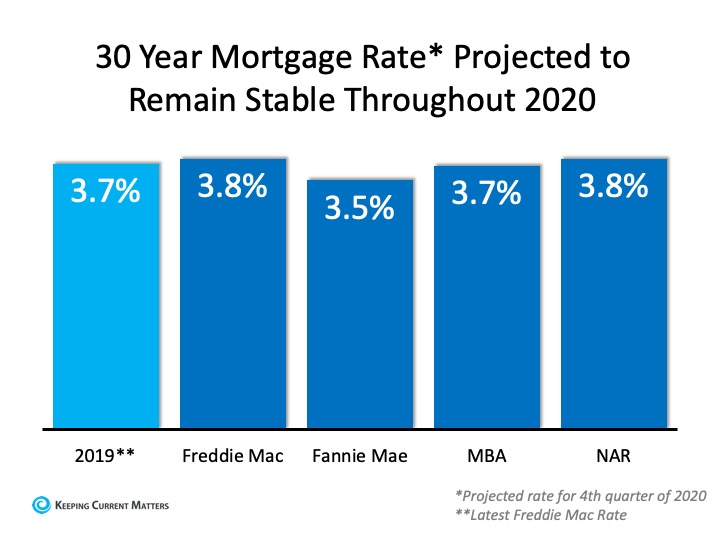
The Primary Mortgage Market Survey from Freddie Mac indicates that interest rates for a 30-year mortgage have fallen since November 2018 when they hit 4.94%. In their latest forecast, Freddie Mac expects rates to remain low, leveling out to a yearly average of 3.8% in 2020.
When you purchase a home at a low mortgage rate, it will impact your monthly mortgage payment, giving you the opportunity to buy more house for your money.

3. Investing in Your Family is a Win

There are some renters who haven’t purchased a home yet because they’re uncomfortable taking on the obligation of a mortgage. Everyone should realize that, unless you’re living rent-free with your parents, you’re paying a mortgage – either yours or that of your landlord.
Today, rental prices continue to increase, and when you’re paying your landlord’s mortgage instead of your own, you’re not the one earning the equity. As an owner, your mortgage payment is a form of ‘forced savings’ you can use later in life to reinvest in your family. You can use it for a variety of opportunities, such as saving for your children’s education, moving up to a bigger home, or starting your own business. As a renter, it can be more challenging to achieve those types of dreams without home equity working for you.

Bottom Line

Buying a home sooner rather than later could lead to substantial savings and long-term financial growth for you and your family. Reach out to a local real estate professional to determine if homeownership is the right choice for you this year.

Monday, January 6, 2020

Organizing A His-and-Her Shared Walk-In Closet


It is possible to keep your his-and-her closet organized and still speak to one another. Here are some of our favorite products to help you get organized without causing a fight.
Focus on footwear
She doesn't have to sacrifice displaying her shoe collection in order to make room for his sneaker addiction. How? Get custom-made shoe shelves to keep shoes out of the way. Or try a shoe turntable that holds up to 25 pairs.
Don’t get tangled
Line drawers with felt to make it easy to find necklaces and bracelets, and prevent them from tangling, too. If you don’t have drawer space, try hanging your jewelry. Pottery Barn's fabric-lined mirrored wall-mounted jewelry closet is multifunctional—it’s a jewelry box, a mirror and a piece of art.
Tie it up
Men just can’t complain about women’s shoes without getting off the hook. Many men have their ties in disarray. Keep them organized with Rev-A-Shelf's Classic Wood Pull Out Tie Rack. It holds up to 120 ties!
Bag it
Is your partner annoyed with you as you frantically search for your matching bag? Make it easier by storing them in divided compartments, with each compartment containing bags of the same color or size. No room for compartments, add chrome shelf dividers to make individual homes for your purses.
For more home organization tips, give us a call today!

Friday, January 3, 2020

Why a Home Works for You


Equity in a home is the difference between what the home is worth and what is owed on the home.  As the property goes up in value, the unpaid balance is going down with each payment being made.  These dynamics are working in different directions to make the equity grow.

Leverage, the use of borrowed funds to control the investment, is another dynamic working in favor of homeowners. $9,975 invested in a certificate of deposit at 2% for three years would be worth $10,586.  The same amount invested in the stock market at 7% would be worth $12,220.  Using the same $9,975 to purchase a $285,000 home that appreciates at 2%* annually would have an equity at the end of three years of $41,350.  All three examples have compound growth but only the home uses borrowed funds.

Buying a home requires money for a down payment and closing costs, good credit and the income to pay back the loan.  Even if a person has all three of these requirements, sometimes, they are not sure if it makes sense to buy rather than rent.  A Rent vs. Own comparison can show you the financial advantages without considering the tax benefits.

Most homeowners will say that their home is the best investment they have made.  Not only in the satisfaction of owning their own home, where they can raise their family and a place to share with friends but also as a strong financial decision.

Thursday, January 2, 2020

The 2020 Real Estate Projections That May Surprise You


This will be an interesting year for residential real estate. With a presidential election taking place this fall and talk of a possible recession occurring before the end of the year, predicting what will happen in the 2020 U.S. housing market can be challenging. As a result, taking a look at the combined projections from the most trusted entities in the industry when it comes to mortgage rates, home sales, and home prices is incredibly valuable – and they may surprise you.

Mortgage Rates

Projections from the experts at the National Association of Realtors (NAR), the Mortgage Bankers Association (MBA), Fannie Mae, and Freddie Mac all forecast mortgage rates remaining stable throughout 2020:The 2020 Real Estate Projections That May Surprise You | Keeping Current MattersSince rates have remained under 5% for the last decade, we may not fully realize the opportunity we have right now.
Here are the average mortgage interest rates over the last several decades:
  • 1970s: 8.86%
  • 1980s: 12.70%
  • 1990s: 8.12%
  • 2000s: 6.29%

Home Sales

Three of the four expert groups noted above also predict an increase in home sales in 2020, and the fourth sees the transaction number remaining stable:The 2020 Real Estate Projections That May Surprise You | Keeping Current MattersWith mortgage rates remaining near all-time lows, demand should not be a challenge. The lack of available inventory, however, may moderate the increase in sales.

Home Prices

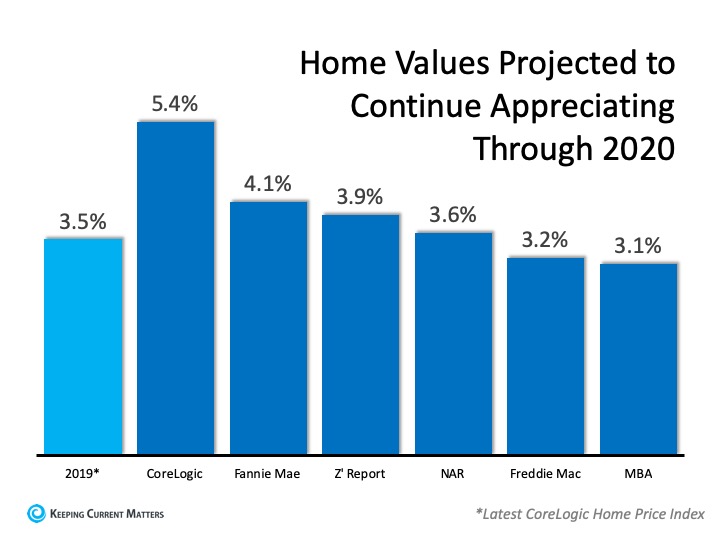
Below are the projections from six different expert entities that look closely at home values: CoreLogic, Fannie Mae, Ivy Zelman’s “Z Report”, the National Association of Realtors (NAR), Freddie Mac, and the Mortgage Bankers Association (MBA).The 2020 Real Estate Projections That May Surprise You | Keeping Current MattersEach group has home values continuing to improve through 2020, with four of them seeing price appreciation increasing at a greater pace than it did in 2019.

Is a Recession Possible?

In early 2019, a large percentage of economists began predicting a recession may occur in 2020. In addition, a recent survey of potential home purchasers showed that over 50% agreed it would occur this year. The economy, however, remained strong in the fourth quarter, and that has caused many to rethink the possibility.
For example, Goldman Sachs, in their 2020 U.S. Outlook, explained:
“Markets sounded the recession alarm this year, and the average forecaster now sees a 33% chance of recession over the next year. In contrast, our new recession model suggests just a 20% probability. Despite the record age of the expansion, the usual late-cycle problems—inflationary overheating and financial imbalances—do not look threatening.”

Bottom Line

Mortgage rates are projected to remain under 4%, causing sales to increase in 2020. With growing demand and a limited supply of inventory, prices will continue to appreciate, while the threat of an impending recession seems to be softening. It looks like 2020 may be a solid year for the real estate market.

Tuesday, December 31, 2019

Children's Rooms Through the Years


Here are some tips on changing room decorations over the years.

Nursery
  • The key to longevity is keeping the essentials basic (e.g., beds, dressers, side tables) and decorating with temporary things. For example: White or mint-colored walls provide a basic pastel backdrop; you can then swap out knickknacks, wall photos and mobiles as your child grows up.
  • You can choose a theme or add a few prints and patterns in places, such as with the bed linens.
  • Keep colors gender neutral so your children can vary how masculine and feminine they want to decorate as they grow up, or easily swap rooms with a sibling.
  • Monochrome themes are sleek, but make it interesting with varied textures, wood accents and fun wallpapers.
  • Storage boxes are a must for storing baby care supplies and, later, toys. Consider buying a vintage or secondhand dresser for decorative storage.
Child's room
  • Involve your child: Bring in his or her favorite colors, hobbies and inspirations! Think of how to incorporate travels, comics, celebrity role models and your kid's dreams.
  • Swap out baby accessories for items for older kids.
  • Keep things simple; kids love to change their minds, so let their decorations bring the color and texture to the room.
  • Removable wall stickers let your kid change the walls easily and inexpensively.
  • A bedside light will let a child read before going to sleep and help him or her find the bathroom in the middle of the night.
  • Drape some string lights across the room for a cozy look.
  • When there are multiple kids to a room, keep the walls and furniture simple to reduce visual clutter; bring out each person's distinct personality but aim for complementary designs.
  • Storage is a must: Keep it at the edge of the room and leave space in the center for play. To encourage kids' tidiness, ensure storage is nearby and at their height.
  • Here are some fun features most kids love: a blackboard wall, a loft bedroom (if possible) or glow-in-the-dark painted stars on the ceiling.
  • Let your kids help out in the decorating; afterwards, they'll love their rooms!
Teen's room
  • A desk is a necessity for studying, as well as a place to spend free time online.
  • Storage is still essential, so make sure it's something he or she wants to use.
  • Give your teen display space for pictures, postcards and collections — peel-and-stick cork is inexpensive and easy to use.
Personal space is important, so let your teen decorate after you install the basic furniture.

Monday, December 30, 2019

Why You Shouldn’t “For Sale By Owner”


Rising home prices coupled with the current inventory in today’s market may cause some homeowners to consider selling their homes on their own (known in the industry as a For Sale By Owner). However, a FSBO might be hard to execute well for the vast majority of sellers.

Here are the top 5 reasons not to FSBO:

1. Online Strategy for Prospective Purchasers
Studies have shown that 93% of buyers search online for a home. That’s a pretty staggering number! Most real estate agents have an Internet strategy to promote the sale of your home. Do you?
2. Results Come from the Internet
According to NAR, here’s where buyers found the homes they actually purchased:
  • 55% on the Internet
  • 28% from a Real Estate Agent
  • 10% Other
  • 6% from a Yard Sign
  • 1% from Newspapers
The days of selling your house by putting up a sign in your yard or placing an ad in the paper are long gone. Having a strong Internet strategy is crucial.
3. There Are Too Many People to Negotiate With
Here’s a list of some of the people with whom you must be prepared to negotiate if you decide to FSBO:
  • The buyer, who wants the best deal possible
  • The buyer’s agent, who solely represents the best interest of the buyer
  • The buyer’s attorney (in some parts of the country)
  • The home inspection companies, which work for the buyer and will almost always find some problems with the house
  • The appraiser, if there is a question of value
4. FSBOing Has Become Increasingly Difficult
The paperwork involved in buying or selling a home has increased dramatically as industry disclosures and regulations have become mandatory. This is one of the reasons the percentage of people FSBOing has dropped from 19% to 8% over the last 20+ years.
5. You Net More Money When Using an Agent
Many homeowners believe they’ll save the real estate commission by selling on their own, but the seller and buyer can’t both save the commission.
A report by Zillow revealed that FSBOs are inclined to do so because they believe it will save money (46 percent cite this among their top three reasons), but they don’t actually save anything, and eventually end up listing with an agent.
The same report revealed that,
“While 36% of sellers that (at first) attempted to sell their homes on their own, only 11 percent of sellers—in other words, less than a third…actually sold without an agent.”
It appears working with a real estate professional is the best answer.

Bottom Line

Before you decide to take on the challenges of selling your house on your own, reach out to a local real estate professional to discuss your needs.

Friday, December 27, 2019

What's Keeping Buyers Out of the Market


60% of buyers paid for their down payment by saving according to the 2019 Profile of Home Buyers and Sellers, recently released in San Francisco at the National Association of REALTORS Convention.  The most difficult step in the process was saving for a down payment cited by 13% of respondents.

51% of those surveyed mentioned student loans as the main deterrent to saving.  Credit card debt was mentioned by 45% which is up from 37% in 2018.  Car loans were stated by 38% which is up three percentage points from the previous year.

Childcare was cited by 16% of the people which was one percentage point less than 2018.
The median years of debt delayed home buyers from saving for their down payment or buying a home was stated as four years.  That is up from three years mentioned by buyers in 2018.

Thursday, December 26, 2019

Anticipating the Cost of a Home


The largest expenditure a buyer has when purchasing a home is the down payment which can range from zero for veterans or 3.5%, 5%, 10% and 20%.  With mortgages come closing costs which can be another 2-4% and must be paid at settlement in cash.

Most mortgages require an escrow account to pay the property taxes and insurance when they are due.  Generally, the lender will require one to three months of taxes and one month of insurance so they can be paid before the actual due date.

First-time buyers should be aware that they'll need this amount of funds available to purchase a home.  Unlike tenants who are not responsible for repairs, homeowners are, and it is necessary to be able to pay for them when they're needed.

Newer homes will need less repairs and older homes probably, more.  At some point, components like the furnace, air-conditioner and appliances will need to be replaced which could crush a homeowner's budget if they are not expecting them.

Homeowners should expect between one and four percent of the value of the home in annual repairs.  The age and condition of the home and whether some of the items have been replaced will help assess the anticipated expenditures.  

Components
Estimated Life
Dishwasher
9-10 years
Refrigerator
13 years
Furnace
15-25 years
Air-conditioner
8-15 years
Stove top
13-15 years
Oven
15 years
Compactors
6 years
Water heater
8-12 years
Faucets
15-20 years

A $175,000 home with 2% estimated repair expenditures would be $3,500 a year or about $300 per month.  Some years, it may not run that much and other years, it might be more.  By anticipating the maintenance expenses, a homeowner is more likely to handle things when they arise.

Another way to handle the risk of unexpected repair expenses would be to purchase a home warranty.  For $500 -700 a year, repairs and sometimes, replacements will be handled by the protection plan.

Tuesday, December 24, 2019

When a House Becomes a Happy Home


We talk a lot about why it makes financial sense to buy a home, but more often than not we’re drawn to the emotional reasons for homeownership.

No matter the size or shape of a living space, the feeling of a home means different things to different people. Whether it’s a certain scent or a favorite chair, the feel-good connections to our own homes are typically more important to us than the financial ones. Here are some of the reasons why

1. Owning your home offers stability to start and raise a family

From the best neighborhoods to the top school districts, even those without children at the time of purchase may have this in the back of their minds as a major reason for choosing the location of the home they purchase.

2. There’s no place like home

Owning your own home offers not only safety and security, but also a comfortable place where you can simply relax and kick-back after a long day. Sometimes, that’s just what we need to feel re-charged and truly content.

3. You have more space for you and your family

Whether your family is expanding, an older family member is moving in, or you need to have a large backyard for your pets, you can take all this into consideration when buying your dream home, so the space truly works for you.

4. You have control over renovations, updates, and style

Looking to actually try one of those complicated wall treatments you saw on Pinterest? Tired of paying an additional pet deposit for your apartment building? Maybe you want to finally adopt that fur-baby puppy or kitten you’ve been hoping for. Who’s to say you can’t do all of these things in your own home?

Bottom Line

Whether you’re a first-time homebuyer or a move-up buyer who wants to start a new chapter in your life, now is a great time to reflect on the intangible factors that make a house a happy home.

Monday, December 23, 2019

January Won't Be Cold for House Hunters


January just may be the new April for home shopping, according to a new analysis released Wednesday by realtor.com®. If 2019 is any indication, economists expect next month to be a lively one for a surge of home buyers who likely will be searching for properties online.

One of five of the largest metros saw their highest number of listing views online in January 2019, realtor.com®’s report notes. Realtor.com®’s analysis is based on average monthly views per listing on its site from 2015 to 2019.

Times have changed over that period: In 2015, the peak month for average views per listing on realtor.com® was in April, and January was behind by 16% in views. However, in 2019, the month of January was just 1% lower than February for the most monthly views per listing at realtor.com®. Further, January was the most popular month for views in 20 of the 100 largest metros, the analysis notes.

Seattle saw the greatest increase in home shopping in January 2019. It had views per property that were 32% higher than its next highest month. The other markets in the top five that saw the most buyer activity online in January 2019 were McAllen-Edinburg-Mission, Texas; San Francisco; Atlanta; and San Jose, Calif.

"As shoppers modify their strategies for navigating a housing market that has become more competitive due to rising prices and low inventory, the search for a home is beginning earlier and earlier," says George Ratiu, realtor.com®’s senior economist. "With housing inventory across the U.S. expected to reach record lows in 2020, we expect to see this trend continue into the new year."
Still, economists note that just because January could prove to be a popular month for house hunters, don’t discredit the spring months. “Realtor.com® data shows that views per listing used to ramp up into spring, but now competition starts high in January and stays high,” the real estate listing site notes.

Friday, December 20, 2019

Bargain Buying 101: Things to Look for In a Deal


When you’re shopping for a new home, it’s not uncommon to face a little bit of sticker shock when it comes to price. This often leads to buyers trying to find a good balance between what they want and what they can afford. However, if you’re smart (and maybe a little lucky), you may be able to find some really great deals if you know what to look for.

One of the keys to finding a good deal is to look for properties that have qualities that might seem unappealing at first but that can be corrected fairly easily. Some of these things can drive prices down significantly but won’t require a major renovation to fix. If you’re hoping to find a bargain, here are a few things to look out for.

Ugly Paint

Even though there’s a lot of damage that can make your paint look ugly, sometimes the paint is just ugly because someone chose to bring together colors that should never coexist. It could be awful colors, it could be cheap paint that’s faded over time or it could even be an amateur paint job that never got touched up. Regardless of the reason for the ugly paint job, it can drive the price of the property down by thousands or even tens of thousands of dollars. It doesn’t even have to be the entire house; one ugly room can give you an opportunity to find a good deal on an otherwise nice property.

Landscaping Issues

A property’s yard is one of the first things that potential buyers see. If it’s obviously been neglected or has bald patches and overgrown flower beds, this can make a negative first impression because it suggests that the house itself might not have been taken care of either. That isn’t always the case, though. Even if the house is in good condition, a yard that needs some TLC can usually shave some money off the asking price and help you to net a great deal.

Fixtures and Accents

There are a lot of cosmetic elements in houses that can start looking rough over time. Handles and knobs can come loose or become tarnished, shutters can get loose, bathroom tiles can become cracked… the list goes on. While updating these issues won’t break the bank, many sellers will drop their asking price quite a bit due to how these little things make the house look.

Bathroom Concerns

A lot of buyers shy away from houses that have obvious bathroom problems, causing those sellers to bring the price down significantly in many cases. Depending on the extent of the issues in the bathroom, though, there could be a real opportunity here. If the problem with the bathroom is mostly cosmetic, then you may be able to fix it on the relatively cheap side and save a lot of money in the process. Just be sure to keep an eye out for signs of water damage or mold, since that could indicate problems that would be much more expensive to fix.

Previous Foreclosure

One other strategy for finding a deal is to look for bank-owned properties that were previous foreclosures. These properties are often sold at a discount because the bank isn’t necessarily trying to sell the house at market value, it’s simply trying to recoup the money it lost when it had to foreclose. The amount you can save will depend on both the bank and the amount of equity that was in the home when it was foreclosed, but you may luck into a great deal on a nice house this way. Just be aware that while there are legitimate programs that can help you find a foreclosed property, there are also some scammy ones out there as well.

Call in the Experts

Having your Realtor help you with your search is another way to find hidden gems and get a bargain on your next home. They can find you properties that need some of these little fixes and give you an idea of what sort of updates the property could need.

Thursday, December 19, 2019

5,300 Reasons to Be Happy You’re a Homeowner


Studies have shown that, in many cases, the largest asset a family owns is the house they live in. Over the last twelve months, that asset has gained substantial value.
CoreLogic just released their 2019 3rd Quarter Homeowner Equity Insights Report. The report revealed that:
“U.S. homeowners with mortgages (roughly 64% of all properties) have seen their equity increase by a total of nearly $457 billion since the third quarter 2018, an increase of 5.1%, year over year.”
The equity in a property is determined by comparing the current value of the property against the outstanding mortgage debt. As prices rise, the equity in a home increases.

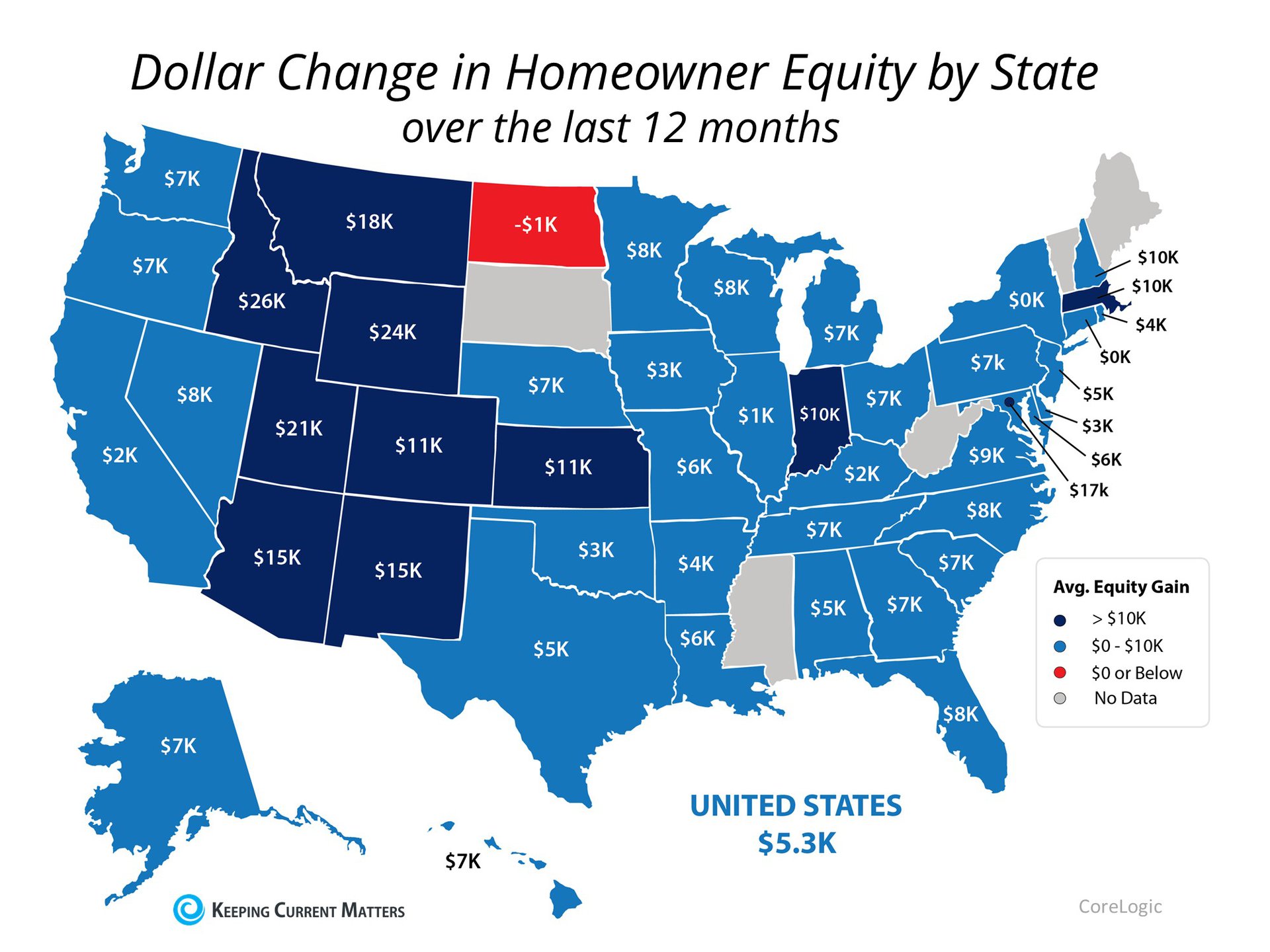
The report went on to explain that the average homeowner gain in equity over the last twelve months was $5,300.

Here’s a map showing the average equity gain by state:5,300 Reasons to Be Happy You’re a Homeowner | Keeping Current MattersSince the housing crash in 2008, many homeowners have felt trapped in their current houses, as they didn’t have enough equity to sell. The gains in equity over the past few years may have freed some homeowners who have a desire to move.

Bottom Line

If you’re curious about your home’s equity, contact a local real estate professional for a market analysis of the current value of your house. You may be pleasantly surprised.

Wednesday, December 18, 2019

What Causes Ice Build-Up on Homes?


When the weather is cooler than cool, it can turn ice cold. Unfortunately, this can lead to a lot of ice on and around your home. There are few things that can make you lose your chill faster in the winter than ice-related falls or damage to your home. Excessive ice build-up can create a number of potentially dangerous situations during the winter, so knowing what causes it (and more importantly, how to prevent it) is an important part of staying safe as temperatures drop.

Ice Build-Up

There are a few different ways that ice can build up during the winter. The most basic ice buildup is just a thin layer of ice that covers large portions of the house, sometimes accompanied with snow or other precipitation. This usually isn’t that big of a deal. Of greater concern are large icicles, sheets of ice and snow that build up on the roof, frozen gutters and built up ice at the edge of the roof known as an ice dam. These can be dangerous in several ways, both to you and to your house.

Frozen Gutters

When ice freezes in your gutters, it places extra strain on the screws or clips holding the gutters in place. Overflow can result in icicles hanging from the gutters, and if the buildup gets too heavy it can actually pull the gutters away from your roof. This is particularly dangerous because that heavy ice can then fall to the ground… bringing part of your gutter with it.

Ice Dams

If a portion of your roof becomes warm enough to melt some of the snow and ice on top of it, an ice dam can form. That melted snow or ice will trickle down the roof as water, reaching the eaves or gutter and encountering much colder materials where it will freeze again. This process continues until there is a buildup of ice at the very edge of the roof, with liquid water attempting to flow underneath it. The ice can overflow onto your gutters, while the water forces its way under shingles and possibly through other materials until it freezes and expands. The longer the ice dam continues this process, the thicker it becomes and the more damage it can do.

Other Forms of Ice

Ice sheets and icicles also present dangers during the winter. Icicles form when liquid water gradually drips at the same spot over time, freezing more and more until it grows large enough to potentially break free and fall to the ground. Ice sheets form similarly to ice dams, but instead of melting entirely the heat of the roof only melts a small portion of the ice sitting on it. The remaining ice is able to shift under its own weight due to the thin layer of water underneath it, and in some cases may slide down the roof and fall to the ground.

Removing Ice Build-Up

Care should be taken when trying to remove any form of ice build-up. Don’t use any sharp implement as it can damage your roof, gutters or walls. Instead, tap away at the ice with a blunt mallet or pole. Work in small sections, making sure that there is someone with you to brace your ladder in case the ice shifts. Apply a calcium chloride ice melter to the ice beforehand, if possible, to melt as much of it as you can (but don’t use rock salt or other chemicals that can damage your home.) Take every precaution you can before you start trying to remove the ice, because even when you’re prepared, it can be dangerous.

Preventing Build-Up

To prevent ice build-up, work on improving ventilation in your attic to ensure even heating and consult an energy efficiency expert to see if there are other steps you can take. Use a snow rake to remove snow and ice buildup from the roof before it can become a problem, and clean your gutters thoroughly before winter weather sets in. If you have a continuing problem with build-up, you might also consider replacing some or all of your existing roof with a standing-seam metal roof with a water-repellant membrane underneath it.

Tuesday, December 17, 2019

Is It Risky to Buy a New Home Before Selling My Current One?

Which comes first, the chicken (buying a new home) or the egg (selling your current home)? There is no simple answer. Knowing and understanding your options can help you make the decision that’s right for you. There can be several advantages to buying a new home before selling your current one, so we've broken down a few things you should consider.

Timing Your Move

You can take your time with the buying and moving process. You’ll have more time to shop for a new home that has the features and location that you want. Then once you buy your new home you can move in at your own pace, and put your current home on the market when ready. 

On the other hand, if you sell your current home before buying, you face the possibility of not having a place to live. There are options. You could rent until you buy a new home, including the possibility of renting your current home from the new owners. Or, once you have an offer, you can begin shopping for your new home and try to coordinate closing dates. While not impossible, this would take a bit of finagling and a lot of luck.

Financing Your Move

If you still owe money on your current home, then you’ll have to be able to afford two mortgages until your current home sells. How quickly that happens depends on the housing market in your area. Having two house payments will limit your purchasing power for a new home.

Selling before you buy gives you the advantage of knowing the exact amount you can put toward your new home purchase. While this might give you more peace of mind and buying power, it might mean missing out on homes you want while waiting for yours to sell.

Ask the Professionals

Your real estate agent can estimate the value of your current home and how quickly the current market is moving. They can also help you find information about neighborhoods you are interested in moving to and how much buying power you’ll need for the home you want.

A mortgage lender can help you figure out if you can afford to have two mortgages. They can also inform you about how to use equity in your current home to help with the down payment on a new home.

Whether you decide to buy first or sell first, you can make the process easier by being prepared and able to take action when the right opportunity comes along.

Have more questions about buying a new home before selling your current one? Feel free to contact me for more information.